
Daily Calorie Needs for Seniors – Think of your “Calories your body needs each day” (TDEE) as your daily energy budget—the total amount of energy (calories) you have to “spend” each day. Just like managing money wisely lets you afford the experiences you love, managing your energy budget lets you explore the world through food without guilt or confusion.
As we age, our bodies change in ways that affect how we use energy. You may notice it becomes easier to gain weight—or harder to maintain strength and energy levels.
That’s not your fault. After 60, your metabolism naturally slows down, muscle mass decreases, and your body becomes more sensitive to how and what you eat. This is why understanding your daily calorie needs becomes one of the most important steps in maintaining long-term health.
This page will help you estimate how many calories your body needs each day—and more importantly—what that number actually means for your health and lifestyle.
Always consult a qualified healthcare professional before starting any new exercise program, changing your diet, or making changes to your medication or treatment plan. If you experience sudden dizziness, chest pain, shortness of breath, or severe symptoms, seek immediate medical attention.
Daily Calorie Needs After 60
As we age, our metabolism naturally slows down. This means your body needs fewer calories—but the right balance becomes more important than ever.
This calculator helps you estimate how many calories your body needs each day to maintain energy, support muscle, and stay healthy.
👉 The goal is not eating less—it’s eating smarter to stay strong and independent.
⚙️ Calculate Your Daily Calorie Needs
This tool estimates how many calories your body needs each day based on your:
- Age
- Gender
- Weight
- Height
- Activity level
👉 The result reflects your daily calorie needs, sometimes referred to as total daily energy expenditure.
Total Energy & Macro Tool
Calculate your daily calorie needs (TDEE) and instantly see your ideal protein, carb, and fat breakdown.
Step 1: Calculate Calories (TDEE)0 Calories / day
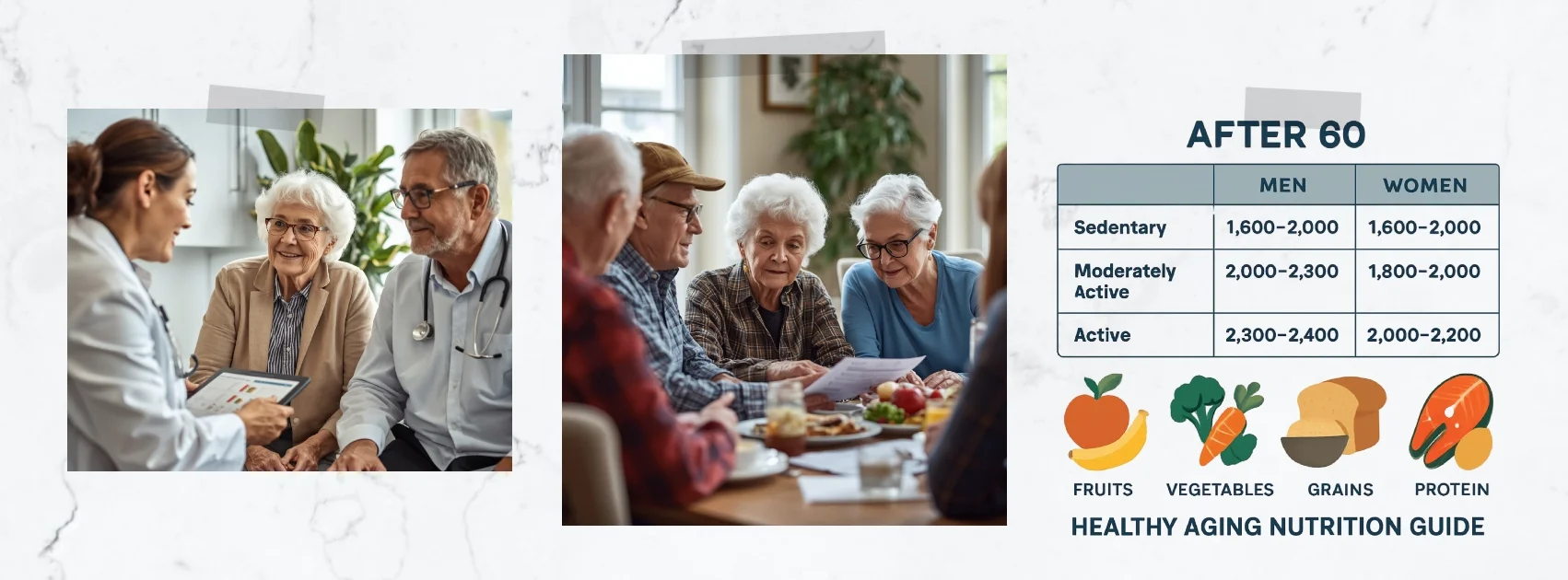
📊 Your Calorie Needs After 60
Your result is a roadmap for health, energy, and independence.
🟢 Maintain
Goal: Stability. Eat close to your daily number to maintain balance without unintended fluctuations.
🟡 Lose Weight
Goal: Safe Reduction. Focus on gradual changes. Too few calories after 60 leads to muscle loss and fatigue.
🔵 Build Strength
Goal: Vitality. Combine calories with high protein and light resistance to protect your mobility.
🥗 Best Foods for Seniors (Nutrient-Dense, Not Calorie-Dense)
| Nutrient | Best Food Sources | Why It Matters |
|---|---|---|
| 🥚 Protein | Eggs, Greek yogurt, fish, chicken, beans, tofu | Preserves muscle, prevents frailty |
| 🌾 Fiber | Oats, berries, apples, broccoli, lentils | Digestion, heart health, blood sugar |
| 🥑 Healthy Fats | Avocado, olive oil, nuts, seeds, fatty fish | Brain function, joint health |
| 🦴 Calcium & Vitamin D | Fortified milk, yogurt, sardines, sunlight | Bone strength, fall prevention |
| 💧 Hydration | Water, herbal tea, soups, watermelon, cucumber | Energy, brain function, digestion |
⚠️ Common Mistakes to Avoid
- Eating too little (slowing your metabolism further)
- Skipping protein (risking muscle loss or sarcopenia)
- Focusing only on the scale, not how you move and feel
🧠 The Real Goal: Independence
Health after 60 isn't about chasing a number. It's about having the energy to live life on your terms. Use your results to fuel your independence.
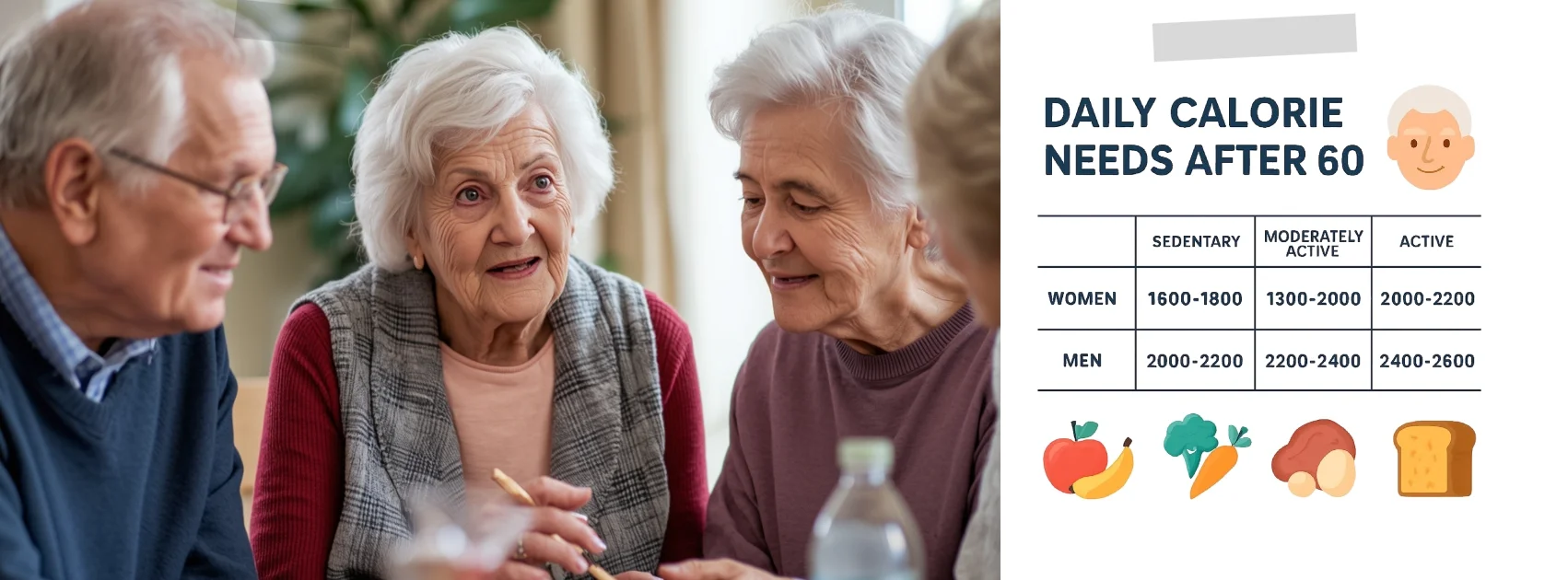
🚀 Simple Action Plan
🧠 Building new habits takes consistency — not perfection. A solid daily routine for seniors at home helps you stay on track with meals, movement, and rest. Below is a simple 4-phase plan to get started.
Focus on nutrient density rather than restriction. Avoid heavily processed items. For more detail, see 9 powerful nutrition tips for seniors.
No intense gym sessions required — focus on consistent, functional movement. Walking, stretching, and everyday activities count.
The secret to staying independent is preserving muscle mass. Combine muscle-fueling food with movement. Need ideas? Check out gentle strength exercises for seniors — all can be done at home.
Pay close attention to your body's feedback loops to adjust your plan. If something doesn't feel right, rest or consult a professional.
🧠 Summary: Daily Calorie Needs After 60
Understanding your daily calorie needs as you age is essential for maintaining health, strength, and independence. After 60, your body changes—your metabolism slows, muscle mass decreases, and your energy needs shift. This means that managing your calories after 60 is no longer about eating less, but about eating smarter.
The calculator helps estimate your daily calorie needs for seniors based on your age, activity level, and body composition. This number can help you maintain your weight, lose weight safely, or build muscle strength. However, it’s important to remember that calories after 60 should not be drastically reduced, as this can lead to muscle loss, fatigue, and reduced mobility.
Because metabolism slows after 60, your body requires fewer calories but more nutrients. That’s why focusing on protein, healthy fats, and nutrient-dense foods is critical. A balanced approach to your daily calorie needs for seniors helps preserve muscle, support energy levels, and reduce health risks.
In addition, combining proper nutrition with light physical activity can improve how your body uses calories after 60. Strength exercises and daily movement help counteract the natural decline in metabolism after 60, making it easier to maintain a healthy weight and stay active.
Ultimately, understanding your daily calorie needs for seniors gives you a practical tool to make better lifestyle decisions. By adapting your habits to support your changing metabolism after 60, you can improve your health, maintain independence, and enjoy a higher quality of life well into your later years.
🔗 Complete Your Health Check
Daily calories are just one piece of the puzzle. Use these tools for a full picture:
📢 share this article
✨ tap to share — help others crack the comment code


Now I understand How to Calculate my TDEE