Skip to content

11 Simple Water Exercises for Seniors

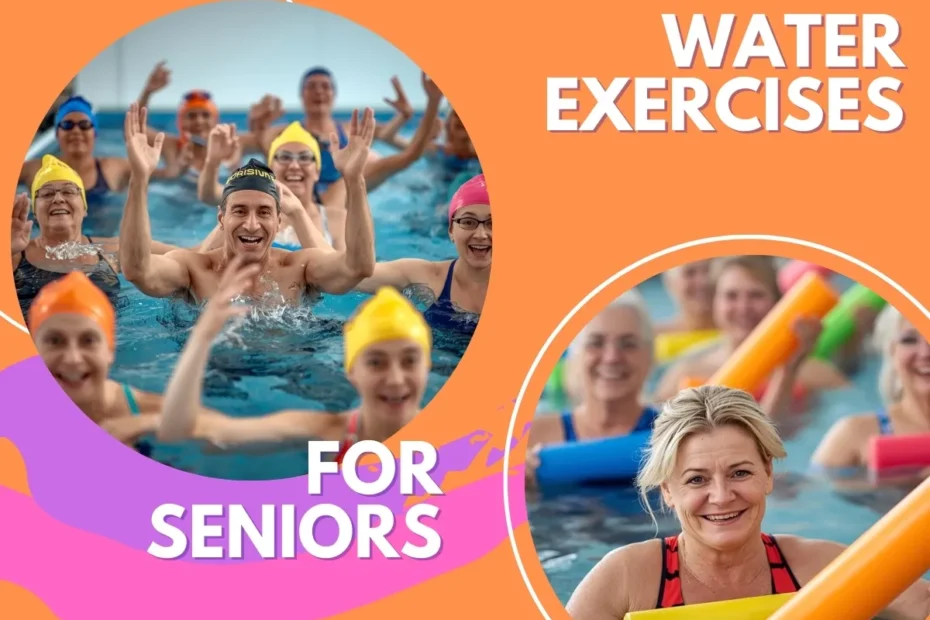
Water Exercises for Seniors

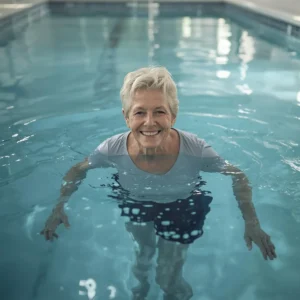
Staying active is essential at every stage of life, but for seniors, finding exercises that are safe, effective, and gentle on the joints makes all the difference. Water exercises for seniors provide one of the most enjoyable and beneficial ways to stay fit without stressing the body. Thanks to the buoyancy and natural resistance of water, older adults can improve strength, balance, heart health, and flexibility—all while reducing the risk of injury.

Below, we’ll explore the top benefits of swimming for seniors, followed by 11 simple water exercises perfect for beginners and active older adults alike.

Water Exercises for Seniors: A Complete Guide to Joint-Friendly Fitness

Benefits of Swimming for Seniors

Water-based activities offer unique advantages that traditional land exercises simply can’t match. Whether you’re dealing with arthritis, joint stiffness, limited mobility, or balance concerns, aquatic exercise creates a supportive environment to help seniors move confidently and comfortably.

Heart Health and Aerobic Support

Swimming and aquatic workouts are excellent forms of low-impact aerobic exercise for seniors. Because water cushions the body, seniors can elevate their heart rate without experiencing the strain often caused by walking or jogging on land.

Regular water exercise helps:

  • Strengthen the cardiovascular system
  • Improve overall endurance
  • Support circulation
  • Reduce the risk of heart disease

For older adults who want to stay active without stressing the knees, hips, or lower back, water exercise is an ideal choice.

Blood Pressure Management

The gentle pressure of water helps support healthy blood pressure levels in seniors. Hydrostatic pressure—water’s natural compression—improves circulation and supports the cardiovascular system while reducing strain on blood vessels.

Over time, consistent aquatic exercise may assist in lowering blood pressure, a common health concern among older adults.

Strengthened Muscles and Decreased Joint Pain

Water provides natural resistance, making it an excellent environment for muscle strengthening exercises for seniors.

Key benefits include:

  • Building lean muscle mass
  • Improving balance and stability
  • Reducing joint pain
  • Increasing daily functional strength

Because movements in water are slower and smoother, they reduce the risk of falls and injuries—a major safety advantage for aging adults.

Better Mental Health and Mood Enhancement

Swimming is not only beneficial for the body—it also greatly supports emotional well-being. The soothing nature of water helps reduce stress, calm the mind, and decrease anxiety levels.

For seniors, swimming provides:

  • A peaceful, meditative experience
  • Reduced symptoms of depression
  • Social opportunities in group classes
  • A boost in confidence and independence

Improved Bone Health

While water exercise is low-impact, it still encourages movement patterns that support bone density, balance, and posture. For seniors concerned about osteoporosis or osteopenia, water workouts provide a safer way to stay active while minimizing fall risk.

Exercise How to Do It & Benefits Image
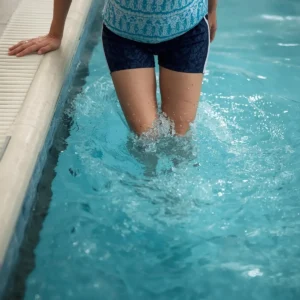
1. Water Walking How to Do It: Walk forward through waist- or chest-deep water, focusing on posture and core engagement. Move your arms naturally as if walking on land. Benefits: • Excellent cardiovascular workout • Strengthens legs and core • Improves gait and balance
2. Leg and Knee Lifts How to Do It: Lift each leg forward, sideways, and backward. For knee lifts, raise one knee toward the chest at a time. Benefits: • Strengthens hips, glutes, quadriceps • Improves balance and flexibility • Supports mobility for daily activities
3. Calf Raises How to Do It: Stand near the pool wall for support. Lift your body onto your toes, then lower slowly. Benefits: • Strengthens calves and ankles • Reduces fall risk • Improves walking stability
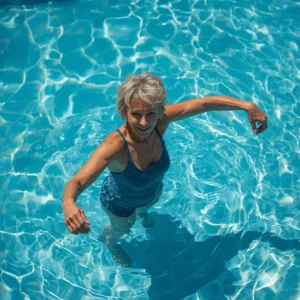
4. Arm Circles How to Do It: Stand in shoulder-deep water and extend arms outward. Make circular motions in both directions. Benefits: • Enhances shoulder mobility • Strengthens upper body muscles • Relieves tension
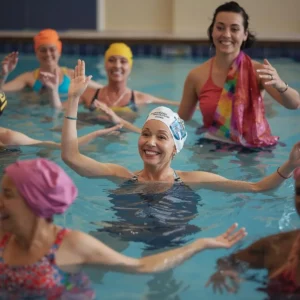
5. Water Aerobics Classes Why It Works: Instructor-led classes combine aerobic movement, strength training, and stretching. Benefits: • Social engagement • Full-body workout • Boosts endurance and mood
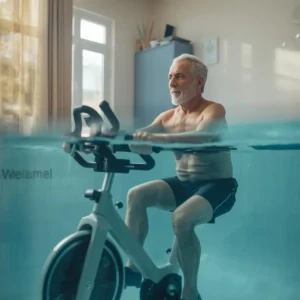
6. Water Cycling How to Do It: Sit on a water bike and pedal, or mimic cycling while holding the pool’s edge. Benefits: • Builds leg strength • Supports cardiovascular endurance • Low-impact on joints
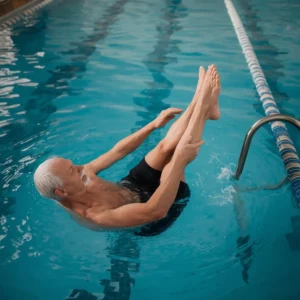
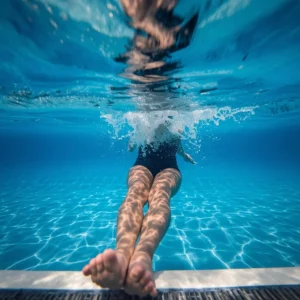
7. Flutter Kicks How to Do It: Hold onto the pool edge and kick legs in alternating motions. Benefits: • Strengthens core and lower body • Improves coordination • Enhances circulation
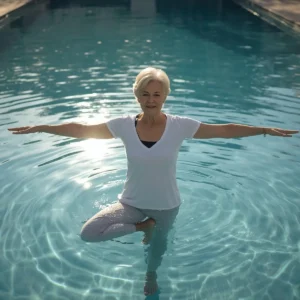
8. Water Yoga Featured Poses: Modified Tree Pose, Warrior Pose, Mountain Pose. Benefits: • Supports balance • Improves mindfulness • Enhances mobility
9. Torso Twists How to Do It: Stand in shoulder-deep water and rotate upper body gently side to side. Benefits: • Strengthens core • Improves spinal flexibility • Helps with posture
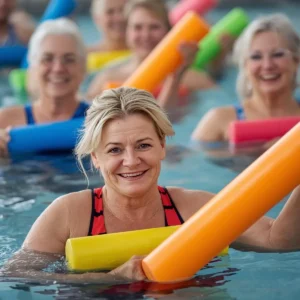
10. Pool Noodle Exercises Ideas: • Floating for core engagement • Bicycle kicks with noodle support • Resistance pushing/pulling Benefits: • Strengthens multiple muscle groups • Fun for all fitness levels • Enhances water confidence
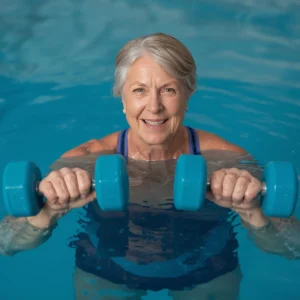
11. Water Resistance Training How to Do It: Use aquatic dumbbells or resistance bands for bicep curls, chest presses, and arm pulls. Benefits: • Builds muscle safely • Enhances bone-supporting movements • Boosts overall strength

Q & A

Q1: What are the best low-impact water exercises for seniors?
The best low-impact water exercises for seniors include water walking, leg lifts, calf raises, arm circles, flutter kicks, gentle water aerobics, and water yoga. These movements strengthen the body while protecting the joints.
Q2: Is swimming good for seniors with arthritis?
Yes. Swimming is an excellent exercise for seniors with arthritis because water reduces joint pressure while offering resistance to build strength. Warm water also helps ease stiffness, pain, and inflammation.
Q3: How often should seniors do aquatic workouts?
Seniors benefit most from aquatic workouts performed 2–4 times per week for 20–40 minutes. Combining aerobic movements, strength-building, and stretching ensures a well-rounded routine.
Q4: Can water exercises help seniors improve balance?
Yes. Water exercises significantly improve balance by strengthening the core, legs, and stabilizing muscles. Water creates gentle resistance while reducing fall risk, making it ideal for balance training.
Q5: What equipment is needed for senior-friendly pool workouts?
Useful equipment includes pool noodles, aquatic dumbbells, kickboards, resistance bands, and flotation belts. These tools add resistance, support mobility, and increase variety in water workouts.
Q6: Are water aerobics safe for older adults with joint pain?
Yes. Water aerobics are safe and beneficial for seniors with joint pain. Water reduces impact on joints and helps improve strength, mobility, and flexibility with minimal discomfort.
Q7: What are the benefits of swimming for seniors with limited mobility?
Swimming improves cardiovascular fitness, reduces joint strain, increases flexibility, and builds muscle strength. The buoyancy of water supports the body, making movement easier for seniors with mobility challenges.
Please follow and like us:

Leave a ReplyCancel reply

Exit mobile version