



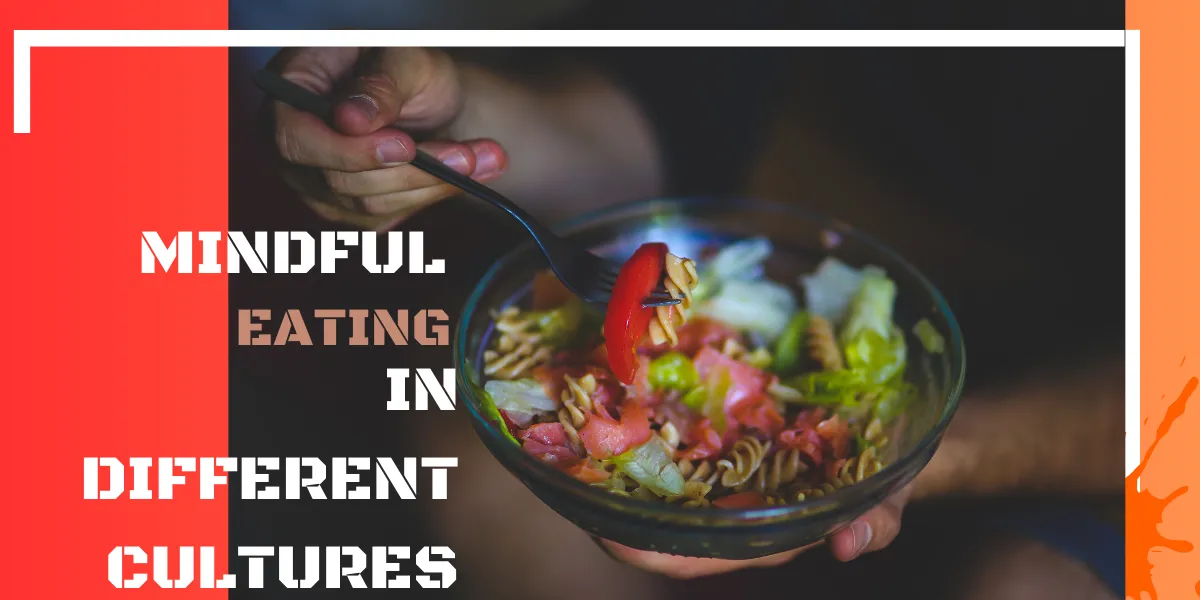
Mindful eating across cultures – Struggling to balance your love for your grandmother’s recipes with your health goals? You’re not alone. It’s not about eliminating cultural foods, but about enjoying them mindfully.
Table of Contents
Toggle
Rethinking the Calorie Deficit addition, not subtraction
The secret is addition, not subtraction
It’s about adding so much color, flavor, and satisfaction from nutrient-dense foods that there’s simply less room for empty calories. This approach doesn’t just support a healthy weight—it actively nourishes your body for strength, vitality, and healthy aging.
Think Global, Eat Local
Explore the vibrant produce sections of international grocery stores. Add tangy kimchi to a rice bowl, roasted okra with Egyptian spices as a side, or a fresh Greek salad loaded with tomatoes, cucumber, and olives alongside your meal.
Flavor First
High-calorie sauces often hide flavor. Instead, build your dishes with herbs, spices, and aromatics used in cuisines worldwide—think cilantro and lime in Mexican cooking, ginger and garlic in Indian dishes, or lemongrass and chili in Thai food. These add immense flavor for very few calories.
The "Volume" Principle
Many traditional cuisines are masters of this. A big bowl of Italian minestrone soup or a Moroccan tagine full of vegetables and lean protein is incredibly satisfying and filling, "adding" volume and nutrients that naturally "subtract" the need for a second helping of higher-calorie staples.
Japan Hara Hachi Bu
The Japanese island of Okinawa is home to some of the world's longest-living people, and one of their secrets is a simple Confucian mantra: Hara Hachi Bu, "eat until you are 80% full."
The Practice: Instead of eating until they feel stuffed, Okinawans stop when hunger is mostly satisfied. It takes ~20 min for the brain to register fullness, so this pause prevents overeating. Combined with a diet rich in fish, vegetables, and soy, it's a cornerstone of their longevity.
France Quality · Portion · Pleasure
The "French Paradox" suggests the French enjoy rich foods while maintaining lower obesity rates. The secret isn't magic—it's their philosophy toward eating.
The Practice: Prioritize quality over quantity. Meals are an event to be savored, not rushed. Portions are smaller, eaten mindfully with conversation, without screens. Pleasure and satisfaction with smaller amounts means they feel more fulfilled.
India Balanced Plate · Thali
A traditional Indian meal, or Thali, is a perfect model for balanced eating. A platter with small bowls of varied dishes, each offering different flavor, texture, and nutrients.
The Practice: A Thali includes whole grain (rice/roti), lentil dish (dal), vegetables, probiotic (yogurt/pickle), and chutney. This combination stabilizes blood sugar and keeps you full and energized for hours.
Your First Step this week
Try building one “Thali‑style” plate for lunch or dinner. Fill half your plate with colorful vegetables, a quarter with a whole grain (like rice or roti), and a quarter with a plant‑based protein (lentils, chickpeas, or tofu). Add a small side of fermented food (yogurt, kimchi, or sauerkraut).
Notice how the variety of flavors, textures, and colors makes you feel more satisfied, energized, and connected to your meal—compared to a standard one‑plate dinner.
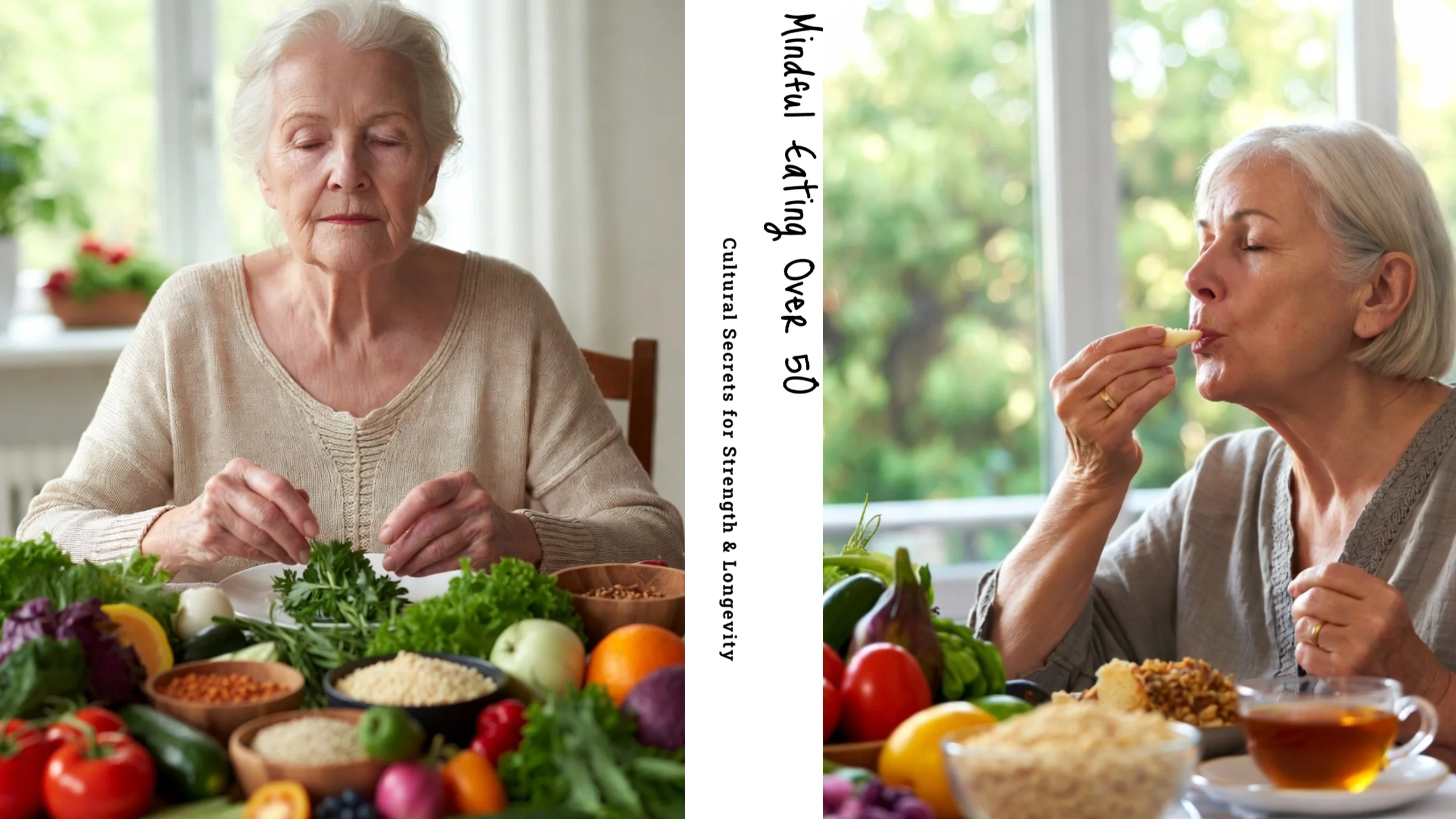
Embracing mindful eating is not about restriction, but about enriching your life with global culinary wisdom. By adopting practices such as Japan’s Hara Hachi Bu, France’s pleasure-driven portion sizes, and India’s balanced Thali, you can transform your relationship with food. This approach to mindful eating supports healthy aging by reducing inflammation, preserving muscle mass, and enhancing cognitive function, all while savoring every bite.
Ultimately, mindful eating empowers you to build a sustainable, joyful path to vitality—proving that the secret to wellness lies not in dieting, but in connecting more deeply with the flavors and traditions that nourish both body and soul.

The information provided in this article is for educational and informational purposes only and does not constitute medical advice. It is not intended to diagnose, treat, cure, or prevent any disease or health condition. Always consult a qualified healthcare professional or your physician before making any changes to your diet, exercise routine, or lifestyle—especially if you have a pre-existing medical condition or are taking medication. Individual needs vary, and what works for one person may not be appropriate for another. Reliance on any information in this article is solely at your own risk.




✉️ Get in Touch
Questions about exercises, nutrition, or home safety? Send us a message.


