
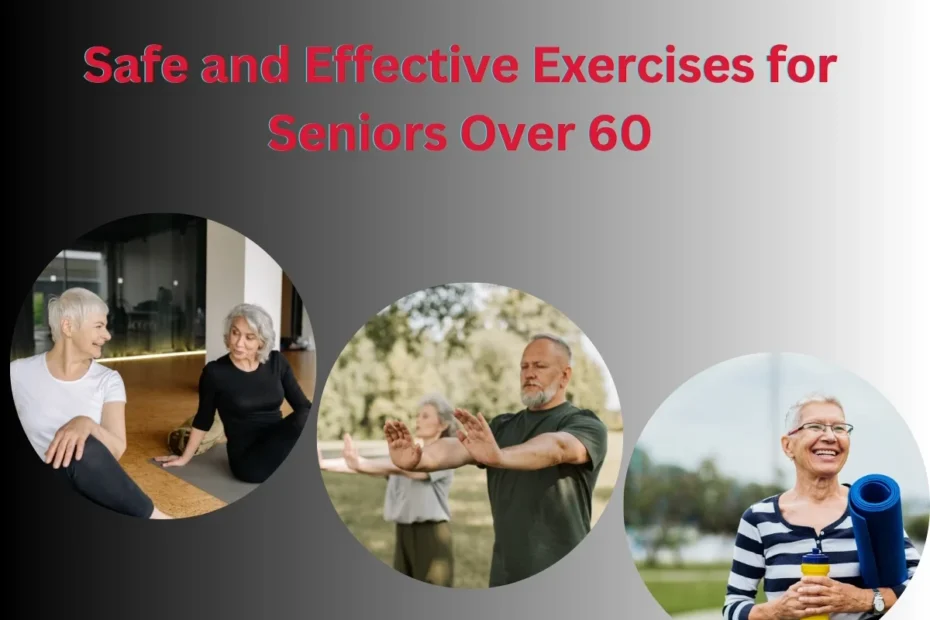
Choosing Safe Exercises for Seniors Over 60 is essential for long-term health and confidence. After 60, the rules change. Your knees might creak. Your balance might wobble. And the exercises you did at 40? They may not feel right anymore. But here’s the truth: you’re not too old to get stronger. In fact, the right exercises can help you carry groceries, play with grandkids, and climb stairs without fear of falling.
Table of Contents
ToggleThis guide gives you 8 safe, gentle exercises designed specifically for seniors over 60 — all from home, with just a chair and a wall. Staying active after 60 isn’t about pushing harder—it’s about moving smarter.
Always consult a qualified healthcare professional before starting any new exercise program, changing your diet, or making changes to your medication or treatment plan. If you experience sudden dizziness, chest pain, shortness of breath, or severe symptoms, seek immediate medical attention.
⚡ Quick Start: 3 Exercises for Right Now
| If you have… | Try this exercise | Duration |
|---|---|---|
| Wobbly when standing | Heel-to-Toe Walk | 10 steps, rest, repeat |
| Weak legs getting out of chair | Chair Squats | 5-8 repetitions |
| Tight shoulders or back | Wall Push-Ups | 5-8 repetitions |
8 Safe Exercises for Seniors Over 60
Stay strong, balanced, and independent with these safe exercises for seniors. Follow the routine below and move at your own pace.
🪑 Chair Squats
Strengthens: Legs, Core, Glutes
✅ Safe and beginner-friendly
- Stand in front of a sturdy chair with feet shoulder-width apart.
- Hold the back of another chair or a wall for steady balance.
- Slowly lower your hips down as if sitting—stop just before touching the seat.
- Push firmly through your heels to return to a standing position.
⏱️ Repetitions: Repeat 5-8 times.
💡 Modification: Place a thick pillow on the chair so you do not have to squat as low.
🚶 Heel-to-Toe Walk
Improves: Balance, Foot Coordination, Focus
- Stand tall next to a long kitchen counter or a wall for security.
- Place your right heel directly in front of your left toe, so they touch.
- Step forward, placing your left heel directly in front of your right toe.
- Keep looking straight ahead, not down at your feet, to train balance.
⏱️ Duration: Take 10 steps, rest, and repeat.
💡 Modification: Keep your fingertips lightly gliding along the wall as you walk for security.
🦵 Seated Leg Raises
Strengthens: Quadriceps (Thighs), Hip Flexors
✅ Perfect for low mobility and beginners
- Sit up straight in a solid chair with your feet flat on the floor.
- Slowly straighten your right leg out in front of you until it is horizontal.
- Hold the top position for 2 seconds, feeling your thigh muscle tighten.
- Lower the foot gently back to the floor. Switch sides.
⏱️ Repetitions: Perform 8-10 repetitions per leg.
💡 Modification: If extending fully hurts your knees, only lift your foot 2-3 inches off the ground.
💪 Wall Push-Ups
Builds: Upper Body Strength, Chest, Arms Safely
- Stand facing a flat wall about an arm's length away.
- Place both hands flat against the wall at shoulder height and shoulder-width apart.
- Slowly bend your elbows to lower your upper body toward the wall.
- Push away from the wall firmly until your arms are straight again.
⏱️ Repetitions: Repeat 8-12 times.
💡 Modification: Stand closer to the wall to make the push easier, or step further back to increase difficulty.
🦿 Standing Side Leg Lifts
Targets: Hip Stability, Outer Thighs, Side Balance
- Stand straight behind a sturdy chair, holding it securely with both hands.
- Keep your toes pointing forward and your spine long.
- Slowly lift your right leg out to the side while keeping your supporting leg straight.
- Lower your leg back down smoothly. Avoid leaning your torso to the side.
⏱️ Repetitions: Complete 5-10 lifts on each side.
💡 Modification: Lift the leg outward just an inch or two until your hip strength develops.
🏃 Marching in Place
Boosts: Blood Circulation, Balance, Ankle Coordination
- Stand tall with feet hip-width apart near a wall or steady counter surface.
- Slowly lift your right knee as high as comfortable, then lower it back down.
- Lift your left knee up next, alternating back and forth in a steady rhythm.
- Pump your arms gently by your side if you don't need to hold a support.
⏱️ Duration: March continuously for 30-60 seconds.
💡 Modification: Can be performed while fully seated in a hardback chair if standing balance is limited.
🧘 Gentle Stretching
Improves: Overall Flexibility, Mobility, Joint Stiffness
- Sit comfortably and clasp your hands together, pushing them straight forward to stretch your back.
- Slowly turn your head to the right until you feel a gentle stretch, hold, then turn left.
- Reach down toward your toes slowly while seated to loosen tight hamstrings.
- Never bounce during any movement—keep all stretching motions steady and liquid.
⏱️ Duration: Hold each stretch calmly for 15-20 seconds.
💡 Modification: Only move into a stretch until you feel light tension—never push to the point of friction or pain.
🚶♂️ Daily Walking
Benefits: Cardiovascular Fitness, Bone Density, Mood
- Wear supportive shoes with flat, slip-resistant soles.
- Walk with an upright posture, letting your shoulders relax down naturally.
- Land smoothly on your heel and roll forward onto your toes with every step.
- Choose a flat, well-lit path free of tripping hazards like loose rugs or rocks.
⏱️ Duration: Aim for a comfortable 10-20 minute walk daily.
💡 Modification: Split your walking into two short 5-minute segments across the day if your stamina is low.
📅 Weekly Routine
- ✔ 3 days of targeted strength training
- ✔ 2 days of dedicated balance focus
- ✔ Daily functional walking session
⚠️ Safety Tips
- Start slow: Gradually build up your endurance and pacing across weeks, not days.
- Use support: Always keep a sturdy chair, steady kitchen counter, or solid wall within hand's reach.
- Listen to your body: Rest immediately if you experience sharp pain, sudden dizziness, or shortness of breath.
💙 Why Fitness Matters After 60
Consistent gentle exercise directly helps you:
- Maintain independence: Keep performing everyday home activities with total ease.
- Reduce fall risk: Build defensive lower body strength and protect joint reflexes.
- Improve quality of life: Boost physical energy levels and mental clarity naturally.
❓ FAQ: Safe Exercises for Seniors Over 60 at Home
If you're looking for safe exercises for seniors over 60 at home, this FAQ covers the most common questions about strength, balance, and fall prevention. These safe exercises for seniors over 60 at home are designed to be gentle, effective, and easy to follow — no gym required.
📌 Jump to Any Question:
What are the best balance exercises for seniors at home?
Heel-to-toe walking and standing leg lifts are very effective balance exercises for elderly to prevent falls. These balance exercises for elderly to prevent falls can be done safely near a wall or chair for support. Start with 5-10 repetitions and gradually increase as your confidence improves.
How often should seniors exercise?
At least 3–5 times per week with light to moderate intensity. Consistency matters more than intensity when practicing safe exercises for seniors over 60 at home. Even 10-15 minutes daily is beneficial.
What is the safest exercise for seniors?
Chair exercises, walking, and gentle stretching are among the safest options. For balance exercises for elderly to prevent falls, seated leg lifts and heel-to-toe walks (with support) are excellent low-risk choices.
Can seniors build muscle after 60?
Yes, with consistent strength training and proper nutrition, muscle can be maintained and even improved. Incorporating safe exercises for seniors over 60 at home like chair squats and wall push-ups 2-3 times per week yields noticeable results within 4-6 weeks.
How can seniors improve balance quickly?
Practice daily balance exercises and strengthen leg muscles for faster results. The most effective balance exercises for elderly to prevent falls include standing on one leg (holding a chair), heel-to-toe walks, and seated leg raises. Consistency is key — 5 minutes daily is better than 30 minutes once a week.
Is walking enough exercise for seniors?
Walking is excellent for cardiovascular health, but combining it with strength and balance exercises provides better results for fall prevention. Add two days of safe exercises for seniors over 60 at home (like chair squats and wall push-ups) to your weekly walking routine for full-body benefits.
What exercises should seniors avoid?
High-impact or fast, unstable movements should be avoided unless supervised. Also avoid deep lunges, full squats, and exercises that require rapid direction changes, as these increase fall risk. Stick with balance exercises for elderly to prevent falls that are slow, controlled, and supported when needed.
How long should a senior workout last?
20–40 minutes per session is ideal depending on fitness level. For those new to safe exercises for seniors over 60 at home, start with 10-15 minutes and add 5 minutes each week. Listen to your body — quality of movement matters more than duration.
What helps prevent falls in elderly people?
Regular balance training, strong leg muscles, and a safe home environment. The most effective balance exercises for elderly to prevent falls target the muscles used in standing, walking, and recovering from a stumble. Remove tripping hazards at home (loose rugs, cords, clutter) and practice your balance routine near a sturdy surface for safety.
💡 Remember: These safe exercises for seniors over 60 at home are general suggestions. Always listen to your body and consult a doctor or physical therapist before starting any new exercise routine.

💬 Take the Next Step
👉 Fuel your workouts the right way with smart nutrition choices
Explore Senior Nutrition →👉 Which exercise works best for you?
Share your experience in the comments—we’re building a supportive community 💙
🔵 Summary
Maintaining your health after 60 doesn’t require complicated routines or intense workouts. What matters most is staying consistent with Effective Exercises for Seniors Over 60 that support your functional strength, mobility, and overall well-being.
By incorporating simple movements like chair squats, daily walking, and targeted balance exercises for elderly to prevent falls into your weekly routine, you can significantly reduce your risk of injury, stay independent longer, and enjoy a vibrant quality of life.
Remember—progress doesn’t happen overnight. Start slowly, listen to your body, and build confidence step by step. Over time, these small daily efforts compound into powerful, lasting health benefits.
Your journey to better health begins with one simple step—keep moving, stay consistent, and make these Effective Exercises for Seniors Over 60 a permanent part of your daily lifestyle.



📢 share this article
✨ tap to share — help others crack the comment code


