

You wake up tired. The gym feels harder. Your mood isn’t what it used to be. Could your testosterone levels be the culprit? Testosterone Levels – Testosterone is a sex hormone primarily found in males, although females produce it in smaller amounts. It belongs to a class of male hormones called androgens, which is crucial for both men and women.
Table of Contents
ToggleNormal Testosterone Levels (Men vs Women)
Normal testosterone levels differ significantly between men and women, reflecting their distinct biological roles. In adult men, typical total testosterone levels generally range from about 300 to 1,000 nanograms per deciliter (ng/dL). In women, levels are much lower, usually between 15 and 70 ng/dL. These ranges can vary slightly depending on the laboratory and testing methods used.
Testosterone plays important roles in both sexes, including supporting muscle strength, bone density, mood, and energy levels. It is important to understand that “normal” levels can vary between individuals, and symptoms should always be considered alongside blood test results when evaluating hormone health and overall well-being.
How Testosterone Levels Change With Age
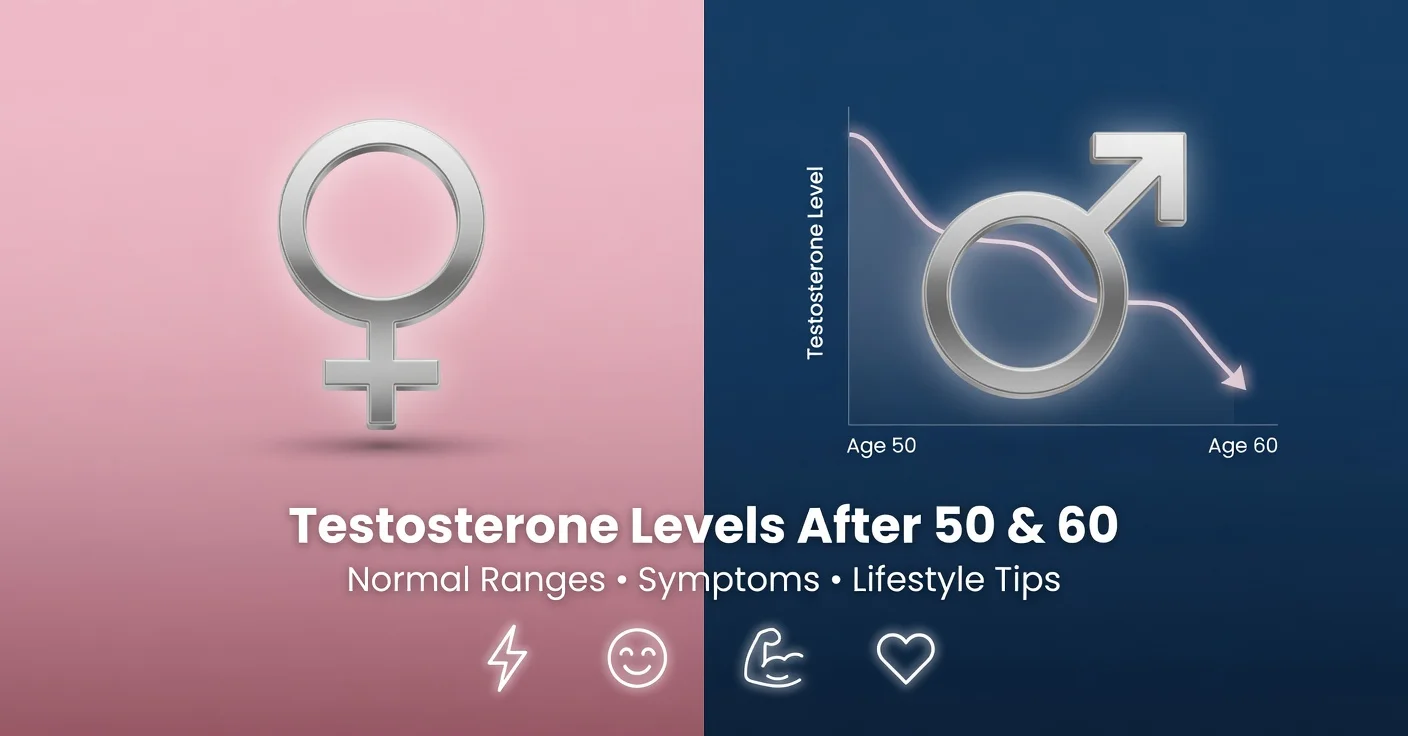
Testosterone levels naturally decline with age in both men and women, although the pattern differs between the sexes. In men, levels typically begin to decline gradually after age 30, often at a rate of about 1% per year. This slow decline can affect energy, muscle mass, mood, and overall vitality over time. In women, testosterone levels also decrease with age, particularly after menopause, when hormonal changes become more noticeable.
While this decline is a normal part of aging, lifestyle factors such as physical activity, nutrition, sleep quality, and stress management can influence how significantly these changes impact daily health, function, and overall quality of life.
- Men: ~1% decline per year after 30
- Women: gradual decline, acceleration after menopause
- Lifestyle factors that influence the rate of decline
How do Testosterone Levels Differ Between Males and Females?
Testosterone levels in males are significantly higher than in females. However, both genders produce and require testosterone. It is produced mainly in the testes, while in females, it is made in the ovaries. Women also produce testosterone in the adrenal glands.
Symptoms and Effects of Low Testosterone Levels in Males and Females
Males
Low Libido
A decrease in sexual desire
Erectile Dysfunction
Difficulty achieving or maintaining an erection
Fatigue
Low energy levels and increased fatigue
Depression and Irritability
Mood changes, including depression and irritability
Decreased Muscle Mass
Loss of muscle mass and strength
Decreased Bone Density
Increased risk of osteoporosis
Females
Low Libido
Similar to males, a decrease in sexual desire
Menstrual Irregularities
Irregular or absent menstrual periods
Fatigue
Low energy levels and increased fatigue
Decreased Bone Density
Increased risk of osteoporosis
Mood Changes
Changes in mood and increased risk of depression
Decreased Muscle Mass

Symptoms and Effects of High Testosterone in Males and Females
Males
Aggressiveness
Increased aggression or mood swings
Acne and Oily Skin
Elevated testosterone can stimulate sebum production
Sleep Apnea
High testosterone levels have been linked to sleep disturbances.
Females
Irregular Menstrual Periods
Elevated testosterone can disrupt the menstrual cycle
Acne and Oily Skin
Similar to males, increased sebum production
Excessive Hair Growth
Known as hirsutism, where women develop male-pattern hair growth
Potential Causes of High Testosterone in Males and Females
Males
Testicular Tumors
Tumors in the testes can lead to increased testosterone production.
Adrenal Gland Disorders
Disorders affecting the adrenal glands
Anabolic Steroid Use
Abuse of anabolic steroids can elevate testosterone.
Females
Polycystic Ovary Syndrome
PCOS: Common cause of elevated testosterone in women.
Congenital Adrenal Hyperplasia
A genetic disorder affecting the adrenal glands.
Tumors
Tumors in the ovaries or adrenal glands can cause increased testosterone.
Potential Causes of Low Testosterone Levels in Males and Females
Males
Aging
Testosterone levels tend to decline with age
Hypogonadism
Conditions affecting the testes, such as injury or infection
Chronic Illness
Conditions like diabetes or chronic liver disease
Obesity
Excess body fat can contribute to lower testosterone
Females
Polycystic Ovary Syndrome (PCOS)
A common cause of elevated testosterone in women.
Primary Ovarian Insufficiency
Ovaries do not function properly.
Adrenal Gland Disorders
Conditions affecting the adrenal glands
Aging
Testosterone levels also decline with age in females.

🌿 Testosterone and Healthy Aging After 50 and 60
As we age, testosterone levels naturally decline in both men and women. This is a normal part of aging, but it can affect energy levels, muscle strength, mood, and overall well-being.
For older adults, the goal is not to “maximize” testosterone, but to maintain balanced levels that support daily function and quality of life. Small lifestyle changes can help support hormone health in a safe and sustainable way.
Regular physical activity—especially strength training and walking—can help maintain muscle mass and support natural hormone production. Nutrition also plays a key role, with adequate protein, healthy fats, and essential nutrients contributing to hormonal balance.
Sleep is another critical factor. Poor sleep can negatively affect testosterone levels, while consistent, high-quality rest helps regulate hormone production.
Focusing on these habits can support long-term health, independence, and vitality after 50 and beyond.
Lifestyle Factors Affecting Testosterone Levels
Maintaining healthy testosterone levels involves more than just medical interventions; it also requires a balanced lifestyle. Lifestyle choices play a pivotal role.
Regular exercise, mainly cardiovascular workouts and strength training, can naturally boost testosterone production. Conversely, leading a sedentary lifestyle and excessive endurance exercise may contribute to lower levels. Sufficient and quality sleep are equally crucial; inadequate sleep can disrupt hormonal balance, including testosterone levels.
Stress management is paramount, as chronic stress can elevate cortisol levels, inhibiting testosterone production. Maintaining a healthy weight is also essential, as obesity correlates with lower testosterone levels.
Nutrition plays a crucial role; diets rich in essential nutrients, such as zinc and vitamin D, positively impact testosterone production.
Natural Remedies or Lifestyle Changes
Natural methods for regulating testosterone involve strategic lifestyle adjustments. Ensuring a balanced diet that emphasizes sufficient protein, healthy fats, and essential vitamins and minerals supports hormonal health.
Regular physical activity, particularly strength training, helps increase testosterone levels. Adequate sleep, preferably 7-9 hours per night, provides the necessary recovery time for hormonal balance.
Stress-reduction techniques, such as mindfulness and relaxation exercises, positively affect testosterone production. Certain natural supplements, like ashwagandha and fenugreek, have shown promise in supporting healthy testosterone levels. Adopting these lifestyle changes helps maintain hormonal balance and promotes overall well-being.
Testosterone levels naturally change with age, but small, consistent lifestyle habits can support balance and overall well-being. The goal is not perfection, but maintaining strength, energy, and quality of life over time.
How's Your Hormone Health?
Vote with an emoji. Share your wellness story.
👇 Comment — and join our Healthy Aging Community.


