


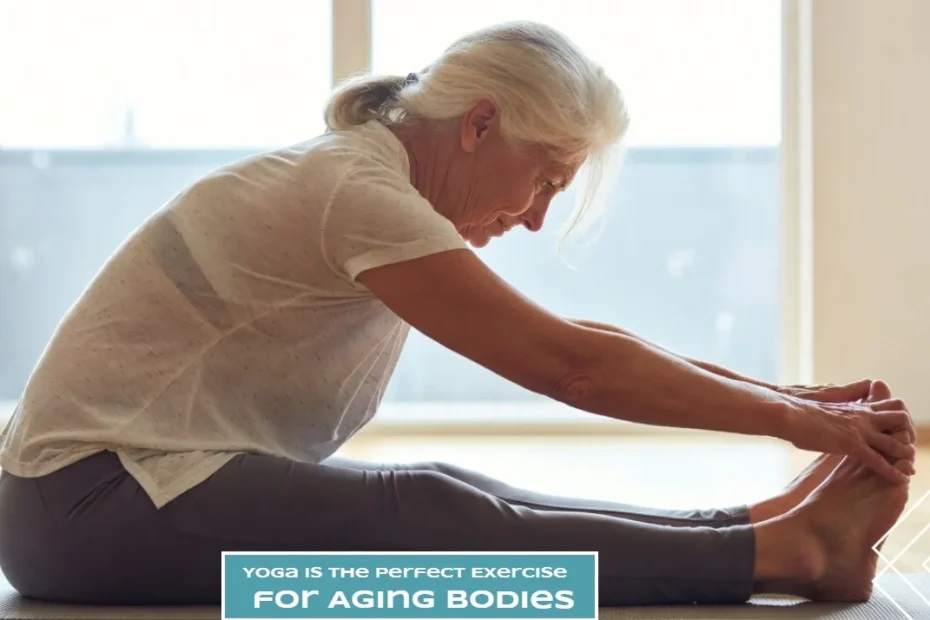
Are you a senior looking to stay active but worried about joint pain or falling? You’re not alone. Many people over 60 wonder if yoga is “right for them.” The good news is, yes—when you choose the right style. This guide is your roadmap to finding a safe, gentle yoga practice that will improve your mobility, balance, and peace of mind, no matter your experience level. More than just physical exercise, yoga is a holistic practice that nurtures your body & spirit, helping you feel stronger, calmer, and more connected to yourself.
Table of Contents
Toggle
Why Yoga is the Perfect Exercise for Aging Bodies
If you're over 50 and wondering if yoga is for you—the answer is yes. Here's why this ancient practice is your key to a stronger, calmer, and more vibrant life.
Reclaim Your Balance and Prevent Falls
Falls are a leading concern for seniors, but balance is a skill you can train. Yoga poses like Tree Pose gently challenge your stability, strengthening the small muscles in your feet and core.
This practice sharpens your proprioception—your body's awareness in space—giving you the confidence to navigate uneven sidewalks or get out of the shower safely.
Soothe Aching Joints and Reduce Stiffness
Arthritis and back pain often worsen with inactivity. Yoga offers a gentle, low-impact solution. Slow, controlled movements lubricate the joints and increase synovial fluid, nourishing cartilage.
This helps improve your range of motion, making daily activities like reaching for a shelf or tying your shoes easier and less painful.
Calm Your Mind, Relieve Stress and Sleep Better
Aging brings unique stresses, but yoga is a powerful antidote. Deep, intentional breathing activates your parasympathetic nervous system—your body's "rest and digest" mode.
This lowers cortisol levels, reducing anxiety and promoting deeper, more restful sleep. Many seniors find the meditative aspect brings profound peace and resilience.
Build Strength Without the Strain
As we age, we lose muscle mass, but you don't need heavy weights. Yoga uses your own body weight as resistance. Poses like Plank or Chair Pose build functional strength.
This isn't about bulking up; it's about creating the strength you need for real life—like carrying groceries, lifting a grandchild, or getting up from a chair with ease.
Ready to find your flow? Yoga is not about perfection—it's about nurturing a harmonious connection between your mind, body & spirit. Scroll down to discover the safest styles for you.
Explore the Best Yoga Styles ↓🧘 Top 4 Safest Yoga Styles (With Specific Benefits)
Various types of yoga can benefit seniors, but it's vital to choose practices that are gentle, accessible, and suitable for their specific needs. Selecting the right style can significantly impact the practice's effectiveness and safety.
Here’s an expanded look at several types of yoga that are commonly recommended for older adults, with a focus on their benefits and how they cater to different needs:
| Style | What It Is & Key Elements | Senior Benefits · Who It’s Best For |
|---|---|---|
| 🧘 Hatha Yoga |
A foundational, slower-paced practice combining gentle movement, posture work (asana), and breath control (pranayama). Focuses on safe alignment and steady transitions — ideal for beginners.
key elements
|
✨ flexibility
⚖️ balance
🧱 posture
😌 stress relief
Supports mobility and gentle strength. Great for seniors who want a classic “beginner yoga routine” with clear pacing. 👵 best for: beginners, overall wellness
|
| 🪑 Chair Yoga |
Modified practice done seated or using a chair for support. Poses adapted so seniors can practice safely without getting up/down from the floor.
key elements
|
🦽 limited mobility
🛡️ fall prevention
💪 hip/shoulder strength
🏠 easy at home
Ideal for balance concerns, recovery, or anyone wanting extra support. Gentle on knees and back. 👵 best for: mobility challenges, rehabilitation
|
| 🌿 Gentle Yoga |
A softer, slower style emphasizing comfortable stretches, careful transitions, and modifications using props (blocks, straps, bolsters).
key elements
|
📈 flexibility safely
🦵 reduce tension
🧘 posture support
🌅 daily movement
Best for seniors wanting to improve flexibility and joint comfort without intense holds. 👵 best for: stiffness, building steady habit
|
| 😴 Restorative Yoga |
Deeply relaxing practice with long-held, fully supported poses (blankets, bolsters). Goal is rest, recovery, and nervous-system reset — not intensity.
key elements
|
💤 stress relief
🌙 better sleep
🕊️ calmness
🧘 gentle opening
Perfect for seniors wanting deep relaxation, tension relief, or on low‑energy days. 👵 best for: stress, recovery, insomnia
|
| 🌀 Yin Yoga |
Slow practice with passive poses held longer to target connective tissues and joints. Props used for comfort.
key elements
|
🦵 joint mobility
🔄 range of motion
💧 tissue hydration
🧠 mental clarity
Helpful for better range of motion and joint comfort. Stay within gentle sensation (never pain). 👵 best for: joint stiffness, deep stretch
|
Chair Yoga for Seniors: A Safe and Effective Option
Worried about getting up and down from the floor? Chair yoga offers all the benefits of traditional yoga—without the stress on your joints. It's the perfect place to start your journey.
Why Chair Yoga is a Game-Changer for Seniors
Chair yoga is a gentle form of yoga that adapts traditional poses so they can be performed while seated or using a chair for support. It's not a "lesser" version of yoga—it's a smart, safe, and highly effective practice designed to meet you where you are.
For seniors over 60, chair yoga offers a low-impact, accessible entry point into the world of yoga. It's particularly beneficial for those with:
- ✅ Limited mobility or balance concerns
- ✅ Arthritis or joint pain
- ✅ Recovery from injury or surgery
- ✅ Fear of falling
- ✅ Osteoporosis or other bone conditions
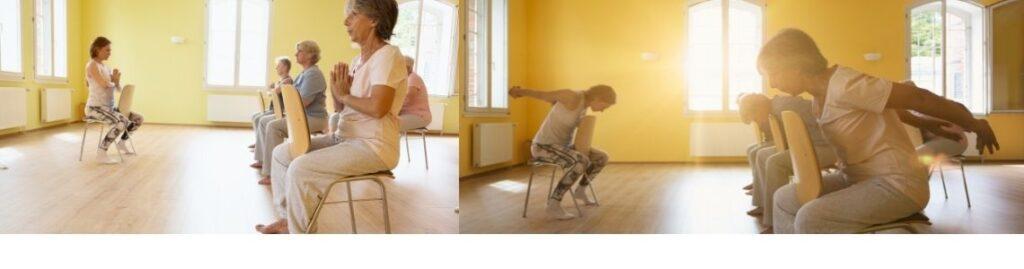
Senior practicing chair yoga
Improves Balance & Stability
Chair yoga strengthens the core and leg muscles that keep you steady. By practicing seated and standing poses with chair support, you'll build the functional strength needed to prevent falls.
Reduces Joint Pain & Stiffness
The gentle, controlled movements of chair yoga lubricate the joints and increase blood flow, helping to alleviate arthritis pain and morning stiffness. You'll feel more mobile and comfortable.
Boosts Mental Clarity & Mood
Chair yoga incorporates deep breathing and mindfulness, which reduce stress and anxiety. Seniors often report better sleep, improved focus, and a more positive outlook after just a few sessions.
Builds Strength Without Strain
Using your own body weight and the chair for support, you'll build muscle tone—especially in your arms, legs, and core. This makes everyday activities like carrying groceries or getting up from a chair easier.
Safe & Accessible for Everyone
Chair yoga is designed to be adaptable and inclusive. You can practice it at home, in a class, or even at your desk. It requires no special equipment—just a sturdy chair and comfortable clothing.
Connects Body, Mind & Spirit
Like all yoga, chair yoga nurtures the whole self. It's not just about physical movement—it's a practice of self-care that fosters inner peace, resilience, and a deeper connection to your body, mind & spirit.
🧘 5 Gentle Chair Yoga Poses to Get You Started
These beginner-friendly poses are safe, effective, and can be done in just 10 minutes a day. Remember to listen to your body and breathe deeply throughout.
Seated Mountain Pose
How to: Sit tall with feet flat on the floor. Place hands on your thighs. Lengthen your spine and take 5 deep breaths.
Seated Eagle Arms
How to: Extend arms forward. Cross your right arm under your left, bend elbows, and press palms together. Hold for 30 seconds. Switch sides.
Seated Cat-Cow Stretch
How to: Place hands on knees. Inhale, arch your back gently (cow). Exhale, round your back (cat). Repeat 5 times.
Seated Leg Stretch
How to: Extend one leg straight, heel on floor, toes pointing up. Flex your foot and gently lean forward. Hold for 30 seconds. Switch legs.
Seated Spinal Twist
How to: Sit sideways in your chair. Gently twist your torso toward the back of the chair, holding the backrest. Hold for 30 seconds. Switch sides.
💡 Pro Tip: Always use a sturdy, non-slip chair. If you have any health concerns, consult your doctor before starting.
Chair Yoga vs. Traditional Yoga: What's the Difference?
🧘 Traditional Yoga
- Requires getting up and down from the floor
- May be challenging for those with joint pain
- Can feel intimidating for beginners
- Often practiced in a studio or class setting
🪑 Chair Yoga
- ✅ Done seated or with chair support
- ✅ Gentle on joints & safe for most seniors
- ✅ Welcoming and accessible for beginners
- ✅ Can be done anywhere—at home, work, or in a class
Choose the practice that feels right for you. Chair yoga is a wonderful starting point—and many seniors transition to traditional yoga as their confidence and strength grow.
Ready to give chair yoga a try? Start with just 10 minutes a day and feel the difference in your mind, body & spirit.
Review Your Safety Checklist ↓
Pilates vs. Yoga for Seniors
| 🧘 Yoga for Seniors | 💪 Pilates for Seniors |
|---|---|
| Flexibility & Joint Health | Core Strength & Stability |
| Yoga uses gentle stretching and flowing movements to improve flexibility, enhance joint mobility, and reduce stiffness. Regular practice helps seniors move more freely and comfortably, nurturing both body & spirit. | Pilates focuses heavily on strengthening deep core muscles, improving posture, spinal support, and balance — essential for daily movement and fall prevention. |
| Balance & Stability | Joint-Friendly Movement |
| Many yoga poses train balance and body awareness (proprioception), which helps reduce fall risk and improves coordination. | Pilates is low-impact and controlled, placing minimal stress on joints. It is ideal for seniors with arthritis or joint sensitivity. |
| Strength Building | Muscle Tone & Total-Body Strength |
| Yoga uses bodyweight poses to strengthen muscles and support bone health, improving endurance and functional strength. | Pilates works the core, hips, legs, arms, and back through controlled resistance, promoting lean muscle tone and overall strength. |
| Stress Relief & Relaxation | Mind–Body Connection |
| Breathwork and meditation techniques reduce stress, calm the nervous system, and improve emotional well-being. These practices create harmony between your body & spirit. | Pilates emphasizes mindful movement and breath control, helping seniors stay mentally engaged while exercising safely. |
| Pain Management | Posture Improvement |
| Gentle yoga positions can help relieve common aches such as back pain, neck tension, and joint discomfort. | Pilates strengthens postural muscles, helping correct alignment and reduce strain on the back, shoulders, and hips. |
| Social Engagement | Accessibility & Adaptability |
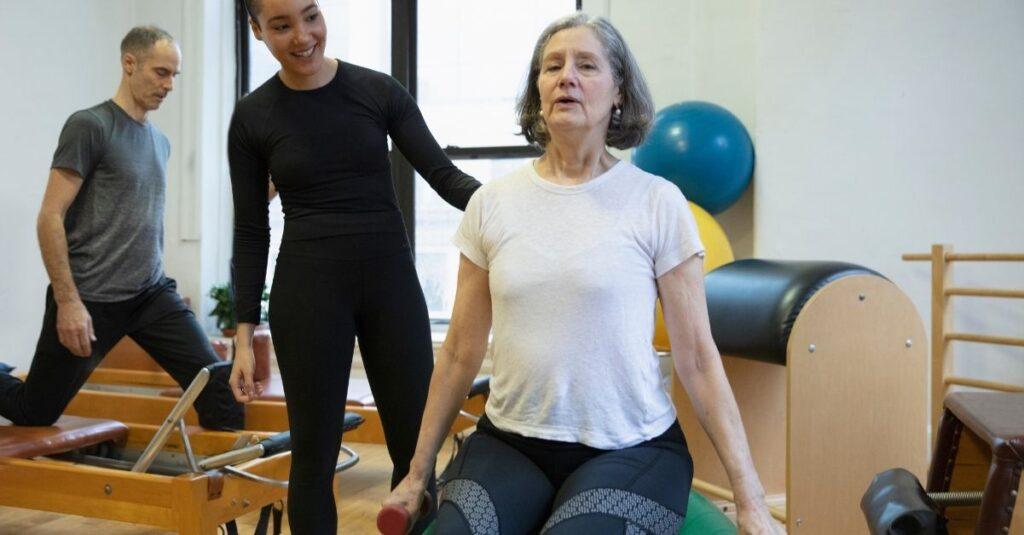
| Group yoga classes create opportunities for social interaction, support, and motivation. | Pilates can be done on a mat, reformer, chair, or even in a wheelchair, making it highly adaptable for seniors with mobility limits. |
| ✅ Both Yoga and Pilates offer safe, low-impact ways for seniors to improve strength, mobility, posture, balance, and mental well-being. The best choice depends on individual goals — relaxation and flexibility (Yoga) or core strength and posture focus (Pilates). Whichever you choose, both practices nurture your body & spirit, supporting a vibrant, independent life at any age. | |

Your First Yoga Class: A 5-Step Safety Checklist
Starting something new can feel intimidating, but with the right preparation, your first yoga experience can be empowering and joyful. Follow this simple checklist to feel confident, capable, and safe.
Consult Your Healthcare Professional
Before beginning any new exercise routine, have a quick conversation with your doctor or physical therapist. This is especially important if you have osteoporosis, arthritis, high blood pressure, or any joint concerns.
Your healthcare provider can offer personalized advice on movements to embrace—and which to avoid—ensuring your practice is tailored to your unique health profile. For a broader range of safe, effective movements, explore our comprehensive guide to exercises for seniors over 60.
Choose the Right Style & Instructor
Not all yoga is created equal—and that's a good thing! For seniors, styles like Chair Yoga, Gentle Yoga, Hatha, or Restorative Yoga are ideal because they emphasize slow, controlled movements.
Seek out a qualified instructor with experience teaching older adults. They understand common limitations and can provide safe modifications, proper alignment cues, and the encouragement you need to feel successful.
Listen to Your Body—It's Your Best Teacher
Your body speaks to you through sensations. In yoga, you're aiming for a "good stretch"—a feeling of gentle opening and release—never sharp pain.
Honor your limits without judgment. It's perfectly okay to:
- ✅ Take a break or rest in Child's Pose
- ✅ Use props (blocks, straps, blankets) for support
- ✅ Skip a pose that doesn't feel right
- ✅ Modify any movement to suit your comfort
Prepare Your Body & Environment
A little preparation goes a long way in making your practice safe and enjoyable.
Start with gentle movements to prepare muscles. End with relaxation to reduce soreness.
Drink water before, during, and after class to keep your body performing at its best.
Blocks, bolsters, straps, and blankets aren't cheating—they're smart tools for comfort and safety.
Pace yourself. Take breaks when needed. This is your practice—there's no competition.
Be Kind to Yourself—It's a Journey, Not a Destination
The most important safety tip? Self-compassion. Your first class isn't about achieving perfect poses; it's about showing up for yourself and discovering what your body needs today.
Every senior who steps onto a yoga mat is a pioneer of healthy aging. You're not just stretching—you're nurturing a deeper connection between your body, mind & spirit. To understand this bond further, read about the deeper connection between physical and mental health.
Remember: Aging doesn't mean slowing down; it means moving smarter, breathing deeper, and caring for your whole self every single day.
Ready to take the first step? Your journey to better balance, less pain, and greater peace begins with a single breath.
Find Your Perfect Yoga Style ↓Embrace Healthy Aging: Your Journey to Whole-Person Wellness
Nurturing the connection between your body & spirit becomes not just important—but essential—as we age. The good news? Both yoga and Pilates for seniors offer a safe, effective, and deeply rewarding path to whole-person wellness. These practices don't just strengthen muscles; they nurture your entire being, helping you stay strong, mobile, and emotionally balanced.
What You'll Gain
- ✅ Improved flexibility & posture
- ✅ Better balance & core strength
- ✅ Reduced stress & anxiety
- ✅ Deeper, more restful sleep
- ✅ Less joint pain & stiffness
- ✅ A more positive outlook on life
Your Path, Your Pace
Whether you choose yoga, Pilates, or a combination of both, the power lies in tailoring movement to your personal needs and comfort level. Yoga for seniors over 60 emphasizes flexibility, breath, and mindfulness, while Pilates focuses on core strength and spinal support. Together—or separately—they create a foundation for body & spirit harmony.
The key is consistency, not intensity. Even 10 minutes a day can transform how you feel.
The Mindset Shift
Aging doesn't mean slowing down—it means moving smarter, breathing deeper, and caring for your body & spirit every single day. When you practice yoga for seniors over 60, you're not just exercising; you're investing in your independence, confidence, and long-term well-being.
Every breath, every gentle stretch, every moment of mindfulness is a step toward a more vibrant, joyful you.
"The journey of a thousand miles begins with a single step—or in this case, a single breath. Your body & spirit are connected in ways that science is only beginning to understand. Honor that connection. Nurture it. And watch yourself thrive."
— Your Wellness Journey Starts Now
Ready to begin? Choose the practice that calls to you, listen to your body, and take that first step toward a healthier, happier you.
💚 Share your journey in the comments below—we'd love to hear from you!
🧘 We'd Love to Hear From You
Are you a senior who practices yoga? What style do you love, and what benefits have you noticed for your body & spirit? Share your experience in the comments to inspire others on their journey! And if you're just starting, let us know which style you're most excited to try.
💬 Your story matters. Whether it's improved flexibility, better sleep, or a deeper connection between your body & spirit, every journey is unique and worth sharing.
👇 Scroll down to leave a comment — we read every single one!
📢 share this article
✨ tap to share — help others crack the comment code


This is really informative and superbly written.??
Thanks to you, it is very nice to share information with others
Reducing stress, anxiety, depression, and chronic pain
By practicing yoga, you can improve your flexibility, strength, and balance, while also reducing stress and anxiety.
I started yoga as a way to unwind after long, stressful workdays, and it’s been a game-changer for me! Initially, it was about stretching and some basic poses, but I quickly realized the power of deep, mindful breathing. It’s incredible how a few minutes of focused breathing in a peaceful setting can shift your entire mood and relieve tension
Yoga is not just an individual practice—it’s an opportunity to connect and share positive energy with others.
Ready to take your yoga practice to new heights?. Thanks for your comment 🙂