


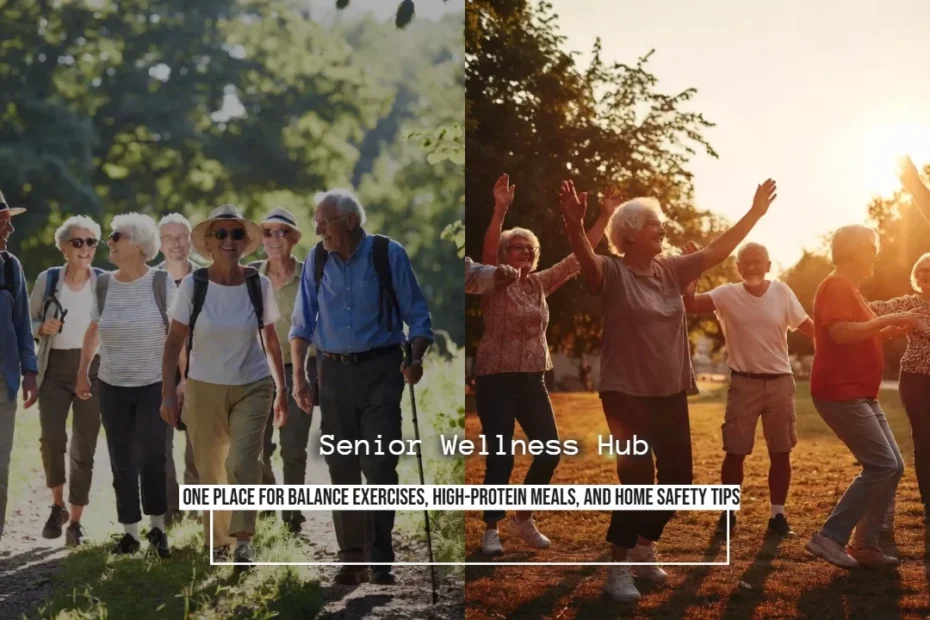
Welcome to the Senior Wellness Hub. If you’re over 60, you know that staying healthy looks different than it did at 40. This senior wellness hub provides practical, doctor-approved guides for healthy aging tips for seniors at home – whether you’re living independently or a caregiver helping a loved one.
Inside this senior wellness hub, you’ll find gentle exercises (no crunches or HIIT), high-protein meals that are soft and budget-friendly, home safety checklists, brain health tips, and caregiver resources. Always consult your doctor before starting any new health routine.
📑 Jump to Section
Why Wellness After 60 Is Different
Unlike younger adults, seniors need a wellness approach that respects physical limitations, chronic conditions, and budget constraints. That means:
- ✓ Low-impact exercises (not HIIT or running)
- ✓ Soft, easy-to-chew meals (not raw salads or steak)
- ✓ Home safety checklists (not abstract "environmental flow")
- ✓ Caregiver support resources (not generic advice)
Your 7-Day Senior Wellness Starter Plan
| Day | One Small Action |
|---|---|
| Monday | Morning stretch (5 min beside bed) |
| Tuesday | Add 1 egg to breakfast (protein boost) |
| Wednesday | Call one friend or family member |
| Thursday | Walk for 10 minutes after lunch |
| Friday | Remove one tripping hazard (loose rug) |
| Saturday | 5 minutes deep breathing before bed |
| Sunday | Write down one thing you're grateful for |
💡 The bottom line: Wellness after 60 is not about perfection. It's about small, consistent actions that help you stay independent, safe, and happy. Start with just one change this week.
© Praktikotips – Senior Wellness. Last updated April 2026.

💡 Why These 5 Dimensions Matter for Healthy Aging
Wellness after 60 isn't about doing everything at once. It's about focusing on the five areas that research shows have the biggest impact on independence, safety, and quality of life. Here's why each dimension matters – and how to start.
🚶♀️ Safe Fitness After 60
After age 60, muscle mass naturally declines by 3-8% per decade. This loss, called sarcopenia, is the primary reason seniors lose independence. The good news? Simple balance exercises for elderly can reduce fall risk by up to 40%. You don't need a gym membership or expensive equipment. A sturdy chair, 10 minutes a day, and exercises like heel-to-toe walks and single-leg stands are enough to build the stability you need to stay on your feet.
🧠 Brain Health & Memory Care
Cognitive decline is not inevitable. Research shows that lifestyle factors – including physical activity, stress reduction, and social connection – have a powerful effect on brain health. Dizziness and vertigo are often early warning signs of inner ear or circulation issues that can affect memory and balance. Addressing these underlying causes, practicing daily stress reduction (even 5 minutes of deep breathing), and staying socially engaged are three of the most effective ways to protect your memory as you age.
🤝 Staying Connected
Loneliness is as harmful to health as smoking 15 cigarettes a day. But staying connected doesn't require a packed social calendar. A single phone call to a friend or family member, a wave to a neighbor, or attending a senior center activity once a week can dramatically reduce isolation. For seniors with mobility challenges, technology like video calls (Zoom, FaceTime, WhatsApp) makes connection possible from home. The key is small, consistent actions – not big events.
✨ Purpose & Joy After 60
Having a reason to get up in the morning is linked to longer life, better mobility, and lower rates of depression. Purpose doesn't have to mean grand achievements. It can be tending a small garden, calling a grandchild weekly, volunteering at a local library for two hours a week, or even caring for a pet. The key is finding an activity that makes you feel needed and engaged. Start small – even 30 minutes of meaningful activity per week makes a measurable difference.
🏠 Home Safety & Aging in Place
Most falls happen in familiar places – at home. 5rem;">
💡 The bottom line: You don't need to work on all five dimensions at once. Pick one that feels most urgent or most interesting. Start there. Once that becomes a habit, add a second. Consistency – not intensity – is what creates lasting change after 60.
📋 Daily Senior Wellness Checklist
Print this page and check off each item daily.
🚶♀️ Fitness & Movement
🍽️ Nutrition & Hydration
🧠 Brain & Mood
🏠 Home Safety & Sleep
⭐ Real Stories: How Small Changes Made a Big Difference
These readers started with just one small change from this hub. Here's what happened.
"I started with just the heel-to-toe walk while waiting for my morning coffee. After three weeks, I noticed I wasn't grabbing the kitchen counter as often. Small change, but my confidence is completely different now."
— Margaret, 72
Started with: Balance exercises for elderly
"The home safety checklist took me 30 minutes. I removed two loose rugs and added night lights in the hallway. My daughter says she worries less now – and I haven't tripped once since."
— James, 68
Started with: Home safety checklist
"I never paid attention to protein. After reading the guide, I started adding one egg to breakfast and Greek yogurt as an afternoon snack. Three months later, my energy is better and my doctor noticed my muscle tone improved."
— Patricia, 74
Started with: High-protein meals for seniors
📝 Have your own success story? Share it in the comments – you might be featured here.
Use this senior wellness hub as your starting point. Bookmark it and return often as we add new guides. The key to healthy aging tips for seniors at home is consistency – not intensity. Pick one small change from any section above and try it this week. Your future self will thank you.
❓ Top 10 Questions About Senior Wellness
Short, evidence-based answers to the questions seniors and caregivers ask most often.
🥩 1. How much protein do I need after 60?
Seniors need 1.2 to 1.5 grams of protein per kilogram of body weight daily. For a 150-pound (68 kg) senior, that's 82-102 grams per day – about 25-35 grams per meal. Good sources: eggs, Greek yogurt, cottage cheese, canned tuna, chicken, and beans. Spread protein evenly across meals for best muscle maintenance.
🏠 2. What's the #1 cause of falls at home?
Loose rugs and poor lighting cause more falls than any other home hazards. Fix: Remove loose rugs entirely or secure edges with double-sided tape. Add night lights in hallways and bathrooms. Keep pathways clear of clutter, cords, and pet bowls. These fixes take under 30 minutes and cost less than $50.
🦴 3. Can I start exercising if I have arthritis?
Yes – and you should. Low-impact exercises like chair exercises, swimming, water aerobics, and tai chi are ideal for arthritic joints. They improve range of motion, reduce stiffness, and strengthen muscles around joints without causing pain. Always consult your doctor first, and start with 5-10 minutes daily.
👵 4. How do I know if my parent needs home safety modifications?
Look for these warning signs: hesitating or shuffling while walking, grabbing walls or furniture for support, recent falls (even "near misses"), avoiding stairs, or bruises on arms/legs. If you see any of these, do a room-by-room home safety checklist immediately.
🧩 5. What's the best brain game for seniors?
Learning something new – a language, musical instrument, or new skill – is more effective than passive puzzles. Active learning creates new neural pathways. That said, daily crossword puzzles, Sudoku, or memory games are still beneficial. The key is consistency: 15 minutes daily beats 2 hours once a week.
😴 6. How many hours of sleep do seniors really need?
Seniors need 7-8 hours of sleep per night – the same as younger adults. However, sleep becomes lighter and more fragmented with age. Improve sleep quality by: keeping a consistent bedtime, avoiding caffeine after 2 PM, getting morning sunlight, and limiting daytime naps to 20 minutes.
💧 7. How much water should I drink daily?
Seniors need 6-8 glasses (48-64 ounces) of fluid daily. Thirst sensation decreases with age, so don't wait until you feel thirsty. Spread water intake across the day. Good sources: water, herbal tea, broth-based soups, and water-rich fruits (watermelon, oranges).
🦷 8. Is it normal to feel dizzy when standing up?
Occasional dizziness when standing (called orthostatic hypotension) is common but not "normal." It can indicate dehydration, low blood pressure, or medication side effects. If it happens frequently, see your doctor. In the meantime, stand up slowly, stay hydrated, and review our complete guide to dizziness and vertigo.
🤝 9. How can I help a senior who lives alone and is lonely?
Start small: a daily 10-minute phone call, scheduling weekly video calls with grandchildren, or connecting them to a local senior center. Many communities offer free "friendly visitor" programs. Even caring for a pet or plant provides a sense of purpose and daily routine.
📅 10. How often should I do balance exercises?
Aim for balance exercises at least 3-4 times per week. Even 10 minutes daily makes a difference. The best results come from consistency, not intensity. Practice heel-to-toe walks while waiting for coffee, single-leg stands while brushing teeth, or seated leg lifts during TV commercials.
📌 Still have a question? Drop it in the comments below – we reply to every reader within 48 hours.
Always consult a qualified healthcare professional before starting any new exercise program, changing your diet, or making changes to your medication or treatment plan. If you experience sudden dizziness, chest pain, shortness of breath, or severe symptoms, seek immediate medical attention.
Senior Nutrition Tips
Get daily recipes, superfood guides, and nutrition strategies designed for energy, strength, and healthy aging.
Join Our Facebook Community
Connect with others, discover daily senior wellness tips, fitness ideas, and healthy recipes to stay active and independent.
Fitness & Healthy Aging
Explore low-impact workouts, balance exercises, and strength routines to improve mobility and independence.


