
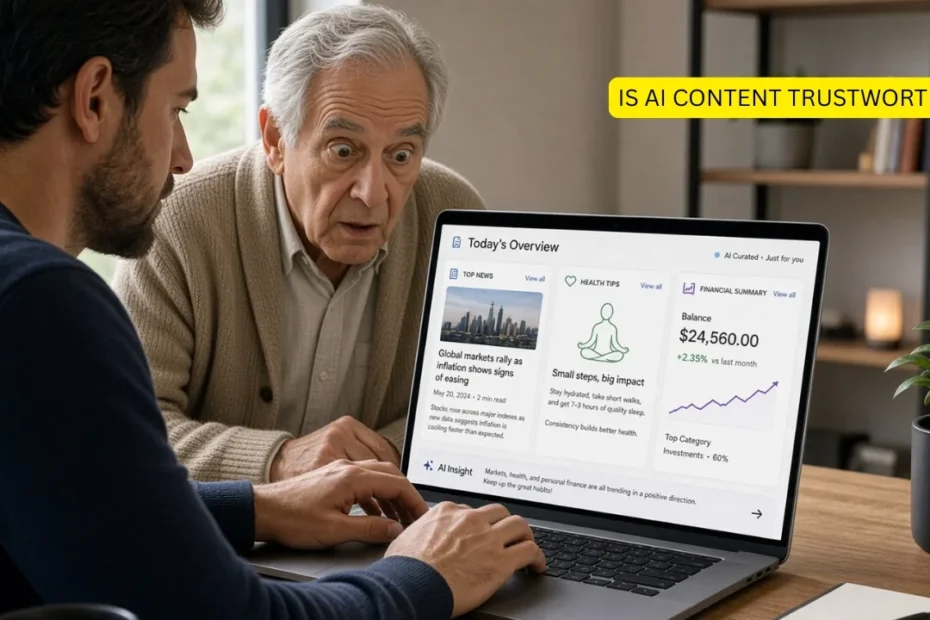
You’re scrolling through your favorite news site. You read an article about a health breakthrough. It sounds convincing. But did a human actually write it—or was it generated by an AI algorithm? And more importantly, can you trust it? You’re not alone in wondering. Content automation is changing the internet, and for those of us over 50, understanding how it works is no longer optional—it’s essential for staying informed, safe, and savvy online.
Table of Contents
ToggleAI and Content Automation: What People Over 50 Need to Know
practical guide · digital literacy
Artificial intelligence is transforming how news, health advice, and financial guidance are created. Understanding the difference between helpful automation and harmful clickbait allows you to navigate today’s web with complete confidence.
Clear, Accurate Information
Used responsibly, AI assists human editors by summarizing complex studies, translating technical research into accessible language, and ensuring high editorial standards. Look for named human authors, cited medical or legal sources, and clear editorial oversight.
Unverified & Sensational Content
Automated “content farms” generate thousands of low-quality articles designed solely for ad revenue. Watch out for sensationalized headlines, missing author credits, unverified health or financial claims, and repetitive, unnatural phrasing.
Content Automation in Plain English
no jargon · just clarity
You've probably heard the terms AI and Content Automation floating around lately. They sound technical and intimidating—like something only tech experts need to understand. But here's the truth: these tools are already shaping the information you read every day, and understanding them doesn't require a computer science degree.
🍞 Think of it like a bakery. A human baker still designs the recipes, chooses the ingredients, and ensures quality. But machines can knead the dough, shape the loaves, and bake them consistently. Content automation works the same way—AI tools handle repetitive tasks like drafting, formatting, and scheduling, while humans provide the ideas, oversight, and final polish.
So what exactly is content automation? In simple terms, it's using software and artificial intelligence to help create, organize, and share content—like articles, social media posts, or newsletters. The key word is help. It's not about replacing human writers; it's about making their work faster and more consistent.
How does this affect you, the reader? Understanding AI and Content Automation matters because it changes what you see online:
- More content, faster: You'll see more articles, updates, and posts than ever before.
- Personalized feeds: Algorithms learn what you click and show you more of the same—sometimes without you realizing it.
- Mixed quality: Some automated content is excellent; some is inaccurate or shallow. Knowing the difference is your new superpower.
- New questions: "Was this written by a human?" and "Is AI content trustworthy?" are questions worth asking every time you read something online.
The good news is that you don't have to fear this shift. You just need to understand it. Once you know how content automation works, you become a savvy reader—someone who can enjoy the benefits while recognizing the risks. And that's exactly what the rest of this guide will help you do.
📘 Educational only · Not technical advice | 🧠 Understanding is your best filter
How to Spot AI-Generated Content
a checklist for savvy readers
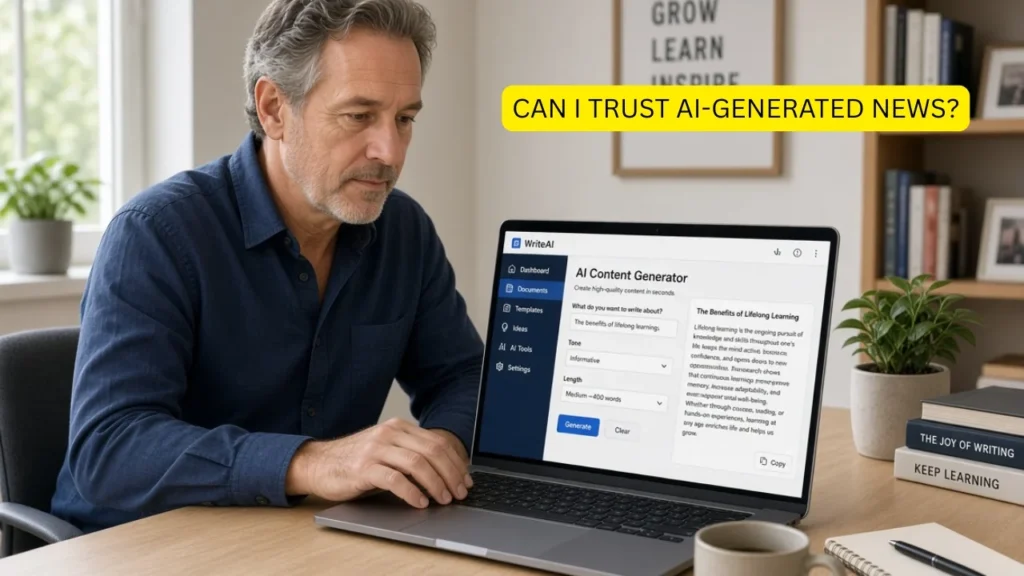
The question "Can I trust AI-generated news?" is one of the most important questions of our digital age. The short answer: sometimes yes, sometimes no. The longer answer requires a checklist. Here are the signs to look for—so you can decide for yourself whether what you're reading is reliable, whether AI content is trustworthy, and whether it deserves your time.
Look for Repetitive Phrasing
AI tools often repeat the same phrases or sentence structures. If you notice the same word or pattern appearing every few paragraphs—like "It's important to note" or "In today's fast-paced world"—that's a red flag. Human writers naturally vary their language; AI often doesn't.
Check for Lack of Specific Details
AI-generated content often stays vague. It might say "studies show" without naming the study, or "experts agree" without quoting an expert. Human-written journalism cites sources. If you can't find a named source or a link to the original research, be cautious.
Look for Factual Inconsistencies
AI can "hallucinate"—meaning it can confidently state things that are simply wrong. Cross-check key facts with a trusted source. If a date, name, or statistic seems off, it probably is. Trust your instincts.
Check the Author's Bio
Scroll to the bottom of the article. Is there an author name? A bio? A photo? Legitimate publications usually include this. If the author is "Admin" or "Staff" with no further information, that's a warning sign—especially when asking yourself, "Is AI content trustworthy?"
Look for Emotional Flatness
AI-generated content often lacks genuine emotion, humor, or personal voice. It reads like a textbook—competent but sterile. Human writing has rhythm, personality, and opinion. If the article feels like it could have been written by anyone, it probably was.
Check Publication Date & Updates
AI-generated articles are often published in bulk. If a site publishes dozens of articles per day with no clear editorial process, be skeptical. Quality publications have editorial standards. Look for "last updated" dates and clear corrections policies.
🧠 Remember: You Are the Filter: When you ask "Can I trust AI-generated news?", you're already being a savvy reader. The key isn't to reject all AI content—it's to read critically. Check sources. Look for author names. Trust your gut. And when in doubt, cross-reference with a source you already trust.
📘 Educational only · Not media criticism | 🔍 Critical reading is your superpower
Protecting Yourself Online: How to Verify What You Read
actionable tips · trust-building
The most powerful tool you have against misinformation isn't a piece of software—it's a habit. Learning to verify what you read takes just a few minutes per article, but it protects you from scams, false health claims, and manipulative content. Whether you're asking "Is AI content trustworthy?" or simply wondering if a headline is real, these tips will help you navigate the digital world with confidence. Understanding AI and Content Automation is the first step; these actions are the second.
Check the Source
Look at the website's "About Us" page. Who runs it? Is there a real editorial team? Do they have a physical address or contact information? Reputable sites are transparent. If you can't tell who's behind the content, be cautious.
Find the Author
Scroll to the top or bottom of the article. Is there an author name? A short bio? A photo? Legitimate publications usually include this. If the author is "Admin" or "Staff" with no details, that's a warning sign.
Cross-Reference with Trusted Sources
If an article makes a health claim, check it against a trusted site like the Mayo Clinic, the CDC, or the NIH. If it makes a financial claim, check the FTC or your bank's official website. One source is never enough.
Check the Date
Is the article recent? Has it been updated? Old information can be misleading—especially in health and technology. Look for a "last updated" date. If there isn't one, be skeptical.
Look for Sensationalism
Headlines that use words like "miracle," "secret," "doctors won't tell you," or "shocking" are designed to grab attention—not inform. Real journalism doesn't need to shout.
Ask: Who Benefits?
Every piece of content has a purpose. Is it to inform? To sell something? To change your opinion? Understanding the motive helps you evaluate the message. When in doubt, ask yourself: "Who profits from me believing this?"
🧠 The 60-Second Verification Check
- Source: Do I recognize this website? Is it reputable?
- Author: Is there a real name and bio?
- Date: Is this current or outdated?
- Evidence: Are sources cited? Can I verify them?
- Motive: Is this trying to sell me something or change my mind?
📘 Educational only · Not legal or medical advice | 🛡️ Verification is your best defense
📚 Related Wellness & Tech Guides
Expand your digital literacy and explore practical tech tools with our curated guides:
📢 share this article
✨ tap to share — help others crack the comment code


