
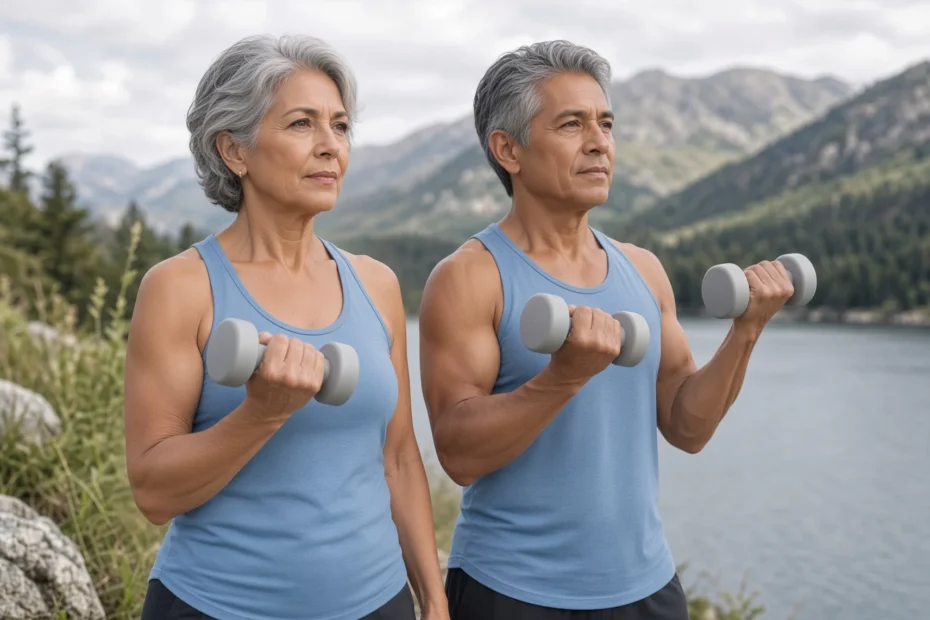
Counting calories after 60 ?. Let’s be honest: after a certain age, it can feel like your body is conspiring against you. You’re eating the same way you always have, yet the numbers on the scale keep creeping up. It’s a frustratingly common story, and it fuels the pervasive myth that weight gain after 60 is simply inevitable.
Table of Contents
ToggleBut here’s the truth that changes everything: it is not.
While your metabolism does change, it doesn’t mean you’re powerless. The key isn’t to eat less and exercise more like you did at 30—that approach often backfires. Instead, it’s about working with your aging body, not against it. This is where a strategic approach to counting calories after 60 becomes a powerful tool.
This isn’t about starvation or obsessive tracking. It’s about shifting from a mindset of restriction to one of nourishment. It’s an opportunity to focus on the quality of your calories, protect the muscle that keeps you strong, and fuel your body for the vibrant, active life you deserve. When done wisely, counting calories after 60 is not a chore; it’s an act of self-care that helps you reclaim your vitality and independence.
Why Calorie Counting is Different After 60
Metabolic Slowdown
Basal metabolic rate naturally declines with age, meaning your body burns fewer daily baseline calories. Standard calorie goals designed for younger adults can lead to unexpected weight plateaus or frustration.
Risk of Sarcopenia
Age-related muscle loss (sarcopenia) accelerates after 60. Aggressive calorie deficits can force the body to shed lean muscle instead of fat, further slowing resting metabolism and lowering physical strength.
Nutrient Density Over Restriction
Because overall calorie requirements decrease, every bite must carry higher nutritional value. Focus on quality protein, fiber, and micronutrients rather than strict food elimination to fuel energy and bone health.
Find your personal calorie sweet spot
Use our Calorie Calculator for Seniors – designed specifically for your age and activity level.
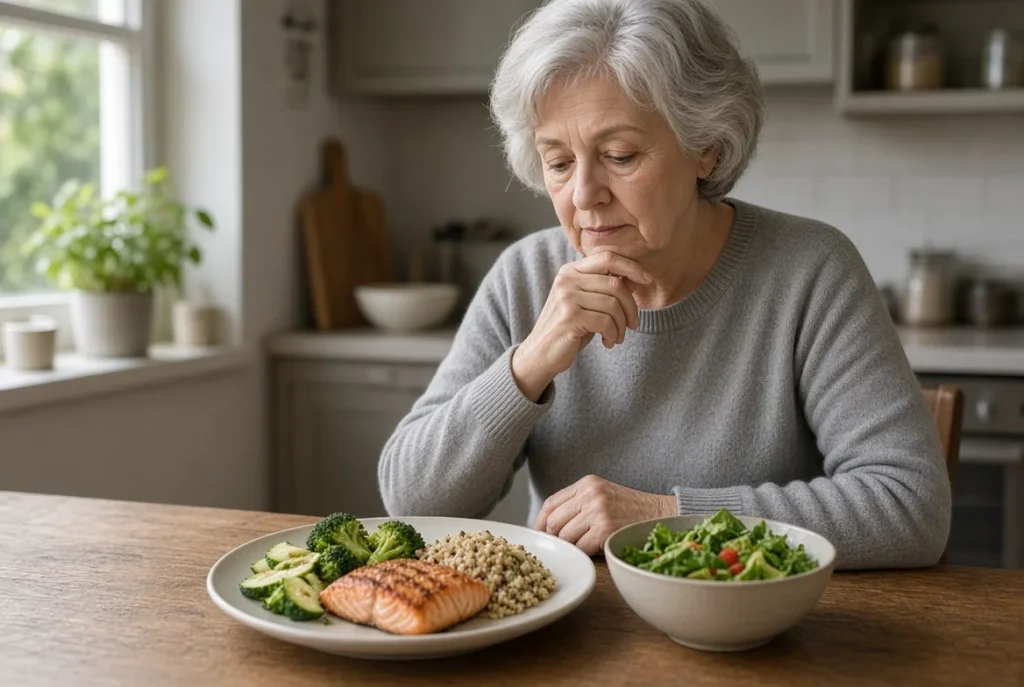
⚖️ How to Count Calories Safely (Without the Obsession)
Standard formulas often fail older adults. A successful plan must account for muscle preservation (Sarcopenia) and metabolic shifts.
Calculate Your "Safe Deficit"
Avoid aggressive cuts. Aim for a moderate daily deficit to protect your bones and muscle mass.
Min Limit: 1,200 calories/day (medical supervision required below this).
Prioritize Protein First
Every bite must work harder. Distribute your intake across breakfast, lunch, and dinner.
Target: 25g–30g of protein per meal.
Use "Adaptive" Digital Tools
Manual tracking is tedious. Real-time summation help seniors estimate portions twice as accurately as static labels.
Listen to Your Body
Track metrics beyond the scale. Pay attention to energy levels, hunger signals, and daily mobility.
Focus on Nutrient "Banking"
Prioritize Calcium (1,000–1,200 mg) and Vitamin D (800–1,000 IU) to protect bone density alongside high-fiber carbohydrates for digestion.
📊 Counting calories after 60 : The Strategic Balance
Understanding the benefits and the risks is key to safe implementation after 60.
Creates vital awareness to offset the natural 0.7% annual metabolic decline common in aging.
Helps identify hidden high-calorie items, leading to more nutrient-dense food choices.
Reduces joint pressure (knees/hips) by managing weight without sacrificing functional strength.
Paired with weights, it's the proven way to lose fat while keeping your resting metabolism high.
Deficits that are too aggressive can burn muscle instead of fat, leading to weakness and fall risks.
Lower calories make it harder to meet high daily requirements for Protein, B12, and Calcium.
Over-rigid tracking can create anxiety during family dinners or social outings.
Many generic apps underestimate needs by 200–400 calories because they don't account for high muscle mass in active seniors.

The Best Calorie Tracking Apps for Seniors in 2026
Finding an app that's simple, accurate, and tailored to your needs makes all the difference. Here are the top picks for ease of use, reliable data, and senior-friendly features.
Nutrola
Nutrola offers an ad-free, intuitive interface with AI photo recognition and a verified database. Its median calorie variance is only about 3% vs USDA data — great for reliable tracking [citation:1].
- AI photo logging — just snap a picture
- No ads, clean interface
- Fast, straightforward logging
- Mobile-only (no web version)
MyFitnessPal
The most widely used tracker with 14 million+ foods, barcode scanning, and broad fitness device integrations. It now includes AI Meal Scan and voice logging in Premium [citation:6][citation:12].
- Largest food database
- 50+ app & device integrations
- Web version available
- Ads in free tier; can feel cluttered
Cronometer
Tracks 82 micronutrients using verified scientific databases (NCCDB, USDA). Preferred by dietitians and health professionals for its research-grade accuracy [citation:8][citation:12].
- Full vitamin & mineral tracking
- Data from peer-reviewed sources
- Great for therapeutic diets
- Manual entry — no AI photo logging
Lose It!
Known for its user-friendly interface and the "Snap It" AI photo feature that estimates calories from meal photos. A straightforward option for building a consistent tracking habit [citation:12].
- Simple, clean design
- AI meal photo recognition
- Goal-setting tools
- Less accurate database than Nutrola
Looking for something even simpler?
The EatSmart app was designed specifically for seniors with extra-large fonts and a clean interface — just snap a photo for instant data [citation:2].
Also Worth a Look
YAZIO — Excellent for European foods & built-in meal plans [citation:6].
MacroFactor — AI adjusts calorie targets weekly based on your actual metabolism [citation:12].
💡 Frequently Asked Questions - Counting calories after 60
Expert guidance on managing nutrition and weight safely after 60.
Key Takeaways:
Metabolic Shifts: Counting calories after 60 is different from doing so in your 30s or 40s because your baseline metabolic rate naturally decreases.
Smart Tools: Utilizing calorie trackers for seniors takes the guesswork out of adjusting daily targets for age, activity level, and muscle protection.
Focus on Quality: Using calorie trackers for seniors highlights the importance of nutrient density and protein, ensuring counting calories after 60 supports health rather than causing muscle loss.
🔗 Complete Your Health Check
Daily calories are just one piece of the puzzle. Use these tools to get the full picture of your health journey.
📘 Deep Dive: Your Diabetes Nutrition Library
✉️ Get in Touch
Questions about exercises, nutrition, or home safety? Send us a message.


Calorie counting is about more than just numbers. It’s about understanding the energy our food provides and how our bodies use it. Weight loss calculators can help us personalize our journey.
Nutrition plays a key role in burning calories. Eating a balanced diet with plenty of protein can boost your metabolism and help you burn more calories, even at rest!
I completely agree! Counting calories can be a useful tool for understanding portion sizes and making healthier food choices. It’s not just about restriction, but about being mindful of what we consume.
Good post! We will be linking to this particularly great post on our site. Keep up the great writing