Skip to content

Senior Yoga for Flexibility and Core Strength | Safe Balance Exercises 60+

Flexibility and core strength

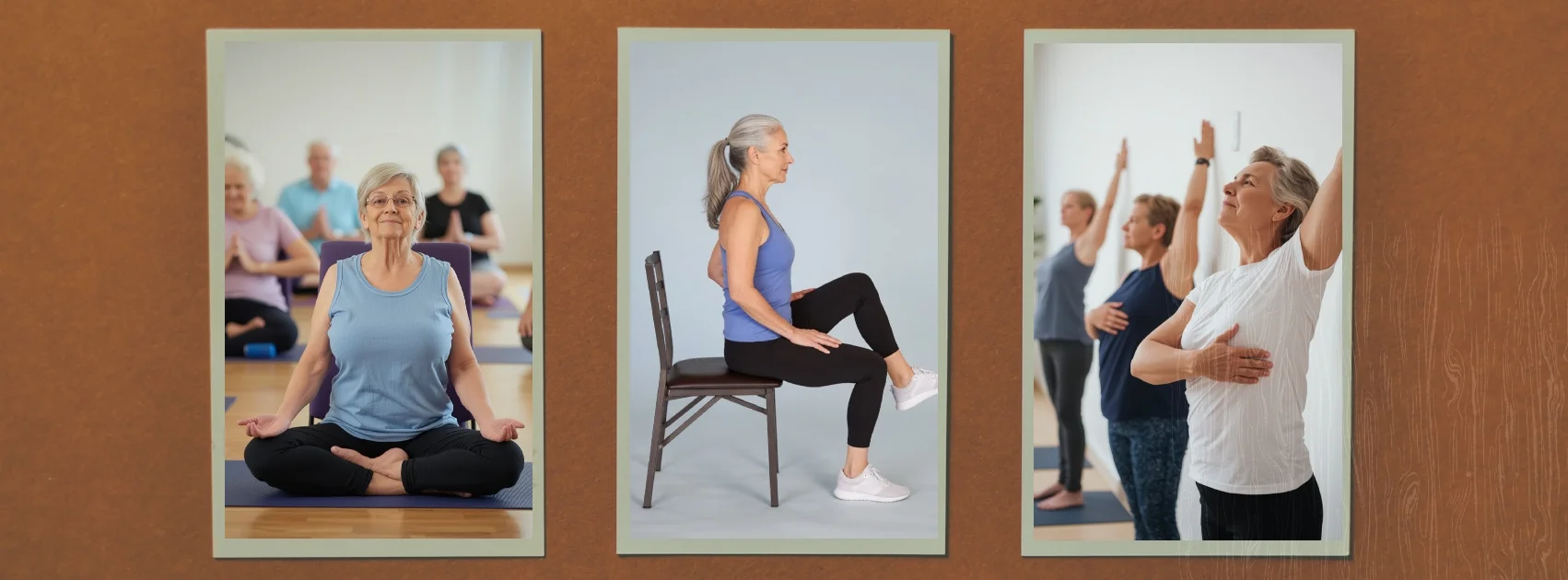
Flexibility and core strength are two of the most important foundations of any safe, effective yoga practice. Whether you’re exploring yoga poses for beginners, practicing yoga for core strength, looking for yoga positions for back pain, or using yoga for weight loss, both elements play a key role in helping the body move with ease and stability. Yoga is a holistic practice that adapts to every age, body type, and fitness level—and with the right approach, it can become a meaningful part of your everyday routine.

This guide explores why flexibility and core strength matter, how yoga uniquely improves both, and the best yoga poses to include in your beginner yoga routine.

Why Flexibility and Core Strength Matter After 60

As we age, two things happen naturally: muscles tighten, and core stabilizers weaken. This combination is the #1 cause of falls, back pain, and loss of independence in adults over 60.

But here’s the good news: gentle yoga can reverse both trends – safely and without expensive equipment.

This guide is written specifically for seniors, caregivers, and anyone 60+ who wants to:

  • ✅ Move without stiffness or joint pain

  • ✅ Protect the lower back while sitting, standing, or lifting

  • ✅ Improve balance to prevent dangerous falls

  • ✅ Stay independent and active for years to come

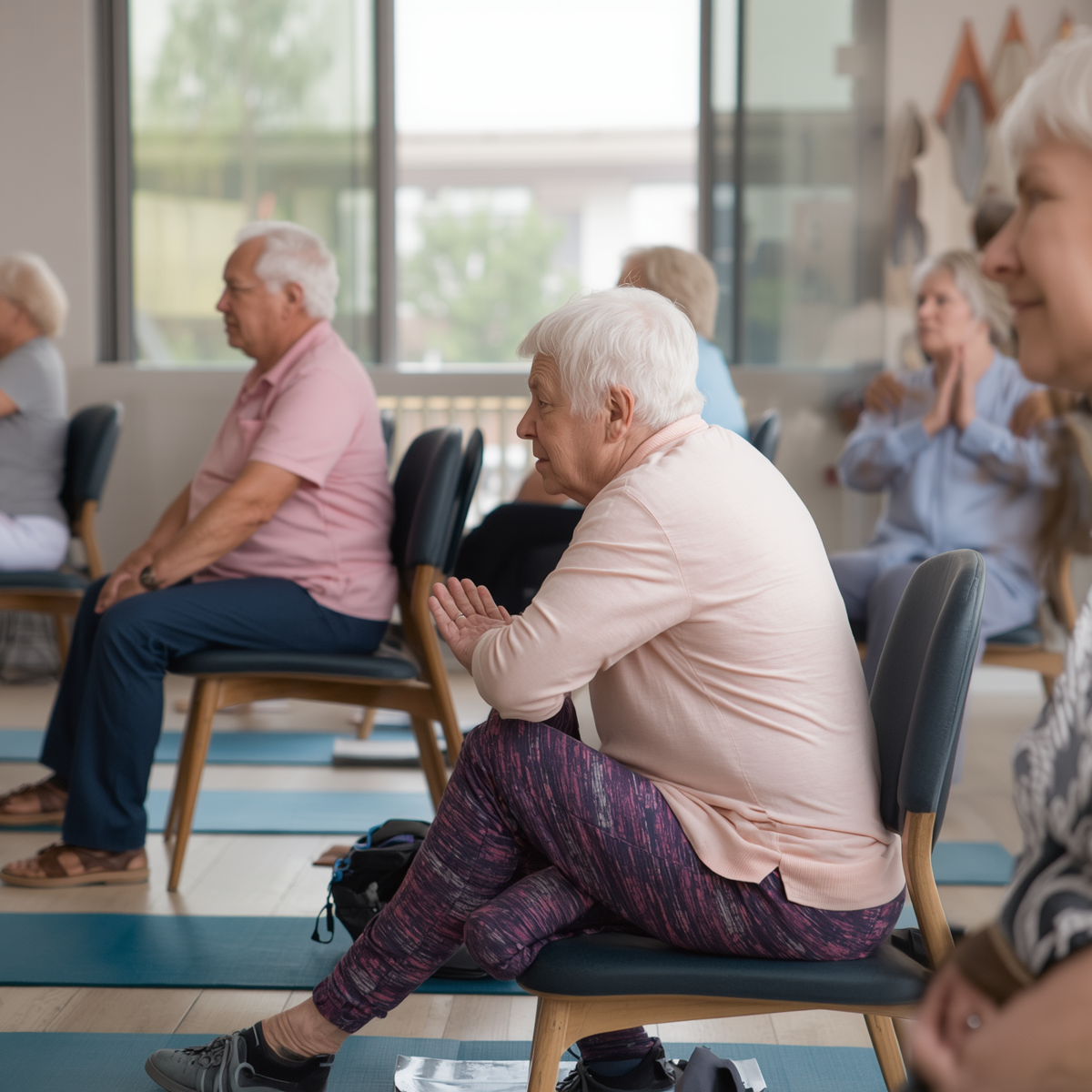
👵👴 No prior yoga experience needed. All poses can be done with a chair or wall for support.

Together, flexibility and core strength improve posture, stability, mobility, and overall functional fitness.

🔹 What Changes for Seniors? Flexibility + Core = Fall Prevention

For older adults, flexibility isn’t about touching your toes – it’s about reaching a high shelf, stepping over a curb, or getting out of a car without pain.

Core strength isn’t about six-pack abs – it’s about catching yourself before a fall, standing up from a low chair, and carrying groceries without back strain.

Together, they create balance – the single most important fitness skill after age 60.

Senior-Specific Benefits of Gentle Yoga

 
BenefitWhy It Matters for Seniors
Improved balanceReduces fall risk by 30-40% with consistent practice
Spinal mobilityEases arthritis-related back stiffness
Hip flexibilityMakes walking, climbing stairs, and dressing easier
Deep core activationProtects against herniated discs and chronic low back pain
Body awarenessHelps you sense when a movement is unsafe before injury happens

🧘 Safe Yoga for Senior Flexibility

Perform these poses slowly. Stop if you feel sharp pain. Stretching should feel like mild tension, not discomfort.

Seated Forward Fold

Focus: Hamstrings & Lower Back

  • Sit on the front half of a sturdy chair, feet flat.
  • Slowly hinge at your hips, sliding hands down your shins.
  • Hold for 15-30 seconds, breathing normally.
👉 Modification: Place a pillow on your lap to rest your hands.
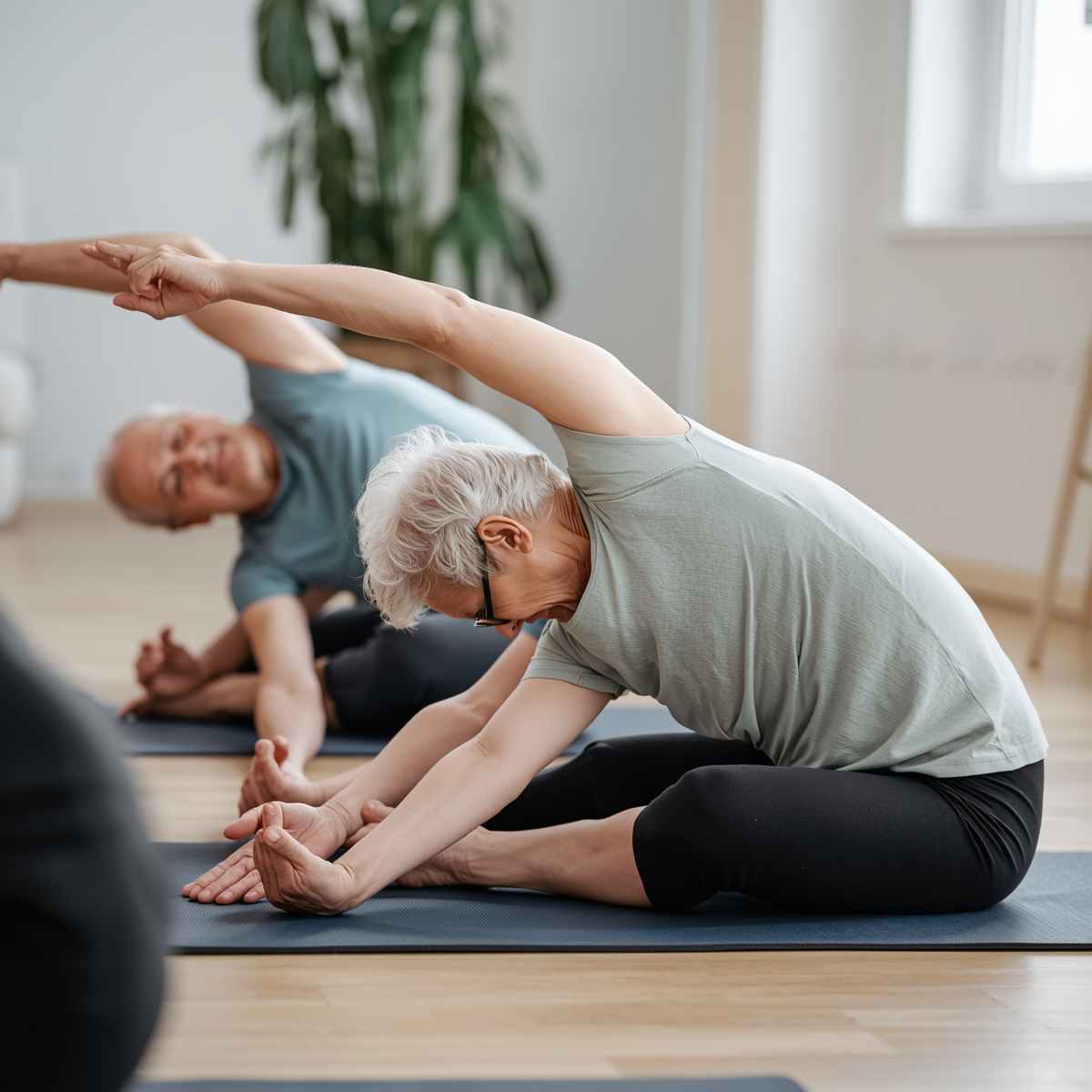
Senior adult performing a seated forward fold yoga pose

Seated Cat-Cow

Focus: Spine Mobility

  • Sit tall, hands on knees.
  • Inhale: Arch your back gently, look up slightly (Cow).
  • Exhale: Round your back, tuck your chin (Cat).
  • Repeat 5-8 times slowly.
Senior adult performing a seated Cat-Cow

Standing Hip Opener

Focus: Hip Flexors & Balance

  • Hold a wall or chair back with your left hand.
  • Lift your right knee toward your chest, then lower.
  • Repeat 8 times, then switch sides.
🎓 Advanced: Make small circles with your lifted knee.
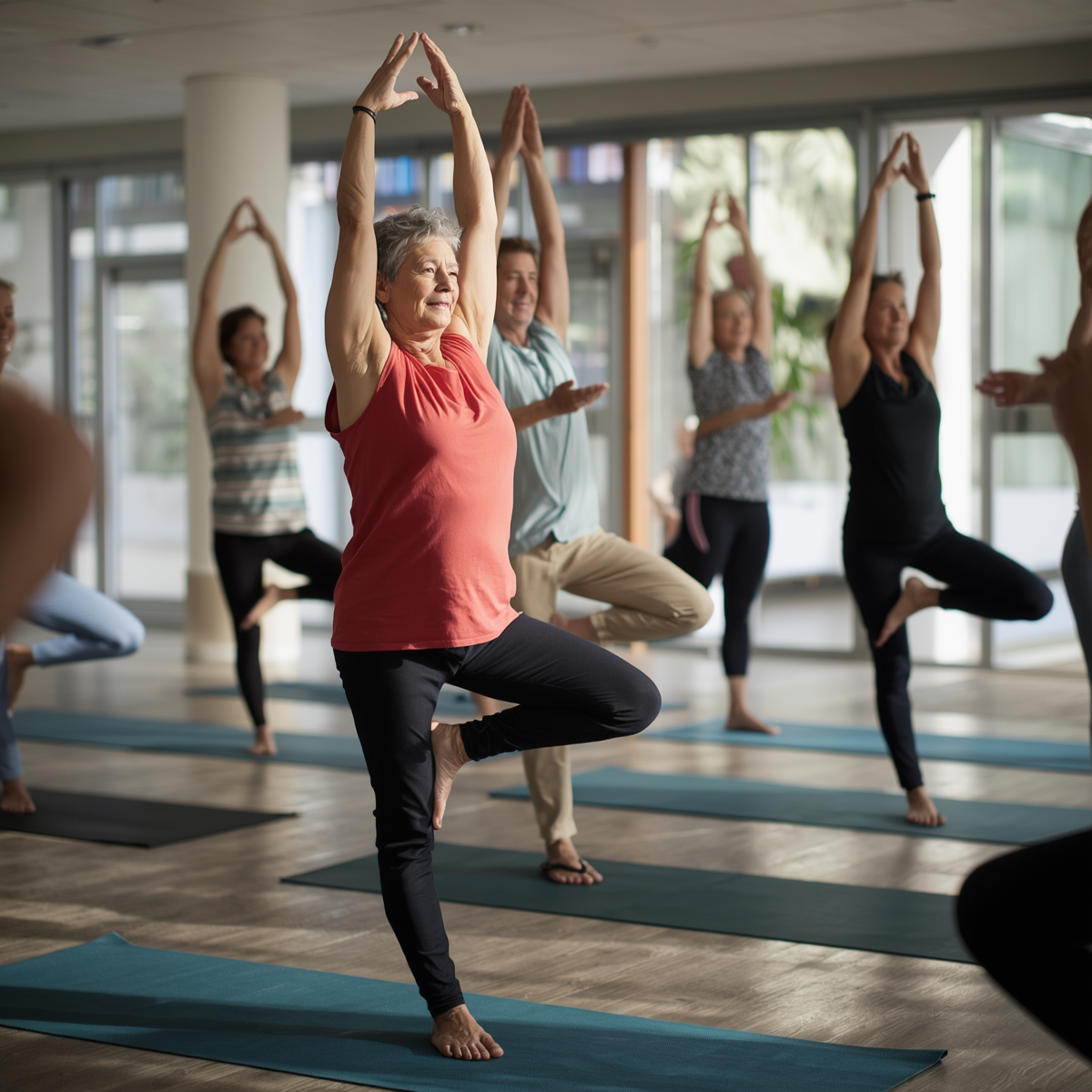
Senior adult performing a Standing Hip Opener yoga pose

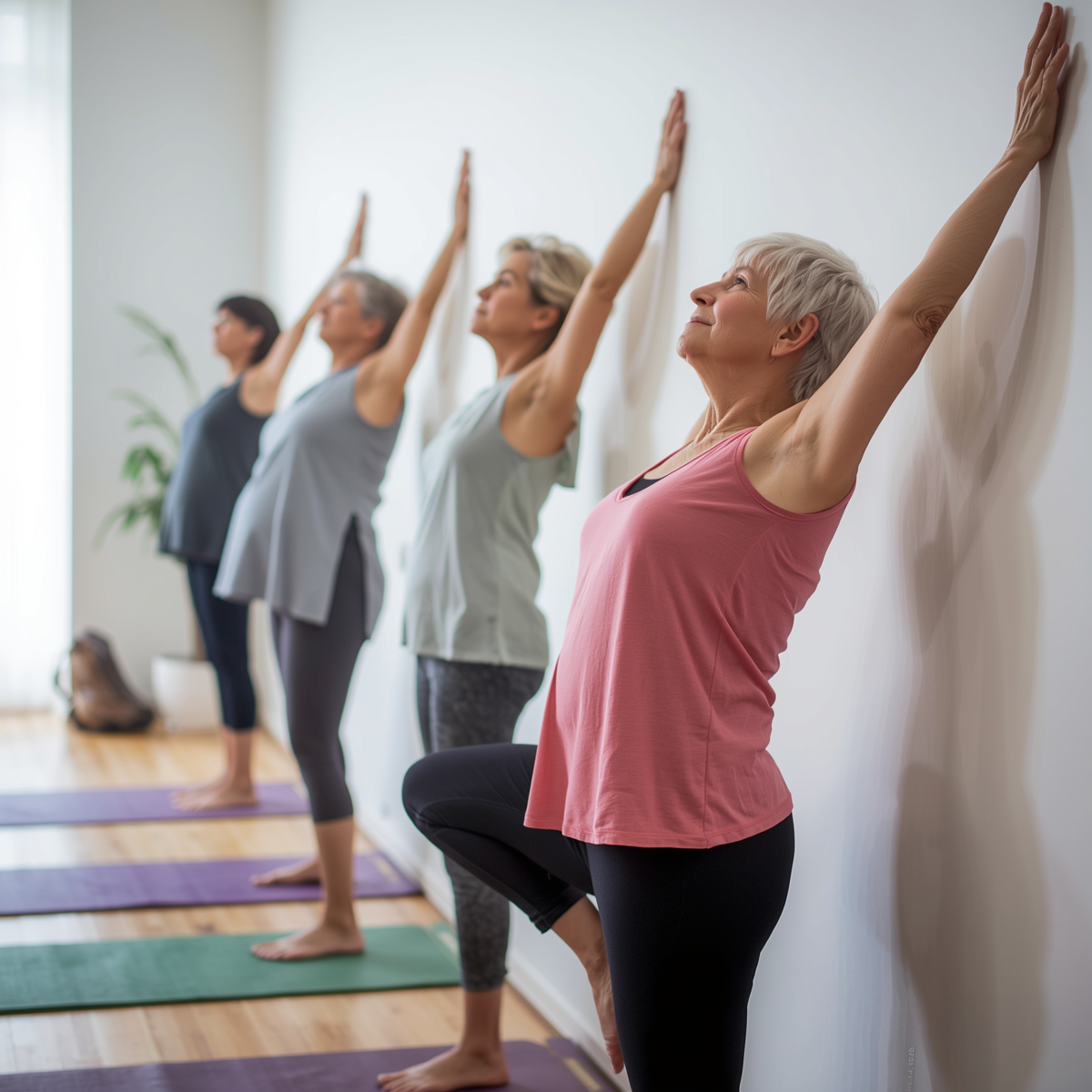
Wall Chest Stretch

Focus: Posture

  • Stand facing a wall; place your right forearm flat at shoulder height.
  • Gently turn your body left until you feel a stretch across your chest.
  • Hold 20 seconds, then switch sides.
Senior performing a wall-assisted chest stretch for better posture

🧱 Safe Senior Core Strengthening

A strong core is your primary defense against back pain and falls. These moves focus on safety and mobility.

🛑 Important Safety Rule: Never perform full sit-ups or crunches. They place excessive strain on your neck and lower back.

Seated Marching

Focus: Deep Core & Hip Flexors

  • Sit tall in a sturdy chair; engage your core muscles.
  • Slowly lift your right knee as high as comfortable.
  • Lower, then repeat with the left knee.
  • Continue alternating for 30-60 seconds.
🏆 Challenge: Hold for 2 seconds at the top of each march.
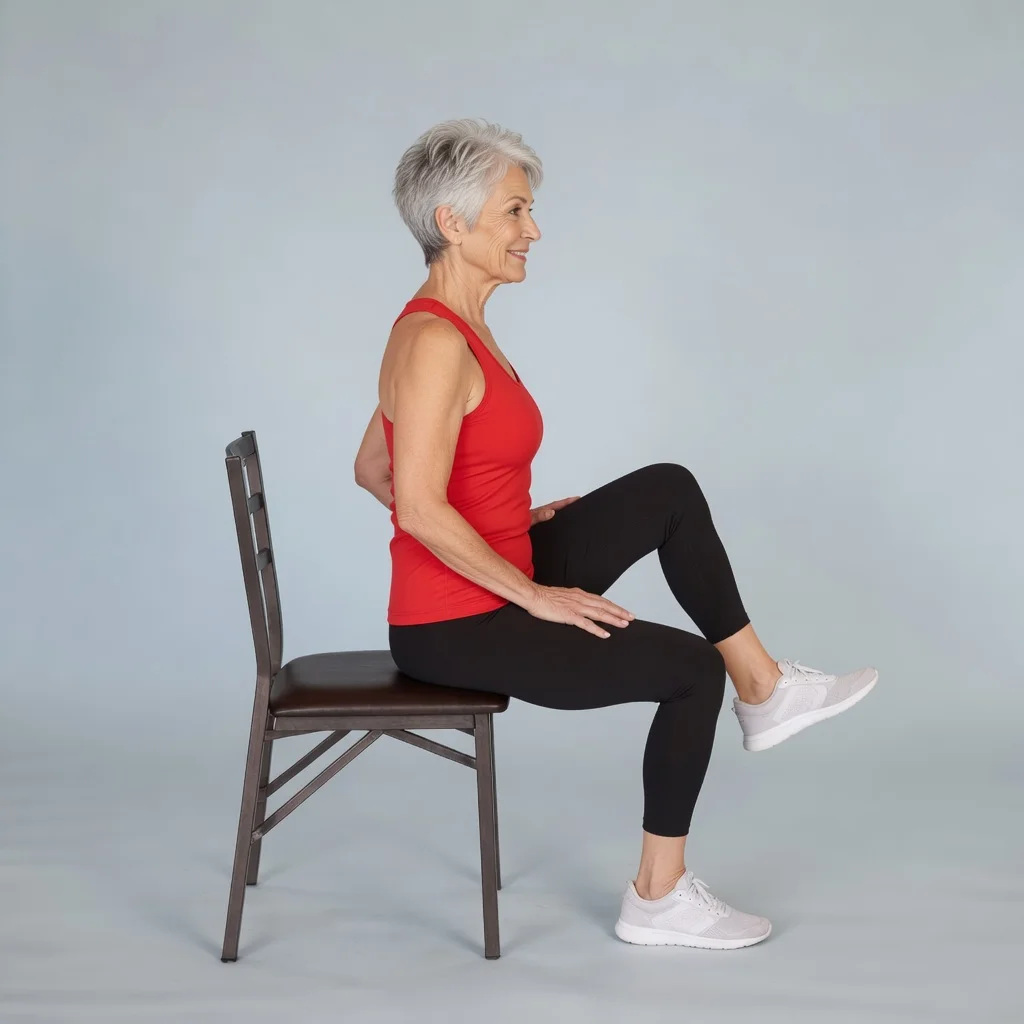
Senior performing a seated marching

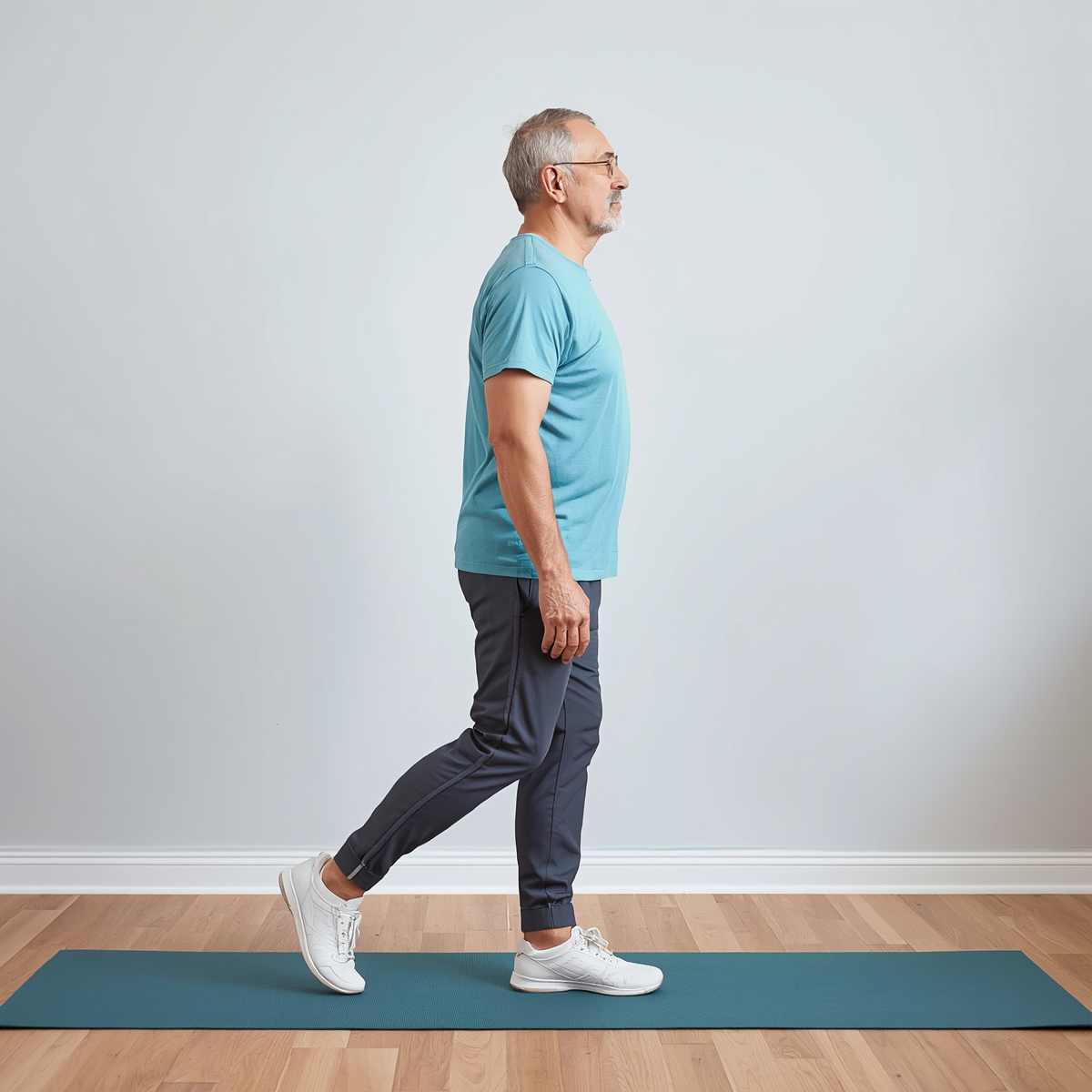
Heel-to-Toe Walk

Focus: Balance & Dynamic Core

  • Stand with a wall or counter within arm's reach.
  • Place your right heel directly in front of your left toes.
  • Step forward, left heel in front of right toes.
  • Walk 10 steps, turn, and repeat.
Senior adult performing a Heel to oe Walk yoga pose

Seated Tummy Tuck

Focus: Transverse Abdominis (Inner Core)

  • Sit upright, hands on your lower belly.
  • Gently pull your belly button inward and upward.
  • Hold for 5 seconds, relax. Repeat 10 times.
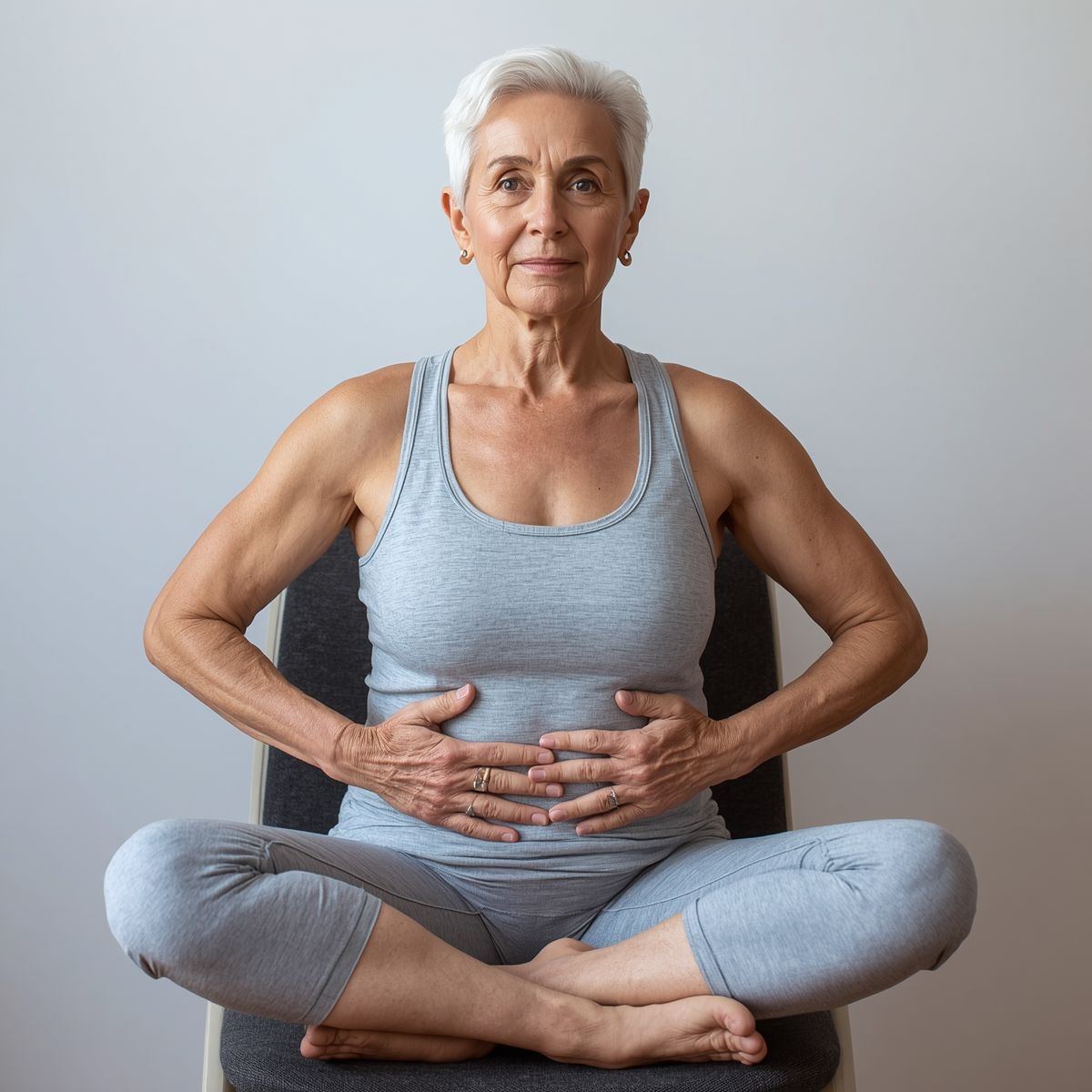
Senior adult performing a seated  Tummy Tuck yoga pose

Wall Plank

Focus: Advanced Core Stability

  • Stand at arm's length; place palms flat at shoulder height.
  • Walk your feet back until your body is at a slight angle.
  • Keep your back straight, engage your core.
  • Hold 10-20 seconds. Perform only if pain-free.
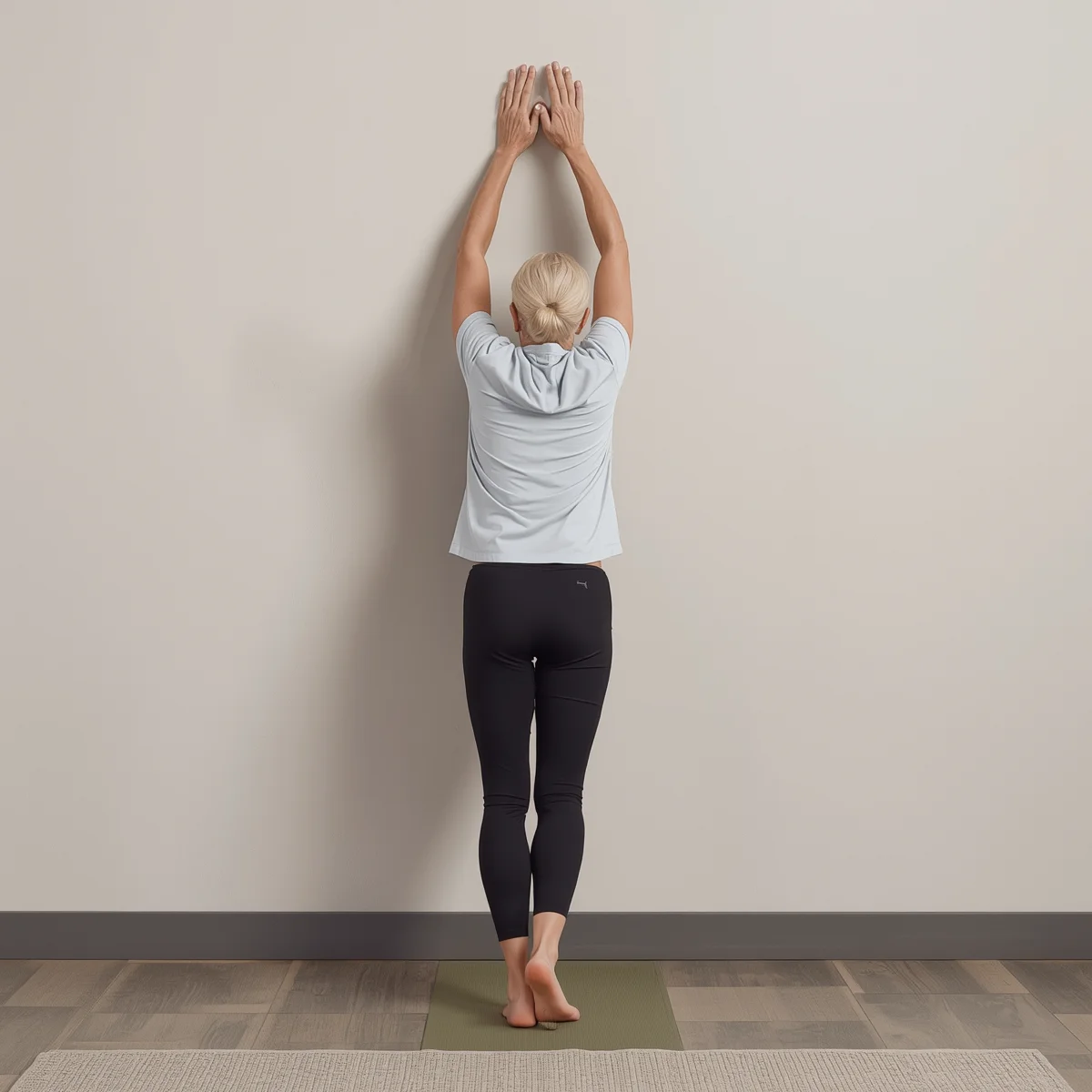
Senior adult performing a Wall Plank yoga pose

🔹 Why Yoga Beats Traditional Exercise for Seniors

Traditional Exercise
Gentle Yoga
High-Impact Risk
Often involves jumping or running, which strains aging joints.
Zero Impact
Gentle on the joints; keeps your skeletal system safe and supported.
Isolated Focus
Usually isolates one muscle group at a time.
Simultaneous Benefits
Strengthens and stretches multiple muscle groups at once.
Equipment Dependent
Often requires heavy gym weights or bulky machines.
Total Accessibility
Uses only a chair, a wall, or your own body weight.
Purely Physical
Lacks breath integration and mental focus.
Holistic Wellness
Integrated breathwork reduces blood pressure and anxiety.
Injury Risk
Higher risk of strain for seniors without a trainer.
Safe & Adaptive
Low risk when using proper chair/wall modifications.

🔹 Tips for Beginners

Flexibility & Core Strength: The Yoga Poses Every Beginner Needs!

Frequently Asked Questions (Seniors)

Can I do yoga if I have osteoporosis or arthritis?

Yes—with modifications. Avoid deep spinal twisting or heavy weight-bearing on wrists. Focus on seated poses and standing moves with wall support. Always consult your doctor before starting.

How long until I see improvement in balance?

Most seniors notice better stability within 3-4 weeks of practicing 3-4 times per week. Falls become significantly less frequent after 8-12 weeks.

I can’t get on the floor—can I still benefit?

Absolutely. All poses recommended here are either seated or standing. You can gain the full metabolic and strength benefits without ever having to get on the floor.

What if I have a knee or hip replacement?

Avoid deep squats or lunges. Moves like Seated Marching and Tummy Tucks are excellent and safe. Always follow your surgeon’s specific movement restrictions.

P

Senior Nutrition Tips

Get daily recipes, superfood guides, and dietary strategies tailored specifically for those over 60.

Follow the Board →
P

Fitness & Healthy Aging

Discover low-impact workouts, mobility drills, and strength training tips to stay active and independent.

Join the Community →
Please follow and like us:

2 thoughts on “Senior Yoga for Flexibility and Core Strength | Safe Balance Exercises 60+”

  1. I simply could not go away your web site prior to suggesting that I really enjoyed the standard info a person supply on your guests Is going to be back incessantly to investigate crosscheck new posts

  2. Its like you read my mind You appear to know a lot about this like you wrote the book in it or something I think that you could do with some pics to drive the message home a little bit but instead of that this is fantastic blog An excellent read I will certainly be back

Leave a Reply

Your email address will not be published. Required fields are marked *