
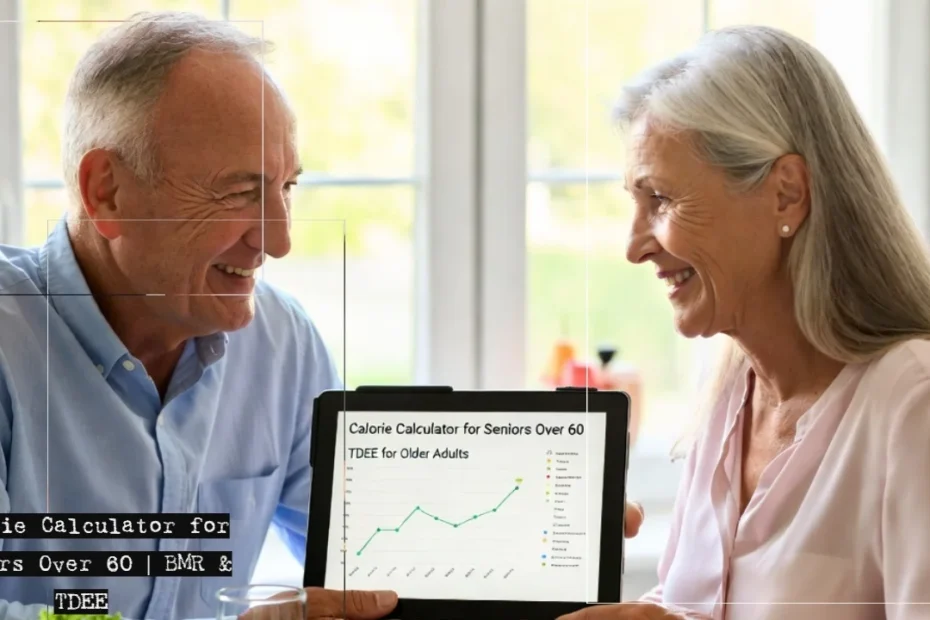
Calories Calculator: Calculating your daily calorie needs is essential to achieving your health and fitness goals. A calorie calculator is a valuable tool that can help you determine the right amount of energy you need to maintain or lose weight. In this post, we will discuss the importance of using a calorie calculator, how it works, and how to use it effectively.
Table of Contents
Toggle
🌿 Wellness & Educational Purpose Only
This site is for wellness and educational purposes only. It is not a medical website and
does not provide medical advice. Always consult your doctor before making changes to your diet, especially if you take medications for diabetes, blood pressure, or heart conditions.
🧮 Calorie Calculator for Seniors Over 60
How metabolism, muscle mass, and medications change calorie needs after 60
Most calorie calculators are designed for younger adults. Seniors have different needs – slower metabolism, natural muscle loss, medication interactions, and reduced thirst sensation. This guide and calculator are tailored specifically for adults over 60.
1. Muscle loss (sarcopenia): Seniors need 1.0-1.2g of protein per kg of body weight – not just fewer calories. Without enough protein, calorie cutting burns muscle, not fat.
2. Slower metabolism: Calorie needs decrease by 0.7% per year after 60. A 75-year-old needs about 10% fewer calories than a 60-year-old of the same weight.
3. Medication interactions: Weight loss can affect diabetes and blood pressure medications. Always inform your doctor before starting a calorie-restricted diet.
4. Reduced thirst sensation: Seniors often don't feel thirsty until already dehydrated. When cutting calories, drink water on a schedule – don't wait for thirst.
5. Different healthy BMI range: For seniors, a BMI of 23-27 is often healthier than the standard 18.5-24.9 range, preserving muscle for fall protection.
📊 BMR & TDEE Calculator for Seniors
Find your personalized calorie needs – designed for adults over 60
Subtract 250-500 calories from TDEE
1,200 (women) or 1,500 (men) calories
1.0-1.2g per kg of body weight daily
Drink 6-8 glasses daily – don't wait for thirst
🥩 Protein First: Why Seniors Need More
📊 How Much Protein Do You Need?
Formula: 1.0–1.2 grams of protein per kg of body weight
Example for 150 lb (68 kg) senior: 68–82 grams of protein daily
Spread across 3 meals: 23-27g per meal
🍗 Best Protein Sources for Seniors
- 🐟 Eggs, Greek yogurt, cottage cheese
- 🐟 Canned salmon or sardines
- 🐔 Chicken, turkey, lean beef
- 🌱 Tofu, lentils, beans
💊 Medication & Hydration: Two Critical Warnings
When you eat fewer calories:
• Blood sugar levels drop – diabetes medications may need adjustment
• Blood pressure often decreases – BP meds may need dose reduction
• Diuretics ("water pills") increase dehydration risk
✅ Always inform your doctor before starting a calorie-restricted diet.
• Thirst sensation decreases with age – you may not feel thirsty until already dehydrated
• When cutting calories, you may drink less (less food = less mealtime beverages)
• Dehydration can cause confusion, falls, and kidney stress
✅ Set a water schedule: 1 glass upon waking, 1 with each meal, 1 before bed.
📏 BMI Matters Too – But Differently for Seniors
While calorie counting helps with weight management, BMI for seniors over 60 is different than standard charts. A healthy BMI for seniors over 60 is typically 23–27, not 18.5–24.9. This higher range helps protect against falls and fractures by preserving muscle and bone density.
📌 What is a good BMI for a 70 year old? Most experts recommend 23-27, paired with a waist circumference under 35 inches for women and 40 inches for men.
✅ Calorie Counting After 60 - Why & How
Using a calorie calculator for seniors over 60 is practical, but only when you account for aging metabolism, muscle preservation, and medication safety. The calculator above gives you your BMR and TDEE – but remember:
- 🥩 Protein first: 1.0-1.2g per kg of body weight daily
- 💊 Talk to your doctor before changing your diet if you take medications
- 💧 Hydrate on a schedule – don't wait for thirst
- 📏 Healthy BMI for seniors is 23-27, not 18.5-24.9
- 🐢 Slow and steady: Aim for 0.5-1 lb loss per week – faster loss burns muscle
⚖️ Calculator vs. Counting: Which Is Right for You?
Both tools work together – here's how seniors can use them effectively
• A calorie calculator gives you a safe target (so you don't under-eat and lose muscle)
• Counting calories (even for just 5-7 days) reveals hidden calories in portion sizes, sauces, and snacks
💡 Senior tip: You don't need to count forever. Try counting for one week to learn portion sizes, then use the calculator to maintain.
📋 Detailed Comparison: How Each Method Works
Click on each category below to expand and see how calculators and manual tracking compare.
⚡ Calories Calculator
📝 Counting Calories
⚡ Calories Calculator
📝 Counting Calories
⚡ Calories Calculator
📝 Counting Calories
⚡ Calories Calculator
📝 Counting Calories
📊 Quick Comparison: At a Glance
✅ Summary: Calorie Calculator for Seniors Over 60
Understanding your daily calorie needs is essential for healthy aging, but standard calculators often miss what makes calorie calculator for seniors over 60 different. Metabolism slows by about 0.7% each year after 60, muscle mass naturally decreases, and medication interactions are common. That's why a dedicated calorie calculator for seniors over 60 is so valuable – it helps you find a safe target that won't accelerate muscle loss.
A TDEE calculator for older adults goes one step further. TDEE (Total Daily Energy Expenditure) accounts for your activity level, giving you a realistic picture of how many calories you burn each day. Using a TDEE calculator for older adults helps you avoid two common mistakes: eating too little (which burns muscle, not fat) or eating too much (which leads to weight gain).
The calculator above gives you both your BMR (calories at complete rest) and your TDEE (calories with daily activity). For safe weight loss, subtract 250-500 calories from your TDEE – but never go below 1,200 calories for women or 1,500 for men without doctor supervision.
Remember to prioritize protein (1.0-1.2g per kg of body weight), stay hydrated on a schedule (seniors have reduced thirst), and always consult your doctor before changing your diet, especially if you take diabetes or blood pressure medications. A calorie calculator for seniors over 60 is a powerful starting point – pair it with protein tracking and gentle movement for the best results.
Ready to Find Your Calorie Target?
Use the calculator above to get your personalized BMR and TDEE. It takes less than 60 seconds!
📧 Get your results sent to your inbox – plus a free printable tracker!
🔒 No spam. Unsubscribe anytime. We respect your privacy.
👥 Know another senior who would find this helpful? Share it!


