
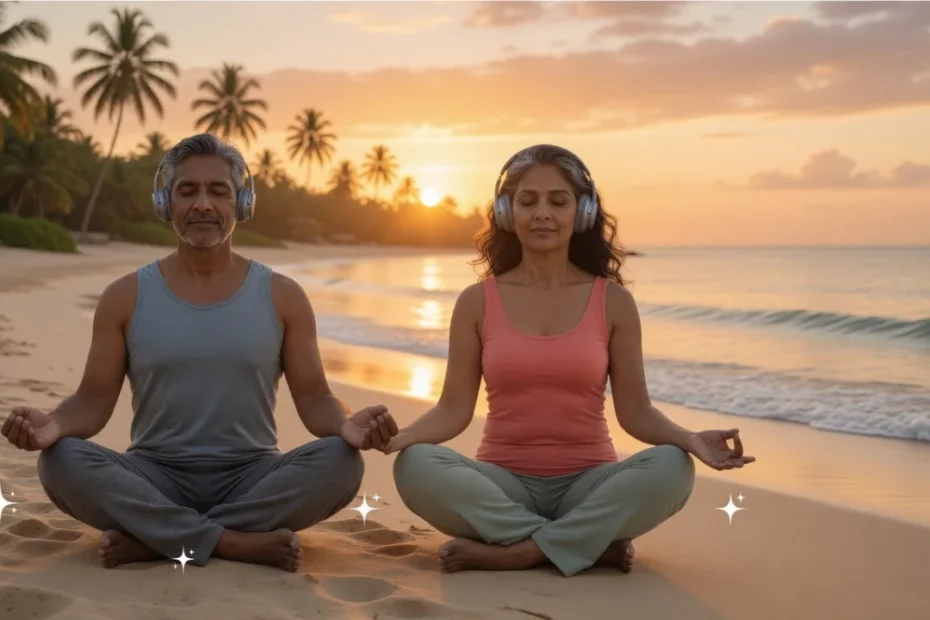
Meditation for seniors with anxiety is a safe, natural, and effective way to calm the mind – especially when combined with soothing music. Unlike medication, there are no side effects. This guide shows you how to reduce anxiety naturally after 60 using simple techniques, such as meditation with music, that work even if you have mobility issues, hearing loss, or cognitive decline
Table of Contents
ToggleHowever, music can also cause harm to some individuals. If you suffer from depression, anxiety, or other mental health conditions, listening to loud music might worsen your condition. That’s why it’s essential to listen to music in moderation.
Meditation has been practiced throughout history, but scientific research has only begun to understand its value. Although meditation has historically been thought of as spiritual, it is now becoming increasingly understood for its positive effects on mental and physical health. Meditation is easier than it seems, and you can practice anywhere, anytime.
👴 Meditation & Music for Seniors: Adaptations That Work
- 🦻 Hearing Loss: Use bone conduction headphones or play music through speakers at a comfortable volume. Focus on低频 (low-frequency) sounds like cello, drum, or nature sounds (ocean, rain) which are easier to hear.
- 🪑 Mobility Issues (wheelchair, bed): You can meditate sitting in a chair, lying down, or even in bed. No cross-legged position required. Use a supportive pillow for neck comfort.
- 🧠 Cognitive Decline (early dementia): Keep sessions short (3-5 minutes). Use familiar music from their younger years (big band, classical, folk). Repeat the same track daily for familiarity.
- 💊 Medication Side Effects: Some blood pressure or diabetes medications can cause dizziness when sitting or standing still. Meditate in a fully supported position (recliner or bed).
- 👁️ Vision Impairment: Guided meditations (voice only) are excellent. Many free apps and YouTube channels offer audio-only sessions.
🧘 How Meditation and Music Help Reduce Anxiety and Stress Naturally
In a world that rarely pauses, anxiety has become a common experience for many. Whether it's from work, social pressure, or personal struggles, stress creeps in and impacts not just our minds but also our bodies and relationships. Fortunately, two of the most accessible and natural remedies—meditation and music—offer powerful tools to manage stress and anxiety effectively.
For seniors, finding easy meditation for beginners over 60 is simpler than you might think. You don't need to sit cross-legged on the floor or clear your mind completely. Let’s explore how meditation for seniors with anxiety, paired with the healing power of music, can become a transformative part of your daily wellness routine.
🧠 Understanding Anxiety and How It Affects You
Anxiety isn't just feeling nervous. It's often a deep-rooted physiological and emotional response to perceived threats—real or imagined. Left unchecked, chronic anxiety can lead to:
- 😴 Insomnia
- 🎢 Mood swings
- 📚 Difficulty concentrating
- ❤️ Elevated heart rate
- 💪 Muscle tension
Traditional approaches like therapy and medication are beneficial, but meditation for seniors with anxiety offers a complementary, holistic path that you can practice anytime, anywhere. Starting with easy meditation for beginners over 60 can be as simple as listening to a calming song for 3 minutes each morning.
🧘 Benefits of Meditation for Stress and Anxiety
When practiced consistently, meditation offers these proven benefits for seniors:
Improved Emotional Regulation
You react less and respond more. Meditation helps you pause before reacting to stressful situations.
Greater Self-Awareness
Learn to notice your thoughts without judgment. Recognize anxiety triggers before they escalate.
Reduced Physical Symptoms
Headaches, muscle tension, and fatigue often lessen with regular meditation practice.
Improved Sleep Quality
Nighttime anxiety becomes more manageable. Fall asleep faster and stay asleep longer.
Increased Resilience
Build inner tools to cope with future stressors. Life's challenges feel more manageable.
Better Concentration & Memory
Daily meditation can improve your ability to focus and remember. Clear your mind for a mental clarity boost.
Music Therapy - Meditation with Music
How often do you listen to music while relaxing or before bed? If you don't already, you might love starting a simple practice of listening to calming tunes. Music has always been a great way to get into a relaxed state of mind.
The benefits of music go beyond relaxation. Research shows that listening to music can improve cognitive performance, increase productivity , reduce stress levels, and even boost creativity.
If you don't meditate yet, consider starting today. Meditation has been practiced for thousands of years, but its effect on human bodies and behaviors is just beginning to be explored.
Studies show that meditation helps improve brain function, concentration, memory, creativity, and leaves you feeling rejuvenated. For older adults, practicing easy meditation for beginners over 60 can be a gentle way to reduce worry and improve sleep. Combining this with meditation for seniors with anxiety techniques creates a powerful, natural tool for emotional balance.
🎵 Can Music Therapy Alleviate Stress and Promote Relaxation?
Music therapy is an evidence-based approach to reducing stress and promoting relaxation . Here's how it helps seniors:
Soothing music lowers stress hormones (cortisol, adrenaline). It calms heart rate and blood pressure.
Music helps express and process feelings. It builds emotional resilience and coping skills.
Shifts focus away from worries. Provides a healthy outlet for stress and anxiety.
Deep listening to music keeps you in the present moment. Reduces racing thoughts.
Group music activities reduce isolation and loneliness. Builds a sense of community.
Calms the mind for faster sleep. Reduces anxiety and nighttime worry.
🌙 Simple Technique to Fall Asleep Fast
- Sit up straight with your back against a wall or chair
- Close your eyes and breathe deeply through your nose
- Focus on your breathing until you feel calm and relaxed
- Slowly open your eyes when ready
In summary: Music therapy offers a holistic approach to stress reduction by addressing physical, emotional, and social well-being. Through active engagement with music, seniors can access coping strategies, emotional regulation techniques, and mindfulness practices that promote relaxation and improve quality of life.
📋 How to Get Started with Meditation and Music
Choose Your Space
Find a quiet, comfortable place where you feel safe and won't be disturbed.
Pick the Right Music
Choose gentle rhythms, nature sounds, or healing frequencies. Free meditation music is available on YouTube or Spotify.
Use Guided Meditations
If you're new, guided meditations are an excellent way to start. Look for sessions focused on anxiety, stress relief, or sleep.
Set a Timer
Start with just 3-5 minutes. You don't need to meditate for 30 minutes to see benefits.
Be Consistent
Commit to the same time each day. Morning or before bed works best for most seniors.
Summary – Meditation with Music:
Meditation for seniors with anxiety doesn’t require sitting cross-legged or clearing your mind completely. Start with just 3 minutes of calming music for elderly listeners – classical, nature sounds, or familiar tunes from your younger years. Download our free 7-Day Meditation & Music Log to track your progress. Remember: consistency matters more than duration. A few minutes daily can reduce stress, improve sleep, and boost mood.
📧 Option 1
Get it in your inbox
🔒 We respect your privacy. Unsubscribe anytime.
Senior Nutrition Tips
Get daily recipes, superfood guides, and nutrition strategies designed for energy, strength, and healthy aging.
Join Our Facebook Community
Connect with others, discover daily senior wellness tips, fitness ideas, and healthy recipes to stay active and independent.
Fitness & Healthy Aging
Explore low-impact workouts, balance exercises, and strength routines to improve mobility and independence.


Remember the importance of quality sleep. Lack of sleep can affect your weight loss efforts
The profound impact of meditation with music as a powerful tool for reducing anxiety. This practice combines the therapeutic qualities of music with the calming effects of meditation, offering a transformative experience
Whether to practice meditation with or without music depends on personal preference and the specific goals of your meditation practice
These tips are a great reminder to prioritize self-care and mental well-being. Meditation and deep breathing exercises have truly made a difference in my life. Thanks for sharing this valuable advice!
Incorporating background music into meditation sessions can also aid in maintaining a consistent practice. The rhythmic patterns and soothing harmonies can serve as a cue for the mind and body to transition into a relaxed state
Meditation sessions with background music can be a powerful tool to enhance relaxation and mindfulness.
Your point of view caught my eye and was very interesting.
I love that feeling after a good yoga session, where my mind feels both calm and sharp. It’s like a reset button for my brain!