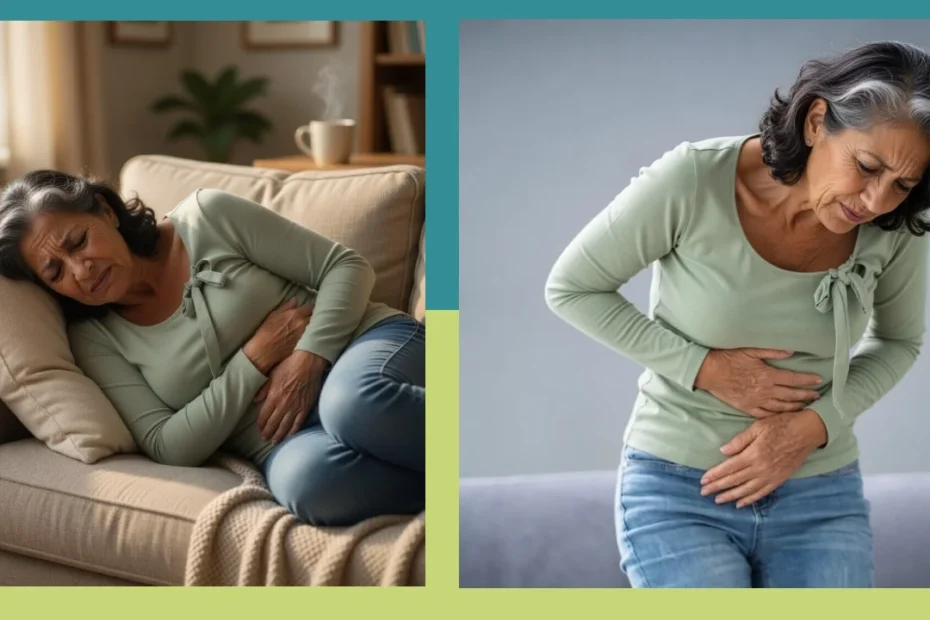
That uncomfortable fullness, burning, or cramping after a meal is something many adults over 60 experience, but it’s not just a normal part of aging. Your digestive system changes, medications can irritate your stomach, and conditions like diverticulitis become more common. This guide will help you identify the most likely causes of your stomach pain after eating, offer safe, senior-friendly home remedies to try, and, most importantly, clearly tell you when you need to see a doctor. Your health and comfort matter—let’s find some answers.
🩺 Common Causes of Stomach Pain
Below are the most common causes of stomach pain after eating, with symptoms, causes, and senior-friendly remedies for each.
Indigestion
📋 Symptoms
Bloating, feeling too full after eating, mild burning in upper abdomen, burping or gas.
⚡ Causes
- Overeating
- Spicy or fatty foods
- Eating too quickly
🌿 Senior-Friendly Remedies
- Eat smaller meals
- Avoid trigger foods
- Ginger or peppermint tea
- Short walk after eating
Acid Reflux & Heartburn
📋 Symptoms
Burning pain in chest or stomach, sour taste in mouth, burping, nausea, worse when lying down.
⚡ Causes
- Weakened lower esophageal sphincter (LES)
- Spicy, fatty, or acidic foods
- Caffeine, alcohol, smoking
🌿 Senior-Friendly Remedies
- Avoid tomatoes, citrus, spicy foods
- Eat smaller meals
- Elevate head while sleeping
- Chamomile or ginger tea
Gas & Bloating
📋 Symptoms
Abdominal discomfort, feeling full or swollen, frequent burping or flatulence.
⚡ Causes
- Swallowing too much air while eating
- High-fiber or gas-producing foods (beans, cabbage, dairy)
- Bacterial imbalance in gut
🌿 Senior-Friendly Remedies
- Probiotics to balance gut bacteria
- Peppermint tea
- Avoid carbonated drinks
- Regular exercise
Constipation
📋 Symptoms
Difficulty passing stool, feeling bloated or heavy, abdominal cramping.
⚡ Causes
- Low-fiber diet
- Dehydration
- Lack of exercise
- Certain medications (pain meds, blood pressure drugs)
🌿 Senior-Friendly Remedies
- Fiber-rich foods (whole grains, fruits, vegetables)
- Stay hydrated
- Regular exercise
- Prune juice or flaxseeds
Food Intolerances & Allergies
📋 Symptoms
Cramping, bloating, diarrhea or constipation, nausea after eating certain foods.
⚡ Common Intolerances
- Lactose (dairy)
- Gluten (wheat, barley, rye)
- Fructose (fruits, honey)
🌿 Senior-Friendly Remedies
- Keep a food journal
- Avoid trigger foods
- Try lactose-free alternatives
- Digestive enzymes (if needed)
Stomach Ulcers
📋 Symptoms
Burning pain worse on empty stomach, nausea, unexplained weight loss, blood in vomit or stool.
⚡ Causes
- H. pylori infection
- Overuse of NSAIDs (aspirin, ibuprofen)
- Excess stomach acid
🌿 Senior-Friendly Remedies
- Avoid spicy, acidic, fried foods
- Eat small, frequent meals
- Cabbage juice (may help heal)
- Seek medical treatment
Gallbladder Issues (Gallstones)
📋 Symptoms
Sharp pain in upper right abdomen, nausea after fatty foods, yellowing of skin (jaundice).
⚡ Causes
- High-cholesterol diet
- Obesity
- Rapid weight loss
🌿 Senior-Friendly Remedies
- Low-fat diet
- Lemon water to stimulate bile
- Avoid processed foods
- Seek medical advice for severe pain
Kidney Stones & Urinary Issues
📋 Symptoms
Intense pain in lower abdomen or back, pain while urinating, frequent urge to urinate.
⚡ Causes
- Dehydration
- High-oxalate foods (spinach, nuts, chocolate)
- Excessive salt intake
🌿 Senior-Friendly Remedies
- Drink plenty of water
- Lemon juice and apple cider vinegar
- Avoid processed salt
- Seek medical attention for persistent pain
Stress & Anxiety-Related Pain
📋 Symptoms
Tightness or discomfort in abdomen, loss of appetite, digestive irregularities.
⚡ Causes
- High-stress levels
- Anxiety disorders
- Poor sleep
🌿 Senior-Friendly Remedies
- Deep breathing exercises
- Chamomile or peppermint tea
- Regular exercise
- Healthy sleep routine
Why Seniors Are Different: 5 Overlooked Causes
Our bodies change as we get older —and our digestive system is no exception. What used to sit well may now cause discomfort, and everyday habits can affect us differently. Here are five often-overlooked reasons why stomach discomfort after meals can be more common for adults over 60—and what you can do about it.
-
💊
How Everyday Medications Can Affect Your Stomach
Many common medications—like pain relievers (ibuprofen, aspirin), iron supplements, and even some diabetes medications—can cause stomach irritation over time. Even a low-dose aspirin for heart health can be tough on your stomach if taken daily.
What you can do: Bring a list of everything you take (including over-the-counter items) to your next check-up. Your healthcare provider can suggest ways to reduce irritation, like taking them with food or adjusting the timing.
-
⏳
Slower Digestion: When Food Takes Its Time
As we age, the digestive process can slow down. This means food stays in your stomach longer, which can lead to feeling overly full, bloated, or uncomfortable after meals. This is especially common for those managing diabetes or after abdominal surgery.
What you can do: Try eating smaller, more frequent meals instead of three large ones. Chew slowly and give your body time to signal that it's full.
-
🦷
The Simple Act of Chewing Well (It Matters More Than You Think)
Dentures, missing teeth, or jaw discomfort can make chewing less effective. When food isn't broken down enough, your stomach has to work harder—which can lead to gas, bloating, and discomfort.
What you can do: Take smaller bites, chew thoroughly, and cook vegetables until they're tender. If you wear dentures, make sure they fit well; your dentist can help.
-
🚽
When Pain Relievers and Other Medications Slow Things Down
Some medications—especially pain relievers and certain blood pressure medications—can slow bowel movements, leading to constipation. This creates an uncomfortable cycle: constipation causes discomfort, which can lead to more medication.
What you can do: Talk to your healthcare provider about whether your medications could be contributing to the problem. They can suggest safe adjustments or recommend gentle, natural ways to support regularity.
-
⚠️
Sensitive Pouches in the Colon: A Common Change After 60
Over time, small pouches can form in the colon wall. When these become irritated, they can cause sudden, sharp discomfort—often on the lower left side—along with fever or changes in bowel habits. This is very common after age 60 and is often related to diet. What you can do: A diet rich in fruits, vegetables, and whole grains can help keep your digestive system comfortable. If you experience sudden, severe pain with a fever, it's important to check in with a healthcare professional right away.
🚨 When to See a Doctor Immediately
Do not try home remedies if you experience:
- ✅ Sudden, severe, or sharp abdominal pain
- ✅ Pain that wakes you from sleep
- ✅ Bloody or black, tarry stool
- ✅ Vomiting blood or yellow-green fluid
- ✅ Inability to pass gas or stool (possible obstruction)
- ✅ Fever above 101°F (38.3°C) with stomach pain
📞 Call your doctor or go to the emergency room immediately.
Stomach pain after eating in elderly individuals often has treatable causes. By identifying your triggers (certain foods, medications, or stress) and using home remedies for indigestion, seniors can try – like ginger tea, smaller meals, and gentle walking – you can reduce discomfort. Download our free Digestive Health Tracker to log your symptoms and share with your doctor. If pain is severe or comes with fever or bloody stool, seek immediate care.
📋 Free Download: Daily Digestive Health Tracker
Enter your email to receive the printable PDF.
🔒 We respect your privacy. Unsubscribe anytime.
📢 share this article
✨ tap to share — help others crack the comment code


Thank you I have just been searching for information approximately this topic for a while and yours is the best I have found out so far