
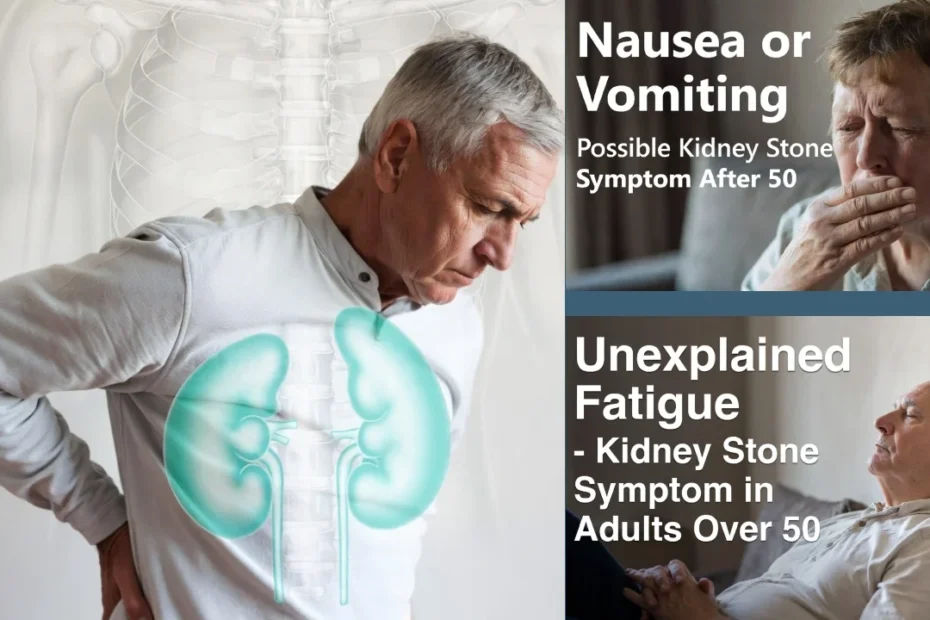
That sharp, sudden twinge in your lower back—the one you initially dismissed as a pulled muscle from gardening or just another sign of “getting older”—might be something more. For adults over 50, the body sends signals in unique ways, and a fleeting ache can sometimes be the first whisper of a kidney stone.
Table of Contents
ToggleWhile kidney stones are often associated with younger adults, the risk of developing them increases with age, making it crucial to recognize their symptoms after 50. These symptoms can be more subtle or easily confused with other age-related issues, from arthritis pain to digestive upset. This guide is designed to help you decode those early clues, separate fact from myth (especially the confusing advice about calcium!), and most importantly, provide actionable strategies for kidney stone prevention in seniors. Your golden years should be about vitality and comfort, not unexpected trips to the ER, so let’s explore what your body might be trying to tell you.
Prevention is key. Staying well hydrated, reducing excess salt and caffeine intake, exercising regularly, and maintaining a balanced diet with adequate magnesium intake can significantly lower your risk. Recognizing the early signs of a kidney stone helps ensure timely medical care and better outcomes.
🔍 Recognizing Kidney Stone Symptoms After 50
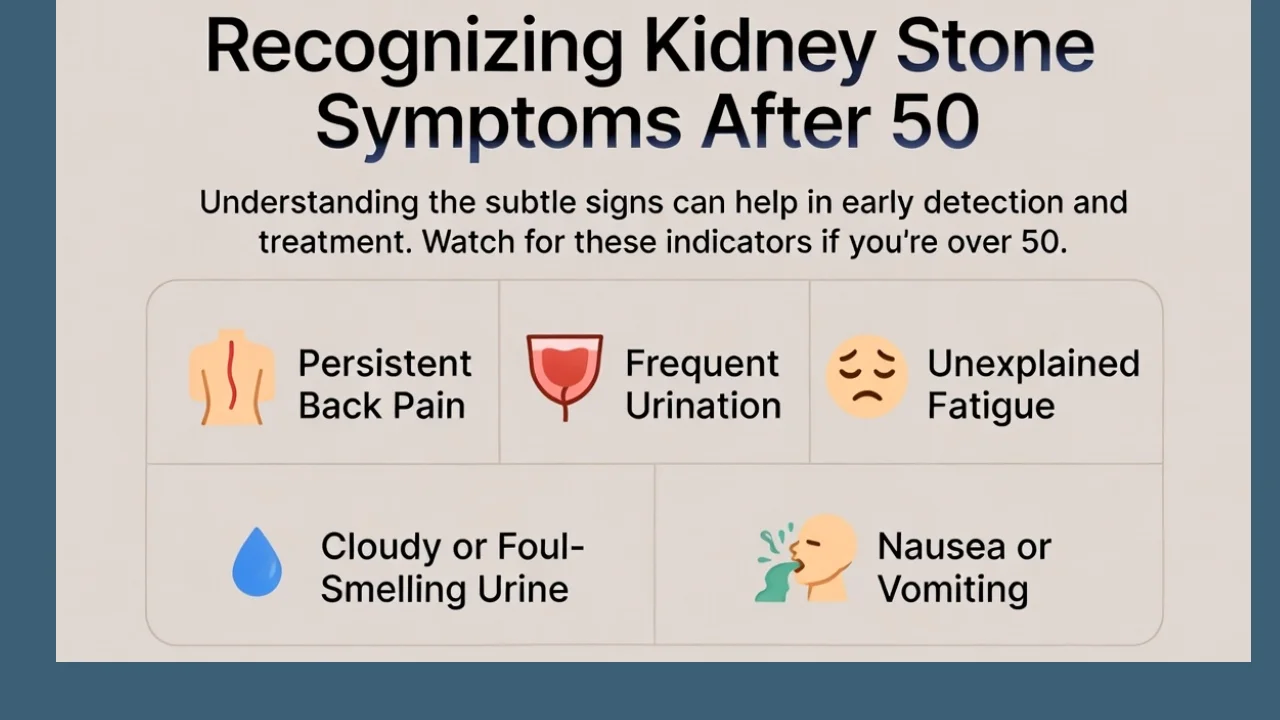
For adults over 50, kidney stone symptoms after 50 can be more subtle or easily confused with other age-related aches. Use this guide to distinguish the signals your body is sending.
📍 The Pain Profile: What It Feels Like
Sudden, sharp pain in the lower back or flank (side), often radiating down toward the lower abdomen and groin area.
Typically experienced as intense waves of excruciating discomfort that come and go unpredictably, a condition known as renal colic.
Ranges from a deep, dull ache to the most severe pain imaginable—frequently compared to or ranked higher than childbirth.
In seniors, this pain is often less localized, showing up as vague abdominal discomfort or general back stiffness instead.
🚨 Other Key Symptoms to Watch For
Urinary Changes
- Persistent urge to urinate
- Pain or burning during urination
- Dark yellow or brownish-red urine
- Decreased urine output
Digestive & Systemic
- Nausea and repeated vomiting
- Unexplained stomach discomfort
- Fever and chills (sign of infection)
- General fatigue or malaise
Visible Signs
- Blood in the urine (hematuria)
- Cloudy or foul-smelling urine
- Swelling in legs or feet
- Unexplained weight gain
🧬 Causes & Risk Factors: Why Age Matters
As we age, our kidneys undergo natural changes that increase the likelihood of stone formation. Understanding these shifts is the first step toward kidney stone prevention in seniors.
🔬 How Aging Affects Your Kidneys
-
⬇️
Decreased Kidney Function: After age 40, kidney mass and blood flow gradually decline, reducing the organ's ability to filter waste and concentrate urine effectively.
-
🧂
Mineral Imbalance: Age-related changes in hormone levels (like parathyroid hormone) can alter calcium and phosphate metabolism, promoting crystal formation.
-
💊
Medication Use: Many seniors take diuretics, calcium supplements, or antacids—all of which can increase stone risk when not properly managed.
-
🚰
Chronic Dehydration: The thirst sensation diminishes with age, leading to lower fluid intake and more concentrated urine—a prime environment for stones to form.
📊 Risk Factors for Kidney Stones in Seniors
| Risk Factor | Why It Matters After 50 | Impact Level |
|---|---|---|
| Dietary Calcium | Low dietary calcium increases oxalate absorption—but supplements taken without food can raise stone risk. | High |
| High Sodium Intake | Increases calcium excretion in urine, a major contributor to stone formation. | High |
| Obesity & Diabetes | Metabolic changes alter urine pH and increase stone-forming substances. | Medium |
| Family History | Genetic predisposition becomes more pronounced with age-related kidney changes. | Medium |
| Gout / High Uric Acid | More common in older adults; uric acid stones are a direct consequence. | High |
🛡️ Prevention Playbook: Kidney Stone Prevention in Seniors
This is the most important part of your journey. Proactive kidney stone prevention in seniors is not about drastic diets—it's about smart, sustainable habits that work with your body's natural changes. Here’s your actionable guide.
💧 Top 5 Prevention Strategies
-
1
Hydrate Intentionally: Aim for 2–3 liters of fluid daily. Water is best, but citrus drinks (lemonade, orange juice) add citrate—a natural stone inhibitor.
-
2
Balance Your Calcium: Get calcium from food (low-fat dairy, fortified plant milks) rather than supplements. Pair high-oxalate foods (spinach, nuts) with calcium-rich foods at the same meal.
-
3
Watch Your Sodium: Limit processed foods and table salt to less than 2,300 mg/day—this reduces urinary calcium excretion.
-
4
Limit Animal Protein: Reduce red meat and organ meats, which increase uric acid and reduce urine citrate.
-
5
Stay Active, Gently: Regular walking or swimming helps maintain healthy metabolism and prevents obesity, a key risk factor.
🥗 Kidney-Friendly Foods: What to Eat & Avoid
| Category | ✅ Eat More | ❌ Limit or Avoid |
|---|---|---|
| Fruits & Veggies | Lemons, oranges, melons, bananas, cauliflower, cabbage, cucumbers | Spinach, rhubarb, beets, okra (pair with calcium!) |
| Dairy & Calcium | Low-fat milk, yogurt, cheese, fortified plant milks (with meals) | Calcium supplements (without food) & high-fat dairy |
| Proteins | Fish, chicken, turkey, eggs, legumes (in moderation) | Red meat, organ meats, shellfish, processed deli meats |
| Grains & Nuts | White rice, oats, quinoa, most breads | Wheat bran, almonds, peanuts, pecans |
| Beverages | Water, lemonade, coffee (in moderation), herbal tea | Sweetened sodas, excessive black tea |
📋 Your Daily Kidney Health Checklist
Make kidney stone prevention in seniors a daily habit. Check off each item as you complete it and watch your progress grow!
✅ Today's Kidney Health Actions
💪 You've Got This!
🧬 The Truth About Oxalates & Kidney Stones After 50
❌ "Avoid calcium to prevent stones."
✅ Fact: Dietary calcium is your ally, not your enemy. It binds to oxalates in your gut, preventing them from reaching your kidneys.
Oxalates are naturally occurring compounds found in many plant-based foods like spinach, beets, almonds, and chocolate. For most people, they pose no problem. However, for adults over 50—especially those with a history of kidney stone symptoms after 50—understanding oxalates becomes an important part of kidney stone prevention in seniors.
The key isn't fear or elimination. It's balance, pairing, and hydration. Let's separate myth from science so you can eat confidently.
🔬 How Oxalates Affect Your Kidneys
When oxalates are absorbed into your bloodstream, they travel to your kidneys and can bind with calcium to form calcium oxalate crystals—the most common type of kidney stone.
But here's the crucial twist that many articles get wrong:
When you eat calcium-rich foods (like dairy or fortified plant milks) at the same meal as high-oxalate foods, the calcium binds to the oxalates in your digestive tract—before they can reach your kidneys. This is the single most effective dietary strategy for kidney stone prevention in seniors.
🥗 Practical Steps for Managing Oxalates
You don't need to eliminate oxalate-rich foods. Many are packed with nutrients that support healthy aging. Instead, follow these three science-backed principles:
- Pair, Don't Fear: Always eat high-oxalate foods with a calcium source. Example: Add cheese to your spinach salad or have yogurt with berries.
- Hydrate Generously: Aim for 2–3 liters of water daily. Diluted urine means less concentrated oxalates.
- Watch Your Sodium: High sodium intake increases calcium excretion in urine—which can actually increase stone risk.
✅ Foods to Pair with Calcium
- Spinach → with milk or cheese
- Beets → with yogurt
- Almonds → with a glass of milk
- Black tea → with milk (adds calcium)
⚠️ Foods to Monitor (not avoid)
- Rhubarb, Swiss chard, beet greens
- Wheat bran, bran flakes
- Chocolate, instant coffee
- Sweet potatoes (eat in moderation)
🧾 What Is a Low-Oxalate Diet?
A low-oxalate diet is a therapeutic dietary approach that involves limiting foods high in oxalates. It is typically recommended for individuals who:
- Have a history of calcium oxalate kidney stones
- Have been diagnosed with hyperoxaluria (excess oxalate in urine)
- Have certain digestive disorders that increase oxalate absorption
However—and this is critical—this diet is not for everyone. Many high-oxalate foods are nutrient-dense and beneficial for overall health. Unnecessarily restricting them can lead to nutritional gaps, especially for adults over 50 who already need to pay attention to bone health, fiber intake, and antioxidants.
📚 Want to Go Deeper?
For a complete guide on which foods are high in oxalates, which are safe, and how to build a balanced, kidney-friendly meal plan after 60, check out our detailed resource:
📖 Read: Oxalate Rich Foods – What Adults Over 60 Should Know
- Don't avoid calcium — it's your partner in prevention.
- Don't fear oxalates — manage them with smart pairing.
- Do stay hydrated — it's the single most effective habit.
- Do talk to your doctor before starting any restrictive diet.
Disclaimer: This content is for educational and wellness purposes only. It is not a substitute for professional medical advice, diagnosis, or treatment. Always seek the advice of your physician or other qualified health provider with any questions you may have regarding a medical condition.
❓ Frequently Asked Questions About Kidney Stones After 50
Real questions from adults over 50 about kidney stone symptoms after 50, prevention, and treatment. Get clear, expert-backed answers to the concerns that matter most to you.
💬 Your Top Questions Answered
Yes. The risk of developing kidney stones increases with age. After 50, several factors converge:
- Kidney function naturally declines — filtration efficiency drops, making it harder to flush out stone-forming minerals.
- Thirst sensation diminishes — many seniors drink less water without realizing it, leading to more concentrated urine.
- Medication use increases — diuretics, calcium supplements, and certain antacids can alter urine chemistry.
- Dietary changes — reduced appetite or changes in eating habits can affect calcium and oxalate balance.
Yes, it can! Lemon water is a simple, natural tool for kidney stone prevention in seniors. Here’s why:
- Lemons are rich in citrate, a compound that binds to calcium in the urine, preventing it from forming stones.
- Citrate also helps break down small crystals that are starting to form.
- Adding lemon juice to your water increases your total fluid intake, which dilutes urine and reduces stone risk.
How to use it: Add the juice of half a lemon to a glass of water twice daily. Avoid commercial lemonade with added sugar — stick to fresh lemons.
No — this is one of the most common and dangerous myths.
For calcium oxalate stones (the most common type), eating calcium-rich foods actually protects you. Here’s why:
- Dietary calcium binds to oxalate in your intestines before it can be absorbed into your bloodstream and reach your kidneys.
- This means less oxalate in your urine — and fewer stones.
- Calcium supplements taken without food can increase stone risk, but dietary calcium (from milk, yogurt, cheese) is beneficial.
Recognizing kidney stone symptoms after 50 early can save you from a painful emergency. Watch for these clues:
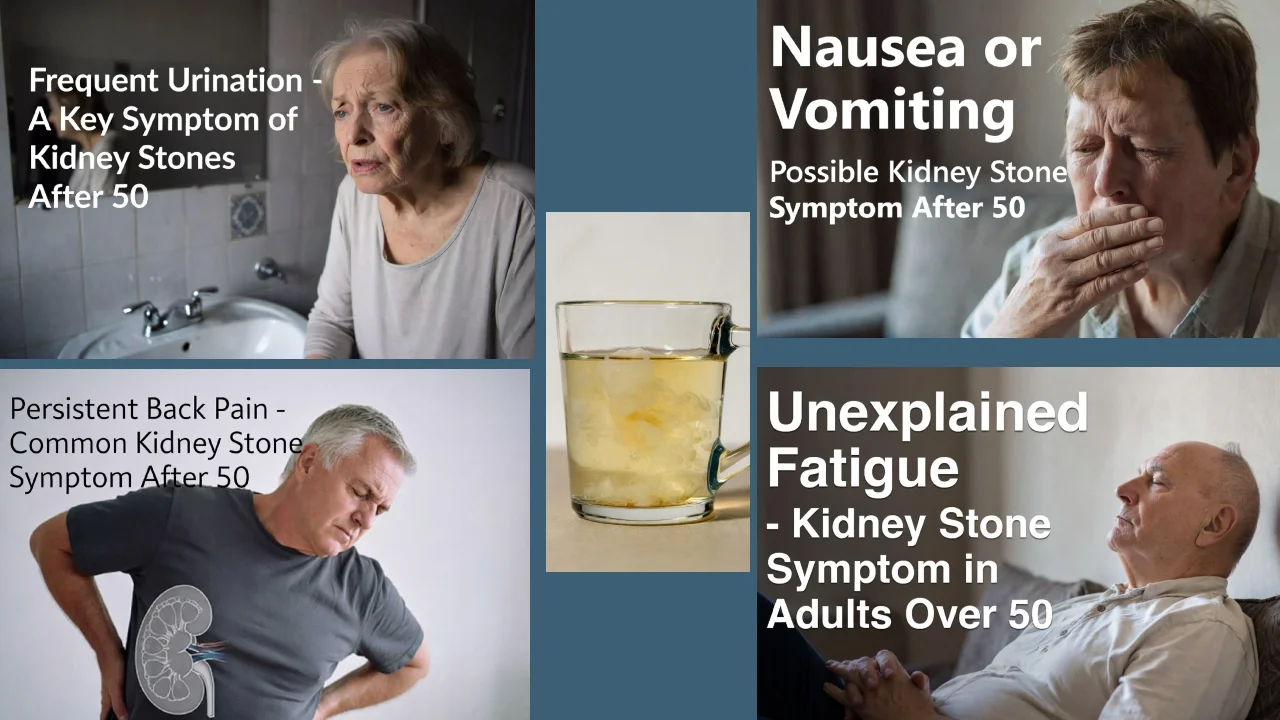
- Pain: Sudden, sharp pain in your lower back, side, or groin that comes in waves.
- Urinary changes: Burning sensation during urination, persistent urge to go, or decreased output.
- Urine color: Dark yellow, brownish-red, or pink urine (blood may be visible).
- Digestive upset: Nausea, vomiting, or stomach discomfort that doesn't resolve with rest.
- Systemic signs: Fever, chills, or unexplained fatigue (may indicate infection).
Yes. Several common medications prescribed for seniors can increase kidney stone risk:
- Diuretics ("water pills"): Can increase calcium excretion in urine.
- Calcium supplements: Especially when taken without food or in high doses.
- Antacids containing calcium: Can contribute to calcium load.
- Certain antibiotics and antiviral drugs: May crystallize in the urine.
What to do: Don't stop any medication without consulting your doctor. Instead:
- Review all your medications with your healthcare provider at least once a year.
- Ask if there are kidney-friendly alternatives.
- Stay well-hydrated — this is especially important when taking diuretics.
Yes — but it's about more than just stone prevention.
- Regular physical activity helps maintain a healthy weight, reducing the risk of metabolic conditions (like diabetes) that contribute to stone formation.
- Exercise improves overall circulation and kidney health.
- It also encourages you to drink more fluids — an automatic prevention habit.
Best activities for over-50:
- 🚶 Brisk walking — 30 minutes, 5 days a week
- 🏊 Swimming or water aerobics — gentle on joints
- 🚴 Stationary cycling — low-impact cardio
- 🧘 Yoga or stretching — improves flexibility and reduces stress
Remember, proactive kidney stone prevention in seniors isn’t about restrictive diets or drastic changes; it’s about working with your body’s natural processes. Stay hydrated, make informed food choices, and always consult your healthcare provider about any concerns.
By understanding these signs and taking small, consistent steps, you can protect your kidneys, maintain your independence, and continue enjoying the active, fulfilling lifestyle you deserve. Your health journey is a marathon, not a sprint—and a little knowledge goes a long way in keeping you pain-free and on track.
Struggling with Weight Gain or Loss? Could It Be Your Thyroid?
Understanding and addressing thyroid health is crucial for achieving and maintaining a balanced weight.
Click HereFeeling Tired All the Time? Your Thyroid Might Be to Blame
Recognizing that fatigue often stems from unnoticed thyroid issues, we empower individuals to take charge of their health.
Click Here✉️ Get in Touch
Questions about exercises, nutrition, or home safety? Send us a message.


While some kidney stones pass on their own, others require treatment such as medications or procedures to help break up the stone or even surgical removal
I’ve experienced some of these symptoms before and never realized they could be related to kidney stones. This post is a great reminder to pay attention to our bodies and not ignore any unusual discomfort.
Oh, that sounds really painful! Kidney stones can be so debilitating. I hope you feel better soon. Have you tried any home remedies or over-the-counter pain relievers to manage the symptoms?
Kidney stone pain is like nothing else. It’s a level of agony
Just got back from the ER. The pain from kidney stones is unlike anything I’ve ever experienced. It comes in waves, but when it hits, it’s absolutely debilitating