Skip to content

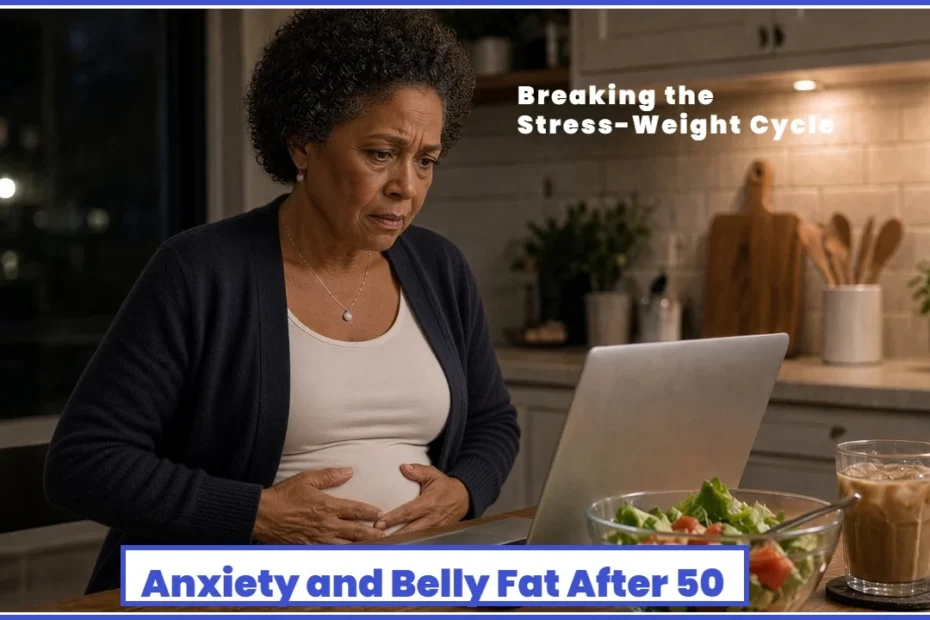
Anxiety and Belly Fat After 50: Breaking the Stress-Weight Cycle

anxiety and belly fat

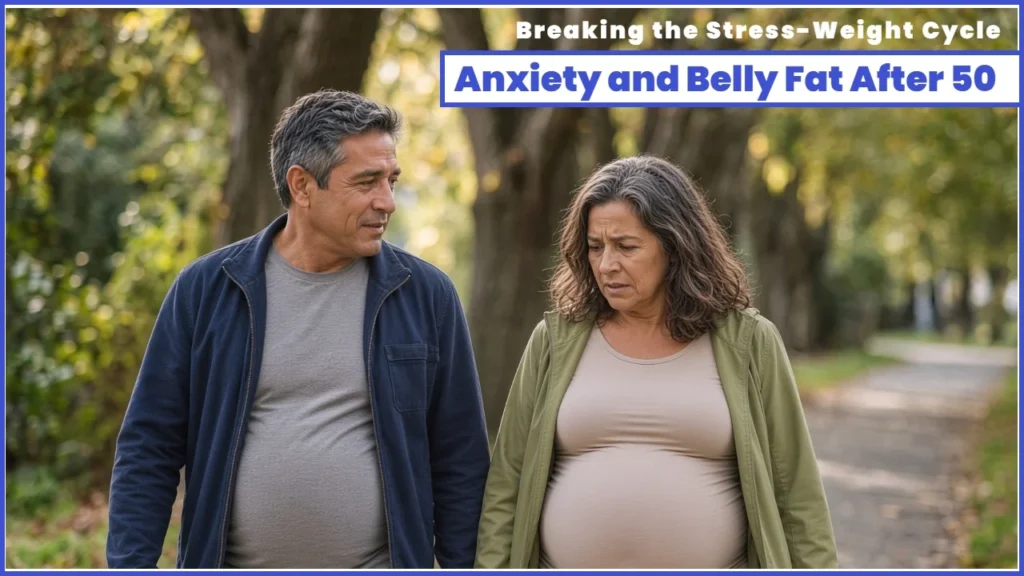
Have you noticed that feeling anxious also seems to add inches around your midsection? The link between anxiety and belly fat is not just in your head—it’s biology. After age 50, chronic stress raises cortisol levels, which directly signal your body to store visceral fat.

At the same time, that extra weight can worsen mood, creating a frustrating cycle. Understanding the connection between anxiety and belly fat is the first step to breaking free.

In this guide, we’ll explore why this happens, which medications may contribute, and most importantly, gentle, senior-friendly ways to calm your mind and support a healthy weight.

📌 For Adults Over 50: Anxiety isn’t just “in your head.” It raises cortisol levels, which signal your body to store belly fat. Menopause and medication side effects make this worse. The good news? Specific foods and low-impact exercises can break the cycle.

Medical Disclaimer & Important Notice

Praktikotips (praktikotips.me) does not provide medical advice, diagnosis, or treatment. The information shared on this website — including articles, recipes, summaries, and user comments — is for educational and informational purposes only. It is not a substitute for professional medical advice, psychiatric evaluation, or personalized healthcare guidance.

🧑‍⚕️ Always consult a qualified healthcare professional before making any changes to your diet, exercise routine, mental health treatment, or medication regimen — especially if you are over 50, pregnant, nursing, taking prescription drugs (e.g., blood thinners, antidepressants, blood pressure medication), or have a known medical condition (kidney stones, GERD, diabetes, heart disease, anxiety disorders, etc.).

🧘 Low-Impact Exercises That Reduce Anxiety AND Joint Pain

“Just exercise more” isn’t helpful — especially after 50. If you have arthritis, back pain, or stiff knees, high-impact workouts can hurt more than help. The goal is movement that calms anxiety, supports metabolism, and protects your joints. Try these gentle, proven options:

🪑 Chair Yoga

Seated stretches & breathing. Improves flexibility, reduces cortisol, and lowers fall risk. Perfect for limited mobility.

Start with 10 min, 3x/week

🚶 15-Min Walk (After Meals)

Walking lowers blood sugar spikes, eases anxiety, and lubricates joints. Flat, soft surfaces (track or grass) reduce knee strain.

💡 Tip: Use walking poles for stability

💧 Water Aerobics / Pool Walking

Buoyancy removes 90% of joint pressure. Great for arthritis, fibromyalgia, and weight loss. Builds strength without pain.

🏊‍♀️ 30 min, 2x/week

🧘‍♀️ Tai Chi (Slow Flow)

Research shows Tai Chi reduces anxiety and improves balance. Gentle circular movements strengthen knees and hips.

🌱 Free videos on YouTube for seniors

🌟 Senior safety first: Always warm up with 2-3 minutes of gentle arm circles & ankle rolls. Use a chair or wall for support if balance is a concern. Stop immediately if you feel sharp pain or dizziness. Consistency (10-15 min daily) beats intensity.

📌 Anxiety + movement connection: Low-impact exercise releases endorphins, lowers stress hormones, and improves sleep — directly breaking the anxiety/weight cycle.

🥗 Foods That Fight Depression & Support Emotional Wellness

What you eat directly affects brain chemistry, inflammation, and neurotransmitter production. Instead of a generic list, here are the four most powerful nutrient families that help ease anxiety and low mood — especially important after 50.

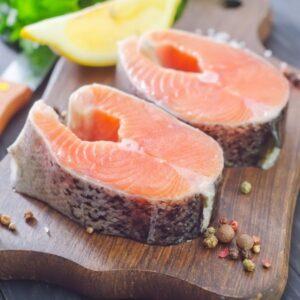
🐟 1. Omega-3 Fatty Acids
Omega-3s (EPA/DHA) reduce brain inflammation, support serotonin function, and lower anxiety. Studies show seniors with higher omega-3 intake have 30% lower risk of depression.
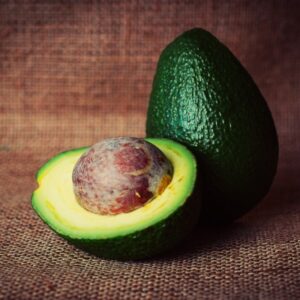
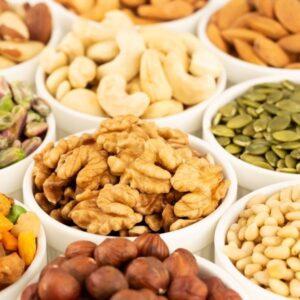
🐟 Salmon (wild) 🐟 Sardines / Mackerel 🌰 Walnuts 🌱 Flaxseeds (ground) 🥑 Chia seeds
💡 Senior tip: Canned salmon or sardines (low-sodium) are budget-friendly, no-cook options. Aim for 2–3 servings per week.
🥬 2. B Vitamins (B6, B12 & Folate)
B vitamins are essential for making neurotransmitters like dopamine and serotonin. Deficiency is common after 50 and linked to low mood, fatigue, and brain fog.
🍗 Lean chicken / turkey 🥚 Eggs (especially yolk) 🌾 Fortified whole grains 🍃 Spinach & kale lentils
📌 Important: Vitamin B12 absorption decreases with age. Ask your doctor to check your B12 levels — a sublingual supplement may be recommended.
💆 3. Magnesium (The Calming Mineral)
Magnesium regulates the HPA axis (stress response) and lowers cortisol. Low magnesium is directly linked to anxiety, muscle tension, and poor sleep — all common after 50.
🎃 Pumpkin seeds 🌻 Sunflower seeds 🍫 Dark chocolate (70%+ cocoa) 🥑 Avocado 🍌 Banana 🌾 Quinoa
🌙 Evening ritual: A small handful of pumpkin seeds or a square of dark chocolate 1 hour before bed can promote relaxation.
🦠 4. Probiotics & Gut-Brain Connection
90% of serotonin is produced in the gut. A healthy microbiome reduces inflammation and anxiety. Fermented foods are natural, affordable, and senior-friendly.
🥛 Unsweetened Greek yogurt 🥬 Sauerkraut (refrigerated) 🍵 Kimchi (mild version) 🍎 Kefir (drinkable) 🧀 Live-culture cottage cheese
🧠 Senior tip: Start with 2 tablespoons of sauerkraut or ½ cup of yogurt daily. Avoid high-sugar flavored yogurts — sugar worsens anxiety.

Putting it all together: A simple “anti-anxiety plate” could be: grilled salmon (omega-3), quinoa (magnesium + B vitamins), and a side of sauerkraut (probiotics). No need to be perfect — small changes add up.

📢 Important reminder: These foods support mental wellness but are not a replacement for therapy, medication, or medical care. Always talk to your doctor before making significant dietary changes, especially if you take blood thinners, antidepressants, or diabetes medication.

📚 More from Praktikotips for healthy aging:

Conclusion – Anxiety and Belly Fat

The link between anxiety and belly fat after 50 is real—driven by cortisol, menopause, and medication side effects. This guide explains the biology behind the cycle and offers senior-friendly, low-impact exercises and mood-supporting foods to help break it. No generic advice. Just practical steps for calmer days and a healthier weight.

We hope you found this information helpful and informative! If you have any additional thoughts or experiences about managing stress and its impact on weight regulation, we encourage you to share them in the comments below. We love hearing from our readers and appreciate any insights you may have to offer.

📢 share this article

✨ tap to share — help others crack the comment code

Please follow and like us:

6 thoughts on “Anxiety and Belly Fat After 50: Breaking the Stress-Weight Cycle”

  1. Let’s prioritize our health by adopting a healthy diet, engaging in regular physical activity, and maintaining a healthy weight

  2. The Role of Community in Combating Loneliness and Abandonment, know and how the importance of community support in alleviating feelings of loneliness and abandonment.

  3. Nutrition can impact anxiety: Certain nutrients, such as omega-3 fatty acids, magnesium, and B vitamins, have been linked to reducing anxiety symptoms. Encouraging a balanced diet rich in these nutrients can be beneficial for individuals managing anxiety disorders.

  4. This is so important! Stress and anxiety are often overlooked when talking about obesity. I’m going to share this with a friend who’s going through something similar.

  5. Thank you for bringing awareness to this. It’s not just about ‘eating less,’ mental health plays such a huge role in weight management.

Leave a Reply

Your email address will not be published. Required fields are marked *