
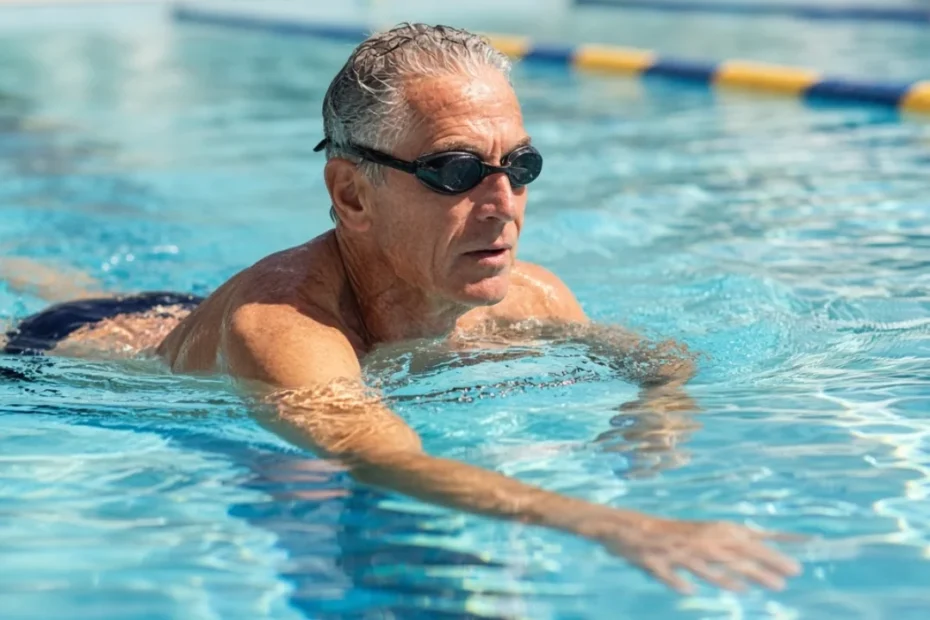
🌊 You want to stay active. You know exercise is good for you. But your knees ache. Your back stiffens. And the thought of high-impact workouts makes you wince.
Table of Contents
ToggleHere's the truth: you don't need to run, jump, or lift heavy weights to get stronger, healthier, and more confident after 60. There's a better way — one that's gentle on your joints, surprisingly fun, and proven to work.
Welcome to the Pool: Gentle & Effective Swimming Exercises For Seniors To Build Strength
Swimming is the ultimate low-impact exercise for seniors. The water supports up to 90% of your body weight, removing stress from aching joints while providing natural resistance that builds strength. No falls. No impact. No gym intimidation.
Whether you're an experienced swimmer or haven't set foot in a pool in decades, this guide will show you how to start—safely, simply, and at your own pace. You'll discover a complete swimming workout for seniors over 60, including warm-up moves, gentle laps, strength exercises, and a cool-down routine—all designed for beginners and those returning to fitness.
💡 Your only job today? Read through this guide. Then, choose one small action—buy a swimsuit, call your local pool, or try water walking in the shallow end. That's your win. The rest will follow.
Always consult a qualified healthcare professional before starting any new exercise program, changing your diet, or making changes to your medication or treatment plan. If you experience sudden dizziness, chest pain, shortness of breath, or severe symptoms, seek immediate medical attention.
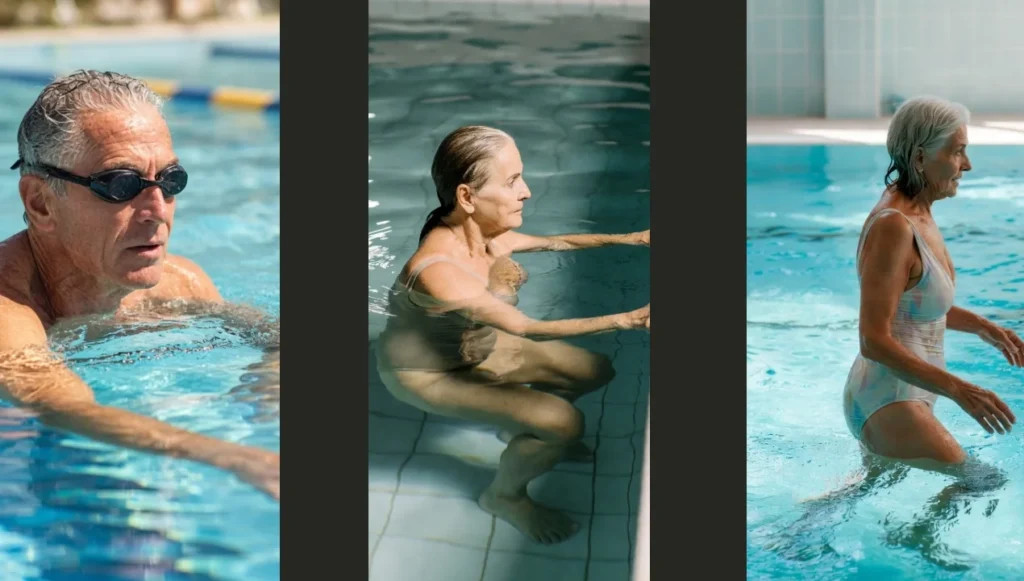
Swimming is the ultimate low-impact exercise for seniors
🏊♀️ Your First Pool Session: A 20-Minute Plan
| Time | Activity | Intensity |
|---|---|---|
| 0-5 min | Walk in chest-deep water (forward, backward, sideways) | 🌿 Gentle |
| 5-10 min | Hold pool edge + gentle kicking (flutter kick) | 🌿 Gentle |
| 10-15 min | Use kickboard or noodle for supported kicking | 🌿🌿 Moderate |
| 15-18 min | Standing arm exercises (arm circles, presses) | 🌿 Gentle |
| 18-20 min | Slow walking + deep breathing cool-down | 🌿 Gentle |
💡 Rest whenever you need. Always have a lifeguard or buddy nearby.
Safety Tips: Essential Guidance for Senior Swimmers
A few simple precautions can help make a swimming workout for seniors more comfortable, confident, and enjoyable.
🏊 Stay Within Your Comfort Zone
Choose a pool area that matches your swimming ability and confidence. If you are less comfortable in deep water, begin where you can stand securely and gradually build confidence as your skills improve.
🤝 Use Support When Appropriate
Pool rails, steps, and appropriate flotation or exercise equipment can provide additional support during water exercises. Use equipment according to the pool's guidance and choose options suited to the activity you are performing.
🌊 Pace Yourself
A good swimming session doesn't need to be exhausting. Alternate swimming with easier activities such as water walking, take breaks when needed, and gradually increase your activity as your fitness develops.
👥 Choose a Safe Swimming Environment
Whenever possible, swim during supervised pool hours or with a companion. A lifeguard, instructor, or another swimmer nearby can provide an added layer of safety, particularly if you are returning to swimming after a long break.
🌡️ Find a Comfortable Pool Temperature
Choose water that feels comfortable for your activity and personal preferences. Some people find moderately warm water more pleasant for gentle swimming and water exercises, while others prefer cooler temperatures for more active sessions.
Why Swimming Can Be a Great Choice for Seniors Over 60
🏊♂️ Swimming Exercises For Seniors To Build Strength: 30 Minutes
• Walk briskly in chest-deep water (2-3 minutes)
• Large arm circles forward and backward (1 minute each)
• Gentle leg swings holding the pool edge (1 minute)
• 2 slow laps (any stroke), rest 30 seconds between laps
• OR: 5 minutes aqua jogging (use a flotation belt if needed)
• OR: 5 minutes gentle kicking with kickboard
• Leg lifts: 10 to the side, 10 to the back (each leg)
• Arm resistance: chest presses, arm curls, side raises (10-15 reps each)
• Float on back (use noodle for support)
• Slow walking in shallow water
• Deep breathing (inhale 4 sec, exhale 6 sec)
❓ Frequently Asked Questions: Swimming Exercises For Seniors To Build Strength
Answers to common questions about pool workouts, safety, and getting started.
Is swimming safe for seniors with arthritis?
Yes. Swimming is one of the most recommended exercises for arthritis. The buoyancy of water supports up to 90% of your body weight, which removes pressure from aching joints while warm water helps soothe inflammation and improve range of motion. Many seniors with arthritis report less pain and greater mobility after just a few weeks of regular swimming.
How often should seniors swim?
For consistent results, aim for 2 to 3 times per week. This frequency allows for significant cardiovascular and strength gains while providing enough recovery time for your muscles and joints. Even once a week provides benefits for mood and joint health. Consistency matters more than duration — a 15-minute swim twice a week is better than an hour-long swim once a month.
Can seniors lose weight by swimming?
Absolutely. Because water is roughly 800 times denser than air, every movement acts as resistance training. A consistent swim routine can burn significantly more calories than walking, making it a highly effective tool for weight management. A 30-minute moderate swim can burn between 200-300 calories while being gentle on your joints. Pair your swim routine with smart eating habits — see our nutrition tips for seniors over 60 for protein-rich meal ideas that support weight management and muscle recovery.
What is the best stroke for beginners?
The Breaststroke or Sidestroke are generally the best starting points. These strokes allow you to keep your head above water if needed and utilize a stable, rhythmic breathing pattern that is less taxing for beginners. Backstroke is also excellent because your face stays out of the water, making breathing easy.
What is the best low-impact water workout for the elderly?
Aside from traditional laps, water walking or aqua aerobics are the premier low-impact water workouts for the elderly. These exercises provide the heart-health benefits of jogging without any jarring impact on the hips, knees, or ankles. Water walking in chest-deep water for 10-15 minutes is an excellent starting point for beginners.
Can I participate if I have limited mobility?
Yes. Many aquatic centers offer "zero-entry" pools or specialized lifts. Exercises like water-supported leg lifts and gentle arm resistance can be performed even with limited mobility, helping to slowly rebuild strength and confidence in a safe environment. Start in shallow water where you can stand comfortably, and use a pool noodle or kickboard for support.
Do I need to be a strong swimmer to start?
Not at all. Many seniors benefit simply from vertical water exercises (like aqua jogging) in chest-deep water where their feet can always touch the bottom. You can gain all the health benefits without ever needing to swim in the deep end. Water walking, arm exercises, and supported kicking are excellent options for non-swimmers.
What should I wear for swimming as a senior?
Comfort and safety are key. Wear a comfortable swimsuit that's easy to put on and take off. Consider water shoes for better traction on wet pool decks. Goggles help protect your eyes and improve visibility underwater (prescription goggles are available). A swim cap keeps hair out of your face. For added buoyancy and confidence, use a kickboard, pool noodle, or flotation belt.
How can I overcome fear of water?
Fear of water is common and completely normal. Start slowly: sit at the edge of the pool and splash water on your face. Move to shallow water where you can stand comfortably. Practice blowing bubbles and floating with support. Consider adult beginner swim lessons at your local pool — instructors are trained to work with fearful adults. Go at your own pace; there's no rush.
What are the signs I should stop swimming?
Listen to your body. Stop immediately if you experience: chest pain or pressure, severe shortness of breath, dizziness or lightheadedness, nausea, sharp pain anywhere, or extreme fatigue. Also stop if you feel cold or shaky (signs of hypothermia). Always swim where a lifeguard is present, and never push through pain. When in doubt, rest.
📌 Jump to question:
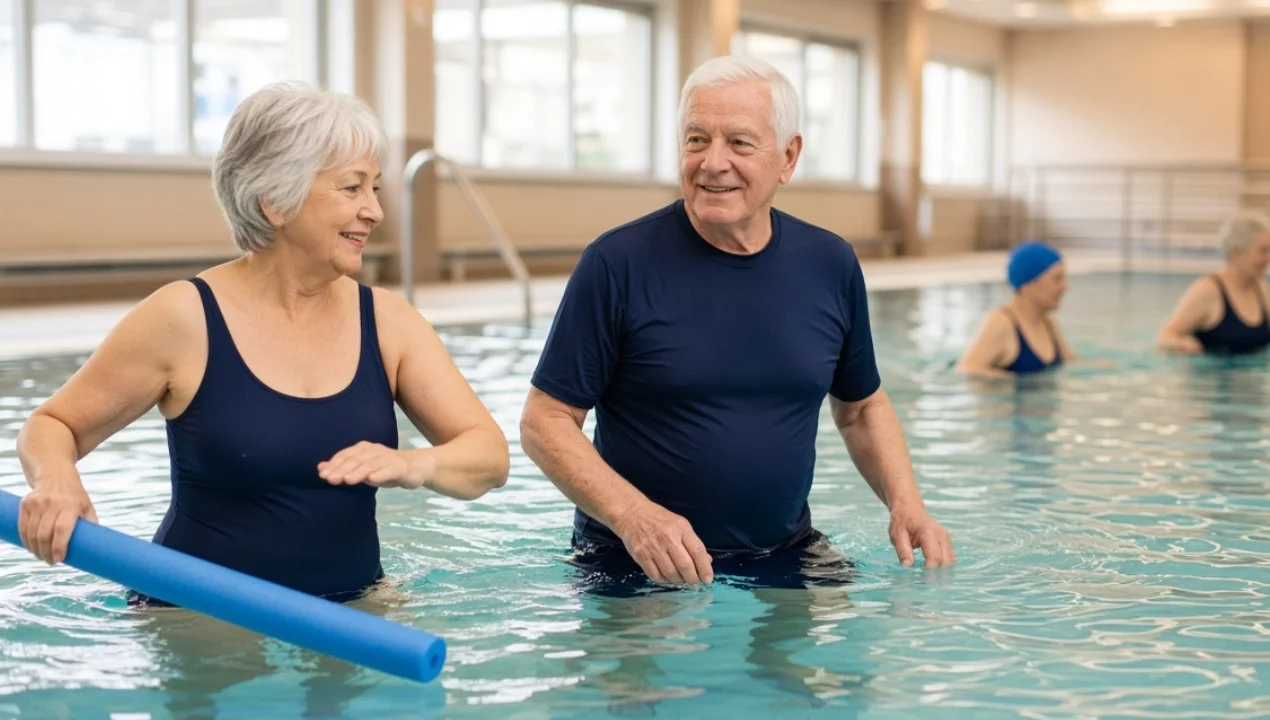
Swimming Exercises For Seniors To Build Strength
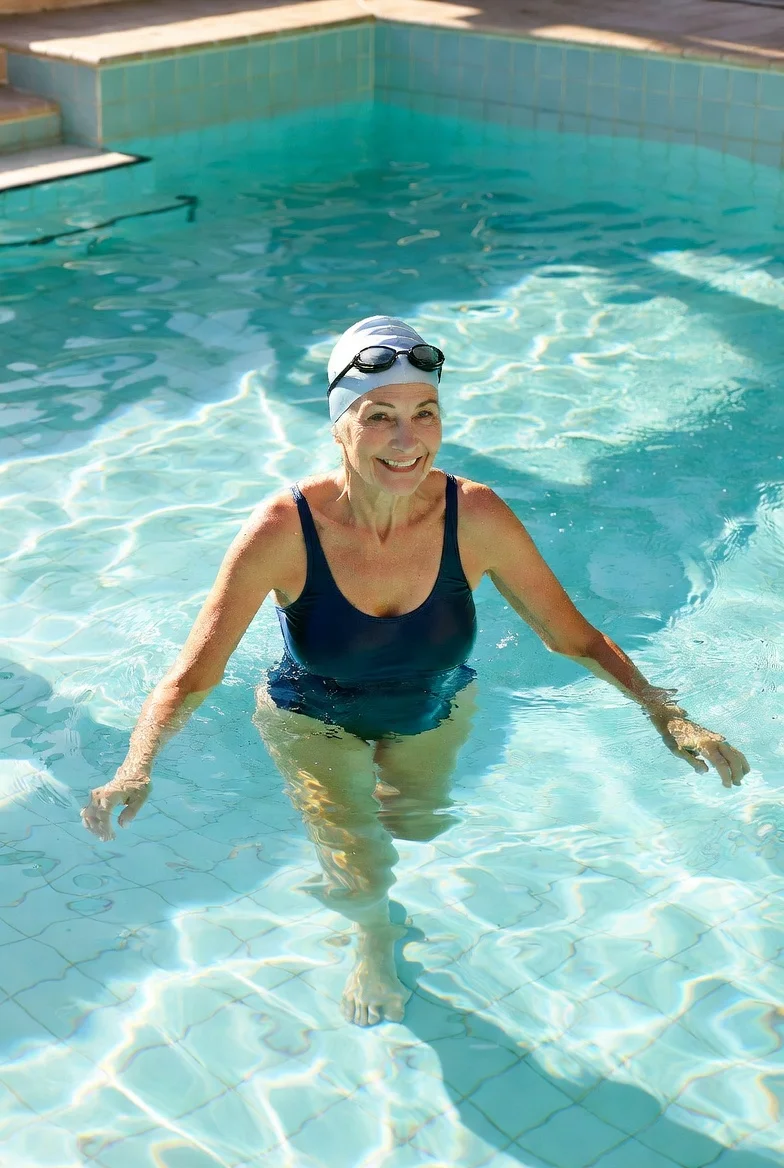
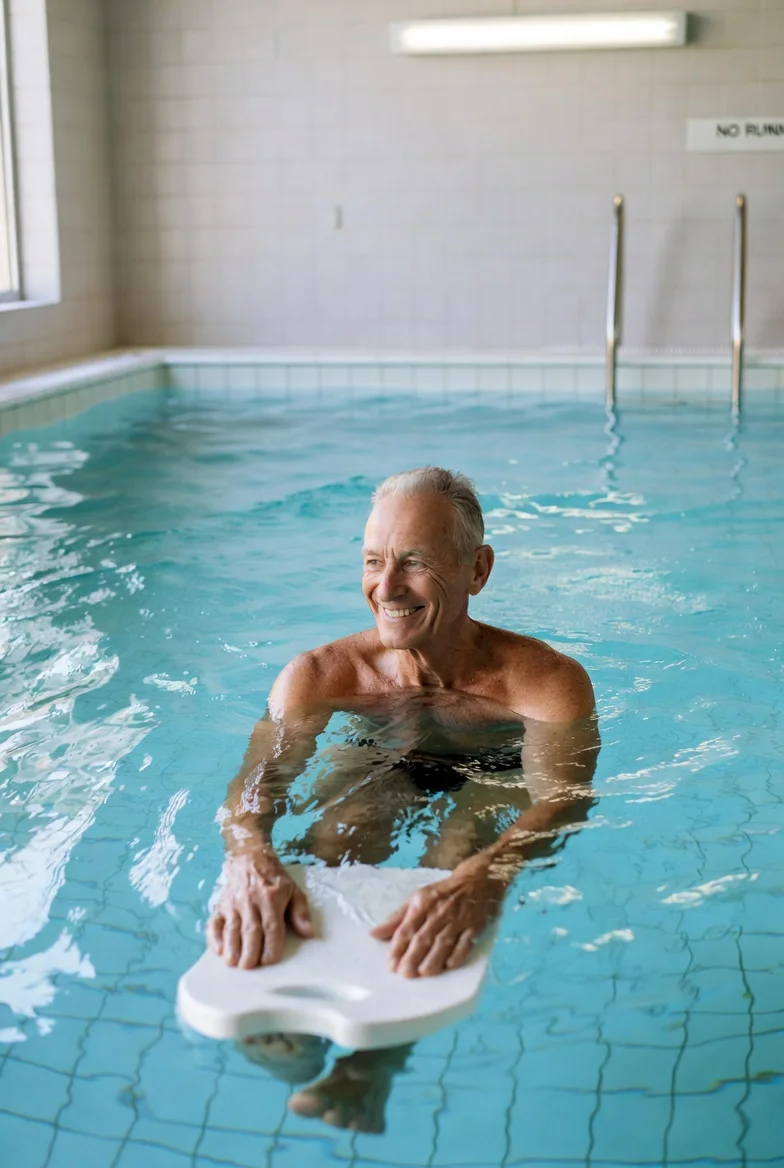

🏊♀️ Your Path to a Stronger, Healthier Future
A swimming workout for seniors can be a comfortable and enjoyable way to stay active while placing less impact on the joints than many land-based activities. The resistance of the water engages multiple muscle groups, while swimming and water exercises can also support cardiovascular fitness, mobility, coordination, and endurance. The right routine should match your current fitness level and feel manageable rather than exhausting.
A well-rounded Swimming workout for seniors / Swimming For Seniors To Improve Balance / Swimming Exercises For Seniors To Build Strength can include three simple phases: a gentle warm-up, a main swimming or water-exercise session, and an easy cool-down. Water walking, relaxed laps, kickboard exercises, gentle leg movements, and aqua exercises can add variety without requiring every session to be intense. The buoyancy of water can also make movement feel more comfortable for people who find some land-based exercises challenging.
You don't need to spend hours in the pool to build a consistent routine. Starting with shorter sessions and gradually increasing duration or variety can make swimming easier to maintain. Alternating swimming with water walking, mobility exercises, or gentle resistance movements can keep your routine interesting while working different parts of the body.
The most useful routine is one you can enjoy and maintain. Whether you're swimming a few relaxed laps, walking through the water, or combining several activities, consistency matters more than trying to make every workout difficult. A balanced approach can help you stay active while making the pool an enjoyable part of your weekly routine.
🌊 Start comfortably. Build gradually. Enjoy every lap.
📢 share this article
✨ tap to share — help others crack the comment code


