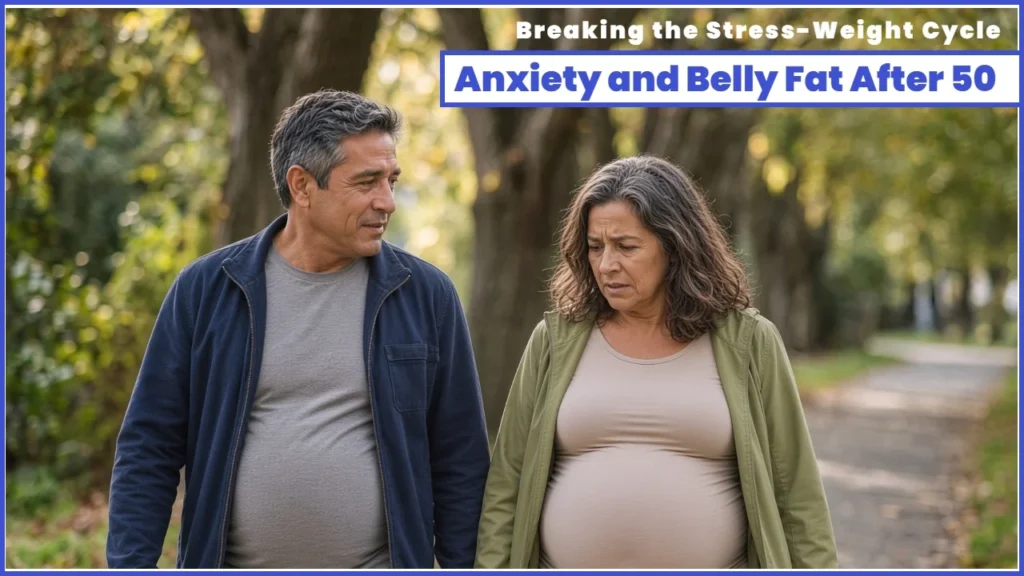
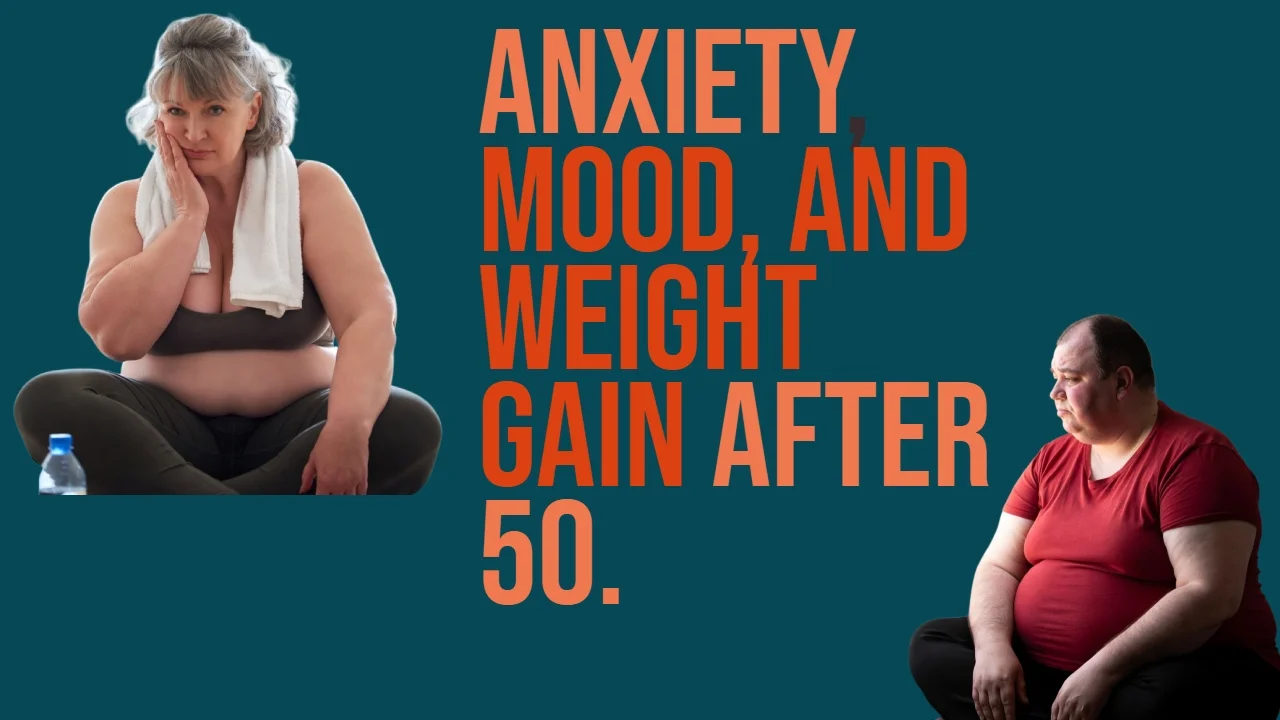
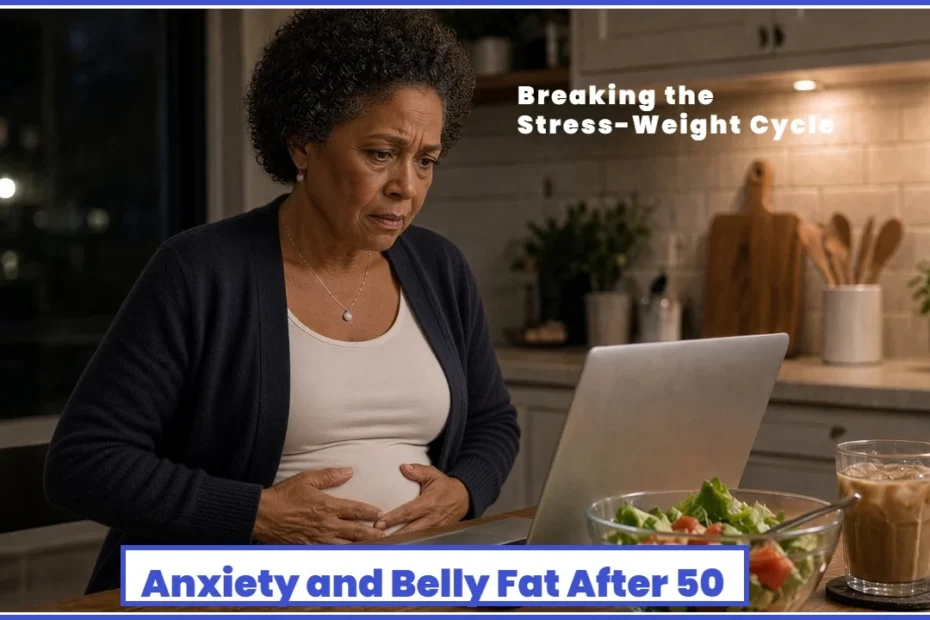
Have you noticed that feeling anxious also seems to add inches around your midsection? The link between anxiety and Belly Fat After 50 is not just in your head—it’s pure biology. After age 50, chronic stress raises cortisol levels, which directly signal your body to store visceral fat around abdominal organs. [no_toc]
Table of Contents
ToggleUnderstanding the Mind-Body Weight Cycle
Midlife HealthAt the same time, that extra weight can worsen mood, creating a frustrating cycle. Understanding the biological connection behind Anxiety and Belly Fat After 50 is the first step to breaking free. In this guide, we’ll explore why this happens, which medications may contribute, and most importantly, gentle, senior-friendly ways to calm your mind and support a healthy weight.
For Adults Over 50
Anxiety isn't just "in your head." It raises cortisol levels, which signal your body to store belly fat. Menopause and medication side effects make this worse. The good news? Specific foods and low-impact exercises can break the cycle.
The Biological Shift: Why Belly Fat Accumulates After 50
Hormonal BiologyManaging body composition becomes uniquely challenging during midlife. The sudden acceleration of abdominal weight gain isn't simply a matter of diet or activity levels—it is driven by deep biological transformations. Experiencing Anxiety and Belly Fat After 50 stems from a combination of metabolic slowing, hormonal shifts, and nervous system stress.
Estrogen Decline
During menopause, falling estrogen levels signal the body to redirect fat storage away from the hips and thighs directly toward the abdomen, increasing deep visceral fat around internal organs.
Sarcopenia (Muscle Loss)
Natural loss of muscle mass after age 50 slows baseline resting metabolic rate. With fewer calories burned throughout the day, unburned energy is easily stored in the midsection.
Insulin Shifts
Hormonal changes decrease cellular sensitivity to insulin. Higher circulating insulin levels inhibit fat breakdown and make the body far more prone to abdominal storage.
The primary driver connecting Anxiety and Belly Fat After 50 is the body's primary stress hormone: cortisol. When you experience persistent worry, your adrenal glands flood the bloodstream with cortisol to prepare for danger. Abdominal visceral fat contains up to four times more cortisol receptors than subcutaneous fat elsewhere on the body, making the midsection a magnet for stress-induced fat deposition.
The Cortisol–Visceral Fat Storage Loop
Chronic anxiety keeps cortisol elevated overnight and between meals. This ongoing stress signal continually triggers glucose release into the blood; when unburned, that sugar is rapidly converted into visceral belly fat. Breaking the cycle of Anxiety and Belly Fat After 50 requires regulating the nervous system first, calming elevated cortisol before aggressive weight loss strategies can work.
Medical Disclaimer & Important Notice
Praktikotips (praktikotips.me) does not provide medical advice, diagnosis, or treatment. The information shared on this website — including articles, recipes, summaries, and user comments — is for educational and informational purposes only. It is not a substitute for professional medical advice, psychiatric evaluation, or personalized healthcare guidance.
🧘 Low-Impact Exercises That Reduce Anxiety AND Joint Pain
“Just exercise more” isn’t helpful — especially after 50. If you have arthritis, back pain, or stiff knees, high-impact workouts can hurt more than help. The goal is movement that calms anxiety, supports metabolism, and protects your joints. Try these gentle, proven options:
🪑 Chair Yoga
Seated stretches & breathing. Improves flexibility, reduces cortisol, and lowers fall risk. Perfect for limited mobility.
✨ Start with 10 min, 3x/week
🚶 15-Min Walk (After Meals)
Walking lowers blood sugar spikes, eases anxiety, and lubricates joints. Flat, soft surfaces (track or grass) reduce knee strain.
💡 Tip: Use walking poles for stability
💧 Water Aerobics / Pool Walking
Buoyancy removes 90% of joint pressure. Great for arthritis, fibromyalgia, and weight loss. Builds strength without pain.
🏊♀️ 30 min, 2x/week
🧘♀️ Tai Chi (Slow Flow)
Research shows Tai Chi reduces anxiety and improves balance. Gentle circular movements strengthen knees and hips.
🌱 Free videos on YouTube for seniors
📌 Anxiety + movement connection: Low-impact exercise releases endorphins, lowers stress hormones, and improves sleep — directly breaking the anxiety/weight cycle.
🥗 Foods That Fight Depression & Support Emotional Wellness
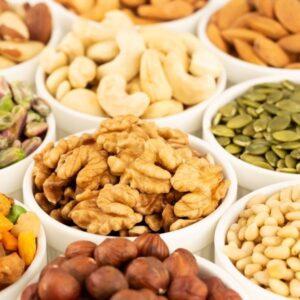
What you eat directly affects brain chemistry, inflammation, and neurotransmitter production. Instead of a generic list, here are the four most powerful nutrient families that help ease anxiety and low mood — especially important after 50.
✨ Putting it all together: A simple “anti-anxiety plate” could be: grilled salmon (omega-3), quinoa (magnesium + B vitamins), and a side of sauerkraut (probiotics). No need to be perfect — small changes add up.
📚 More from Praktikotips for healthy aging:
- 🥤 Beet Juice Benefits for Adults 50+ – Supports blood pressure, circulation & brain blood flow
- 🍍 14 Reasons to Eat More Pineapple – Anti-inflammatory fruit for joint pain & mood
- 🍋 Lemon Water Every Morning – Gentle morning ritual to lower cortisol & aid digestion
- 📏 Metric to Imperial Conversion – Easy kitchen measuring for senior-friendly recipes
Midlife Wellness & Stress Metabolism FAQ
Expert InsightsUnderstand how stress hormones, hormonal changes, sleep, and key nutrients (Anxiety and Belly Fat) shape midlife metabolism and body composition in women.
1. Can anxiety cause belly fat in women? ▼
Yes. When you experience persistent anxiety, your adrenal glands produce elevated levels of cortisol (the main stress hormone).
Cortisol mobilizes energy by triggering the release of glucose into your bloodstream. Abdominal fat tissue (visceral fat) contains up to four times more cortisol receptors than subcutaneous fat (hips or thighs), causing high-stress states to selectively deposit fat right in the midsection.
2. Why is my stomach getting bigger after 50 female? ▼
Abdominal weight shifts after 50 are usually driven by a combination of key metabolic factors:
- Estrogen Drop: Estrogen shifts fat storage from hips/thighs toward the abdomen.
- Insulin Sensitivity Decline: Lower estrogen makes cells less responsive to insulin, signaling fat storage around abdominal organs.
- Muscle Loss (Sarcopenia): Age-related muscle loss slows baseline metabolic burn rate.
- Midlife Cortisol Spikes: Disrupted sleep and life transitions increase stress hormone exposure.
3. What is the connection between anxiety and midlife weight gain? ▼
Anxiety acts as a multiplier for midlife metabolic shifts by creating a continuous hormone feedback loop:
The Cortisol–Insulin Loop: Anxiety elevates cortisol, spiking blood sugar. Your body releases insulin to manage sugar, blocking fat burning and fueling intense cravings for refined carbohydrates.
Behavioral Triggers: High anxiety disrupts deep restorative sleep and drives emotional eating patterns.
4. Are there effective natural remedies for cortisol belly fat? ▼
Reducing stress-driven weight relies on calming the nervous system rather than intense calorie restriction:
- Low-Impact Movement: Walking (especially post-meal), chair yoga, or swimming lower cortisol without adding physical stress.
- Balanced Blood Sugar: Aim for 25–30g of protein plus high-fiber foods per meal to prevent glucose spikes.
- Nervous System Down-Shift: Practice 5 minutes of box breathing, morning sunlight viewing, and limit late caffeine.
- Adaptogenic Nutrients: Ashwagandha and phosphatidylserine have clinically shown support in buffering elevated evening cortisol.
5. What is the link between poor sleep and belly fat? ▼
Sleep deprivation is a direct catalyst for abdominal fat accumulation:
- Hormone Disruption: Sleeping less than 7 hours lowers leptin (fullness) and spikes ghrelin (hunger), sparking carbohydrate cravings.
- Elevated Overnight Cortisol: Poor sleep keeps cortisol elevated overnight when it should reach its lowest trough.
- Insulin Resistance: Just one night of poor sleep reduces next-day insulin sensitivity.
6. Is "adrenal fatigue" real, and does it cause weight gain? ▼
"Adrenal fatigue" is not an official medical diagnosis, but the physical reality experienced is real. Clinically, it is recognized as HPA-axis dysregulation (Hypothalamic-Pituitary-Adrenal axis dysfunction).
Instead of adrenal exhaustion, your brain's communication pathway with stress hormones becomes overstimulated, keeping cortisol elevated, disrupting thyroid production, slowing metabolism, and signaling abdominal weight storage.
7. Can magnesium help with anxiety and weight gain? ▼
Indirectly, yes. Magnesium serves as a critical cofactor in stress regulation, insulin response, and sleep quality:
- Lowers Stress Response: Helps regulate neurotransmitters like GABA and blunts excessive cortisol surges.
- Improves Insulin Sensitivity: Promotes efficient glucose uptake in cells to reduce fat storage signals.
- Supports Sleep Architecture: Forms like Magnesium Glycinate assist in muscle relaxation and deep nightly rest.
Key Takeaway for Midlife Wellness - Anxiety and Belly Fat
Addressing stress-induced weight gain requires a holistic approach focused on calming the nervous system, sustaining balanced glucose levels, and restoring deep sleep—rather than resorting to high-stress workouts or restrictive diets.
Conclusion: Managing Anxiety and Belly Fat After 50
Understanding the connection between Anxiety and Belly Fat After 50 is essential for breaking the frustrating weight gain loop. Driven by elevated cortisol levels, menopausal shifts, and potential medication side effects, abdominal fat storage requires a gentle, hormonal approach rather than extreme dieting or high-stress workouts.
By focusing on senior-friendly low-impact exercises, blood-sugar-balancing meals, and targeted stress management, addressing Anxiety and Belly Fat After 50 becomes completely manageable. Skip the generic advice and implement these practical, sustainable steps for calmer days, balanced hormones, and a healthier weight.
We hope you found this information helpful and informative! If you have any additional thoughts or experiences about managing stress and its impact on weight regulation, we encourage you to share them in the comments below. We love hearing from our readers and appreciate any insights you may have to offer.
BMI Index Calculator
Basal Metabolic Rate
Tdee Calculator
📢 share this article
✨ tap to share — help others crack the comment code


Let’s prioritize our health by adopting a healthy diet, engaging in regular physical activity, and maintaining a healthy weight
Please, go on. It’s my pleasure
The Role of Community in Combating Loneliness and Abandonment, know and how the importance of community support in alleviating feelings of loneliness and abandonment.
Nutrition can impact anxiety: Certain nutrients, such as omega-3 fatty acids, magnesium, and B vitamins, have been linked to reducing anxiety symptoms. Encouraging a balanced diet rich in these nutrients can be beneficial for individuals managing anxiety disorders.
This is so important! Stress and anxiety are often overlooked when talking about obesity. I’m going to share this with a friend who’s going through something similar.
Thank you for bringing awareness to this. It’s not just about ‘eating less,’ mental health plays such a huge role in weight management.