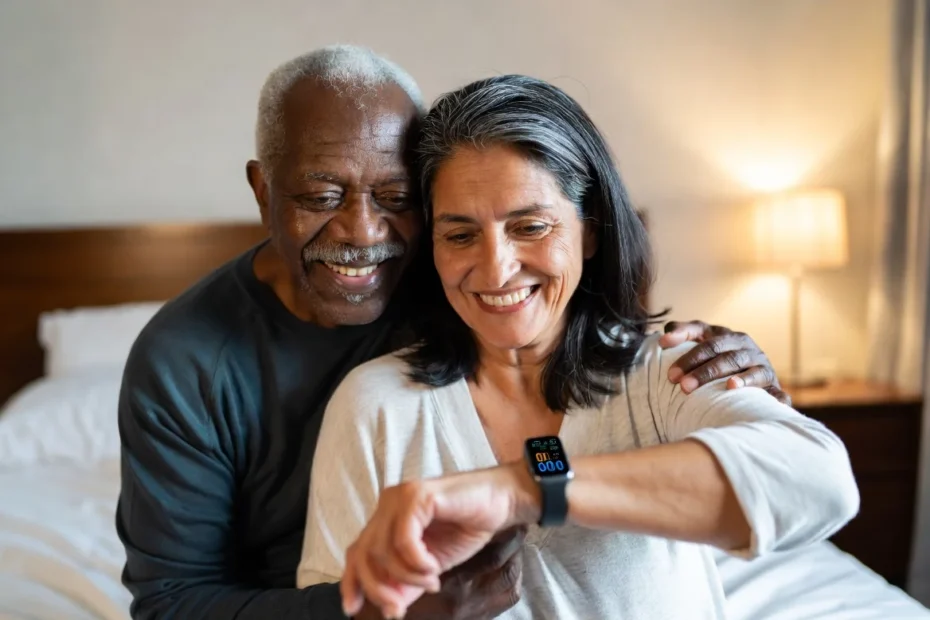
Let’s be entirely honest: most modern health gadgets are an absolute nightmare if you value simplicity. They buzz constantly, demand complicated daily smartphone updates, and expect you to navigate tiny, confusing digital menus just to see your progress.
If you are hunting for the simplest fitness tracker for seniors who hate technology, you aren't looking to track marathon splits or sync your watch to a virtual cloud ecosystem. You simply want a reliable, quiet partner that monitors your steps, keeps tabs on your heart rate, and protects your peace of mind—without making you feel like you need a degree in computer engineering just to use it.
The good news is that wearable health tech has shifted. Instead of forcing you to fight with endless touchscreen swipes, a new wave of senior-focused devices operates entirely in the background. They do the heavy lifting automatically, leaving you free to focus on your day while keeping your critical vitality metrics beautifully secure.
"Technology should serve your daily wellness, not cause your blood pressure to spike out of pure frustration. Let's look at the simple, streamlined options that keep your independence front and center."
What Are Wearable Devices?
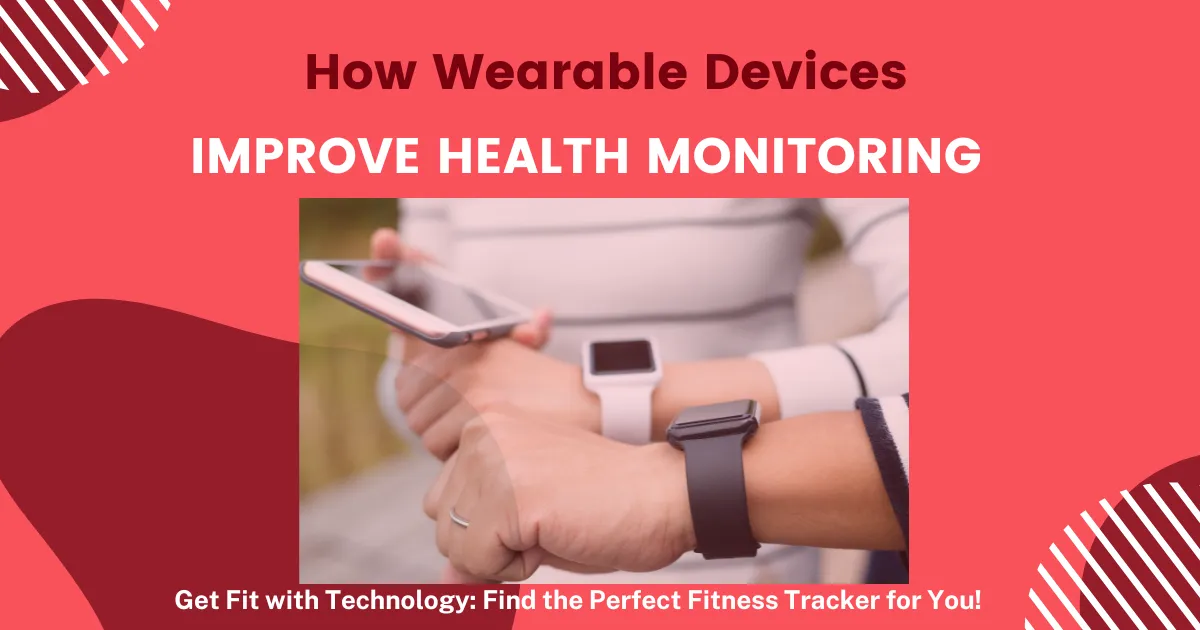
Wearables are taking the world by storm, and they're not going away anytime soon. Wearables (wearable IoT) are electronic devices incorporated into items that can be comfortably worn on the body. These wearable devices track information in real-time. Whether it is an advanced smartwatch or a specialized lifestyle device like the wearable fitness Oura Ring, these tools are designed to make health management entirely seamless.
Wearable devices have motion sensors that take snapshots of your day-to-day activity and sync them with mobile devices or laptop computers. After the invention of smartphones, wearable electronics are the next significant innovation in technology. Today, choosing the right fitness tracker for seniors allows individuals to maintain full personal independence while automatically staying on top of daily wellness metrics. For instance, investing in a dedicated fitness tracker for seniors tracking sleep quality ensures you can monitor heart rate variability, overnight recovery, and deep sleep cycles entirely in the background without any digital distraction.
🌟 Beyond Calories: Tracking What Truly Matters for Longevity
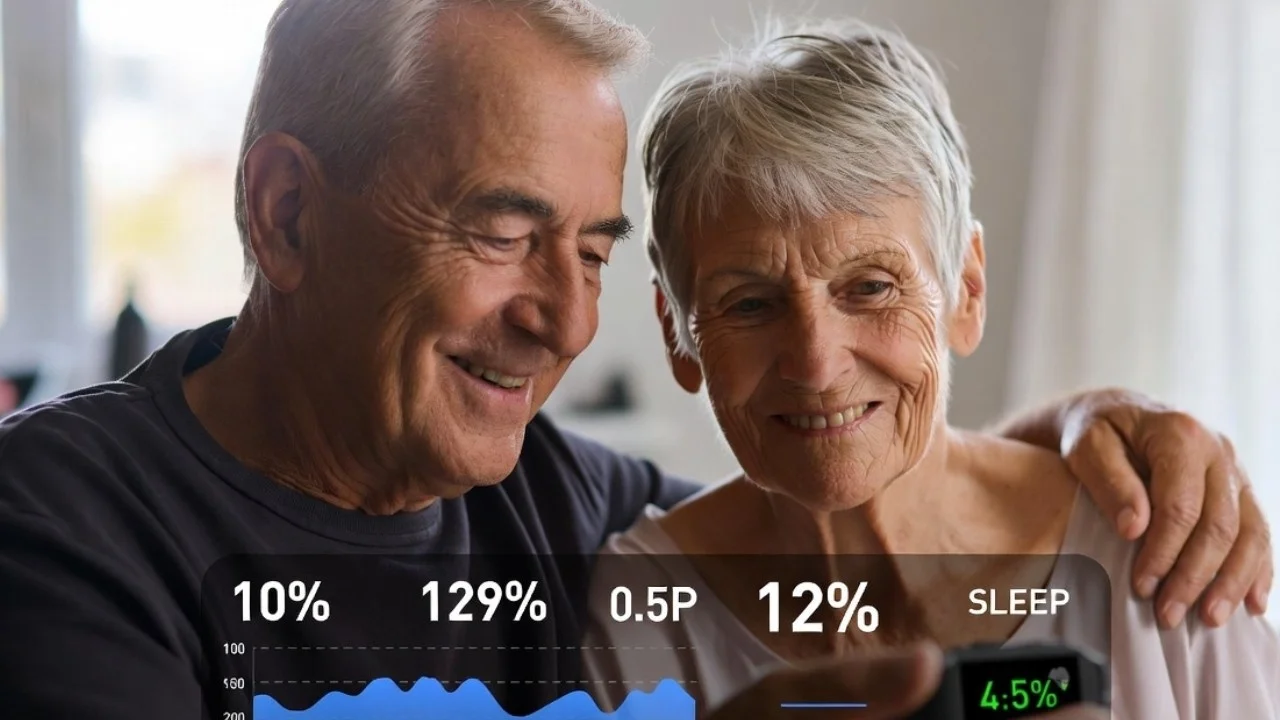
Forget about burning hundreds of calories or crushing intense, sweaty gym sessions. True wellness after 50 is about protecting your daily vitality, optimizing sleep recovery, and waking up with the clean, sustainable energy you deserve. Modern wearable devices give you a window into your nervous system using three vital internal metrics.
Heart Rate Variability (HRV) — Your Stress & Energy Compass
HRV measures the tiny, millisecond variations between your individual heartbeats. Instead of just tracking speed, it gauges how well your autonomic nervous system adapts to daily demands. A higher morning HRV tells you that your body successfully repaired itself overnight, signaling that you have the vitality reserves to take on a full, active day.
- What Are Wearable Devices?
- 🌟 Beyond Calories: Tracking What Truly Matters for Longevity
- 🔍 Finding Your Perfect Match: Top Health Wearables Reviewed
- 🛠️ The "Anti-Frustration" Buying Checklist
- 🚀 Emerging Wearable Technologies: Expanding Monitoring Capabilities
- ⌚ Choosing the Right Wearable Device After 50
- 📋 Technology Summary: The Future of Senior Health Monitoring
Blood Oxygen (SpO2) — The Secret to Waking Up Energized
Have you ever slept for a full eight hours but still woken up feeling completely drained? Tracking your nocturnal blood oxygen levels (SpO2) helps reveal why. Minor drops in oxygen during the night point to micro-disruptions in your breathing that ruin deep sleep cycles. Catching these trends early lets you tweak your sleeping position or environment to secure deep, restorative rest.
On-Demand ECG Monitoring — True Peace of Mind
As our bodies mature, occasional chest flutters or unexpected heart palpitations can cause immediate worry. Many modern wellness wearables allow you to take an electrocardiogram (ECG) right from your wrist. While not a replacement for a clinical checkup, it quickly checks your heart rhythm for common irregular patterns like Atrial Fibrillation, offering reassurance right when you need it most.
🔍 Finding Your Perfect Match: Top Health Wearables Reviewed
Navigating the world of mobile wellness setups can feel overwhelming when most products look like they were built exclusively for engineering students or extreme athletes. Finding an ideal fitness tracker for seniors shouldn't require technical compromises; it should focus entirely on options that provide continuous safety, day-to-day independence, and absolute ease of use.
🤝 Simplest smart watch for seniors with heart monitor
If the idea of swiping through dozens of confusing menu screens makes you break out in a sweat, you aren't alone. Many older adults find typical modern gadgets completely over-engineered. The ideal solution is a simplest smart watch for seniors with heart monitor that trims away all the digital noise, leaving you with simple, automatic health readings.
Instead of complex swipe configurations, these friendly smartwatches prioritize a "set it and forget it" setup. They track your active pulse and resting heart rate entirely in the background, syncing securely to your family's phones without requiring daily technical troubleshooting on your end.
What makes a device truly simple?
- Automatic Tracking: Heart rate scans happen continuously without needing to open separate applications.
- Physical Buttons: Easy tactile controls to quickly display the time and pulse without relying entirely on modern touch gestures.
- Family Sharing: Secure options that pass health trends directly to adult children for collective peace of mind.
🛡️ Wearable devices that detect falls without a monthly fee
Personal safety shouldn't feel like a heavy subscription tax on your monthly pension. Traditional medical alert pendants frequently trap users in rigid contracts that add up over time. Fortunately, modern technology now lets you secure wearable devices that detect falls without a monthly fee.
These watches run on advanced internal accelerometers and gyroscopes capable of measuring the specific physics of a hard impact. If a sudden tumble occurs, the device communicates with your own mobile phone to text emergency alerts directly to local family members, cutting costly third-party call centers entirely out of the loop.
Smart ways to cut out hidden fees:
- Built-In GPS Alerting: Passes your precise location straight to your family's phones during an accidental fall.
- Stand-Alone Safety: Relies on internal sensors rather than continuous paid premium monitoring subscriptions.
- Adjustable Sensitivity: Tweak sensor configurations to minimize false alarms from basic everyday movements.
🌙 Best fitness tracker for seniors tracking sleep
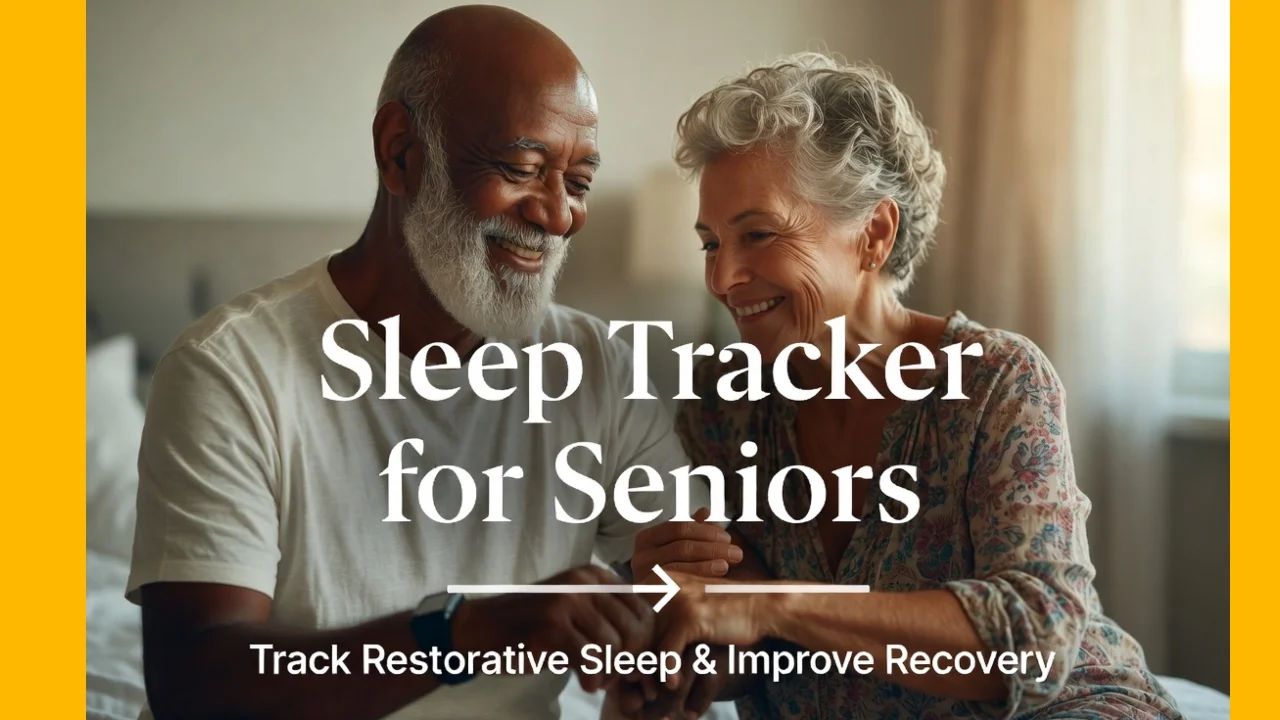
As our bodies mature, our sleep architecture goes through deep, natural changes. Deep sleep cycles shorten, and waking up during the night becomes much more frequent. Finding the best fitness tracker for seniors tracking sleep isn't about setting competitive workout milestones—it is about managing your morning vitality.
These specialized trackers pay careful attention to respiratory patterns and subtle nightly physical movements. By showing you clear, easy breakdowns of your light, deep, and REM sleep, they guide you toward subtle evening habit shifts that transform how energized you feel when your feet hit the floor in the morning.
Vital metrics for overnight recovery:
- Lightweight Design: Soft, thin profiles that remain completely comfortable to wear even for light sleepers.
- Wakefulness Windows: Reveals exactly how long you spend awake during brief mid-night arousals.
- Morning Energy Score: Translates confusing medical values into a simple wellness rating for the day ahead.
🫀 Do smartwatches track irregular heartbeat accurately?
This is one of the most critical questions asked by health-conscious seniors looking to protect their cardiovascular well-being. So, do smartwatches track irregular heartbeat accurately? The answer comes down to knowing the exact difference between daily pulse checks and a true electrocardiogram.
Most wrist-worn devices track blood flow changes via simple green LED lights. While incredibly efficient for tracing regular heart rate patterns, they can occasionally struggle with irregular flutters. For true medical peace of mind, ensure your tracker features built-in ECG metal sensor pads, which have been cleared by health authorities to spot signs of Atrial Fibrillation with impressive accuracy.
How to capture accurate readings:
- Keep It Snug: The sensor needs close, steady contact with the skin—loose bands generate distorted data.
- Stay Perfectly Still: Always sit down and rest your arm quietly on a flat table while taking an active ECG scan.
- Know the Limits: Treat watch warnings as a helpful tip to contact your doctor, never as a total replacement for medical equipment.
👓 Easy to read smartwatches for aging eyes
The most advanced health tracker on earth is completely useless if you have to go hunting for your reading glasses every time your wrist vibrates. Microscopic fonts and cramped screen arrangements are a massive, frustrating physical barrier. When shopping around, configuring an easy to read smartwatches for aging eyes setup changes everything.
These watches step away from tiny, cluttered numbers in favor of ultra-bright displays with big bold layouts, crisp contrast borders, and scaleable font sizing. This ensures you can effortlessly check your morning steps or review your heart rate at a quick glance, even when walking outside in bright, blinding sunlight.
Crucial display properties to look for:
- High-Contrast AMOLED: Screens with rich black backgrounds that make glowing numbers incredibly easy to isolate.
- Custom Large Watch Faces: Clean digital layouts designed to prioritize one or two massive numbers over crowded dials.
- Anti-Glare Coatings: Specialized protective layers that curb distracting reflections when you are active outdoors.
🛠️ The "Anti-Frustration" Buying Checklist
Before spending your hard-earned money on a piece of health technology, ask yourself a simple question: Will this device adapt to my life, or am I going to be fighting with it every single day? Here are the three non-negotiable comfort and usability features you must check off before making a purchase.
Multi-Day Battery Life
Taking off a watch to charge it every single night is a major hassle. Even worse, if you charge it while sleeping, you lose the ability to track your night-time recovery. Always prioritize devices that offer a continuous 5 to 7 days of battery life on a single charge.
Crisp Screen Visibility
A health tracker won't do you any good if you have to look for your reading glasses every time it buzzes. Look for models featuring high-contrast AMOLED screens, crisp, bold typography, and adjustable font sizing that stays easily readable under direct sunlight.
All-Day Wrist Comfort
Your watch band should be soft, light, and completely non-irritating. Look for breathable, hypoallergenic materials. If you have mild arthritis or changing wrist sizes throughout the day, skip complicated traditional clasps and choose magnetic loops or simple stretch bands.
🚀 Emerging Wearable Technologies: Expanding Monitoring Capabilities
The world of personal wellness is moving far beyond basic heart rate tracking. The next generation of wellness devices brings non-invasive, lab-grade biological insight right to your skin, making health management simple and accessible.
💧 Sweat Sensors: Decoding Your Body's Signals
Sweat, a seemingly simple bodily function, holds a wealth of information about our health, fitness, and stress levels. For years, understanding its nuances was relegated to subjective observations—like feeling clammy or noticing damp patches.
Representing a cutting-edge area of wearable technology, modern sweat sensors stick comfortably to the skin as small patches or wristbands. Unlike a traditional fitness tracker for seniors that focus primarily on physical motion, these biochemical patches utilize electrochemical, optical, or microfluidic techniques to continuously analyze your sweat production and electrolyte concentration. By reading essential biomarkers, they offer profound insights into your daily hydration levels, osmotic balance, and physical muscle fatigue.
🔬 The Science of Sweat
Primarily produced by eccrine glands for thermoregulation, sweat is more than just water. It contains a complex mixture of vital electrolytes, including sodium, potassium, chloride, and magnesium. Subtle shifts in these concentrations act as early indicators of your real-time hydration status and underlying stress levels.
🩸 Wearable Glucose Meters (CGMs)
Managing blood sugar profiles has traditionally relied on painful, repetitive routines. Continuous Glucose Monitors (CGMs) have completely transformed this reality, offering an incredibly smooth and stress-free alternative for proactive health management.
By tracking glucose levels in the interstitial fluid through a tiny, painless sensor placed just under the skin, CGMs deliver real-time blood sugar trends directly to your smartphone or smartwatch. When paired alongside a smart fitness tracker for seniors, this diagnostic tech completely eliminates the need for frequent finger pricks, allowing you to instantly observe how your body processes specific meals, exercises, and sleep cycles.
💪 Vitality Takeaway
Having a continuous view of your glucose curves empowers you to make highly customized choices regarding your nutrition and physical movement, promoting steady metabolic health and keeping afternoon energy crashes entirely at bay.
⌚ Choosing the Right Wearable Device After 50
Not all health trackers are created equal. For our generation, the best wearable devices shouldn't feel like a complicated computer on your wrist—they should be simple, life-enhancing partners that work effortlessly in the background.
Heart & Vitality Monitoring
Look for continuous tracking that monitors resting heart rate and heart rate variability (HRV). These metrics act as an early warming warning system for physical fatigue or changes in wellness.
Long-Lasting Battery Life
Avoid devices that require daily charging. Opt for trackers with a battery that lasts at least 5 to 7 days so you can continuously track your sleep patterns without frequent disruptions.
High-Contrast Visibility
A health tracker is only helpful if you can read it. Prioritize vibrant AMOLED displays with large text options that remain crystal clear even under bright, direct outdoor sunlight.
Proactive Safety Features
Advanced choices offer built-in fall detection and automatic SOS capabilities that can instantly notify your chosen emergency contacts if you experience a hard, sudden tumble.
📋 Technology Summary: The Future of Senior Health Monitoring
The modern landscape of senior wellness is shifting from reactive clinical care to proactive, real-time tracking. Central to this revolution is the everyday fitness tracker for seniors, which has evolved from a basic step-counter into a comprehensive health command center. Beyond merely tracking daytime movement, older adults increasingly rely on a high-fidelity fitness tracker for seniors to track sleep quality to map overnight respiratory patterns, identify midnight wakefulness windows, and make informed evening habit shifts that maximize morning vitality.
Simultaneously, cutting-edge innovations are expanding what these devices can measure from the surface of the skin. The integration of next-generation wearable sweat sensors enables entirely non-invasive, continuous monitoring of critical biochemical markers such as glucose, lactate, and stress-related cortisol without requiring painful blood draws. For individuals managing chronic conditions or seeking early illness detection, pairing a standard fitness tracker for seniors with these advanced wearable sweat sensors provides a multimodal view of overall physiology. Ultimately, using a specialized fitness tracker for seniors that tracks sleep quality alongside real-time metabolic insights ensures that older adults can preserve their physical independence while maintaining total peace of mind.
📢 share this article
✨ tap to share — help others crack the comment code


Step into the world of cutting-edge wearables and discover how these innovative solutions are revolutionizing industries.
Love how wearable devices are transforming our health journey!
This is fascinating! I’m curious to know more about the accuracy and reliability of these wearable devices. How do they ensure data privacy and security? #wearabletech #healthtech