
Kidney stones after 60 can be very different from those in younger adults. Many seniors experience dull back pain, fatigue, or no pain at all – leading to delayed diagnosis and serious complications. This guide covers how to prevent kidney stones in older adults, the best low-oxalate diet for seniors, and when to see a doctor. If you have severe pain, fever, or blood in your urine, seek immediate care.
Table of Contents
ToggleThis is one of the most common questions—and the answer is not simple.
👉 Seniors do not necessarily feel more or less pain
👉 But they often experience different and less typical symptoms
👉 Kidney Stones in People Over 60: Do They Feel More or Less Pain?
As people age, the way the body responds to pain can change. While kidney stones are still painful, older adults may experience symptoms differently.
Key Differences in Seniors :
- Less intense but more confusing pain
Pain may not be as sharp or may be mistaken for back or digestive issues. - Delayed symptom recognition
Seniors may not immediately identify kidney stones, delaying treatment. - Higher complication risk
Conditions like dehydration or reduced kidney function increase severity. - More silent cases
Silent kidney stones in elderly patients can be especially dangerous – without typical pain, infections or kidney damage may go unnoticed until serious.

Common Syptoms in Seniors
Why Pain Feels Different After 60
- Pain perception can change with age
- Nerve sensitivity may decrease
- Chronic conditions can mask symptoms
- Pain may feel duller or more spread out
- It can be confused with back or digestive issues
- Some seniors experience minimal pain (silent stones)
Common Symptoms in Seniors
- Persistent lower back or side discomfort
- Pain during urination
- Frequent urge to urinate
- Cloudy or dark urine
- Nausea or fatigue
- Fever (possible infection)
Low-Oxalate Diet After 60: A Smart Strategy to Reduce Kidney Stone Risk
As we age, preventing kidney stones after 60 becomes increasingly important. A low-oxalate diet can play a key role in reducing discomfort and lowering the risk of stone formation—especially for older adults who may be more vulnerable to dehydration and slower kidney function.
By limiting high-oxalate foods and choosing balanced, nutrient-rich alternatives , seniors can support better kidney health while maintaining overall wellness.
Practical Recommendations to Reduce Kidney Stone Pain After 60
Dealing with pain due to kidney stones can be especially challenging for adults over 60. Changes in hydration, metabolism, and kidney function mean that prevention and daily habits play a crucial role in reducing both the intensity and frequency of symptoms.
Adopting a low-oxalate, balanced lifestyle can support kidney health, reduce discomfort, and promote healthy aging. Below are practical, evidence-based strategies tailored for seniors:
Why It Matters After 60
- Helps reduce the risk of recurring kidney stones
- Supports hydration and overall kidney function
- Encourages a balanced diet without unnecessary restrictions
- May reduce discomfort associated with stone formation
Simple, Effective Strategies
-
Stay Well Hydrated
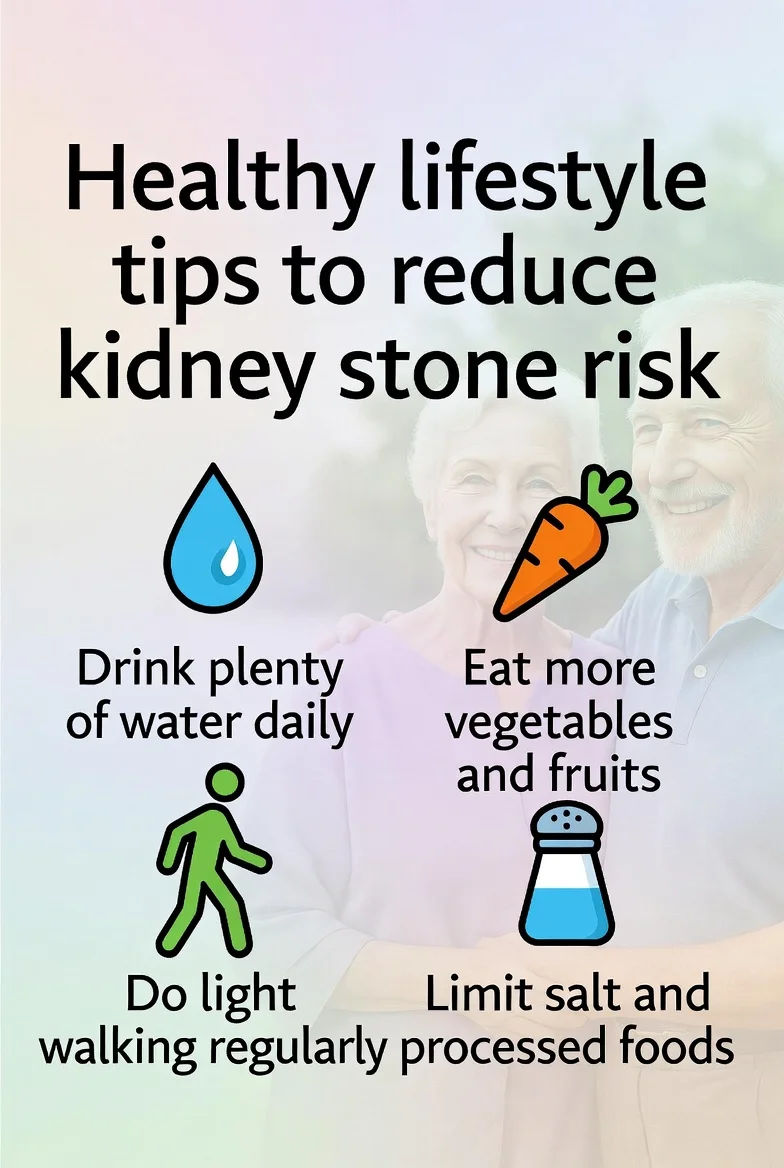
Drinking 2.5–3 liters of water daily helps dilute urine and flush out excess minerals, reducing the risk of stone formation and recurring pain. -
Choose Low-Oxalate Foods
Include fruits and vegetables such as apples, bananas, cabbage, cauliflower, and cucumbers. These options help lower oxalate levels and support kidney health. -
Balance Calcium Intake
Instead of avoiding calcium, pair calcium-rich foods (like dairy or fortified alternatives) with oxalate-containing foods. This helps reduce oxalate absorption and protects the kidneys. -
Limit High-Oxalate Foods
Reduce intake of foods like spinach, beets, rhubarb, almonds, and peanuts . If consumed, combine with calcium-rich foods and increase water intake. -
Reduce Salt and Processed Foods
Excess sodium can increase calcium levels in urine, raising the risk of kidney stones. -
Consult a Healthcare Provider
Before making major dietary changes, especially if you take medications or have existing conditions.
With small, consistent changes, a low-oxalate diet can become a sustainable habit that supports kidney health and independence after 60. For older adults, prevention is not just about avoiding pain—it’s about maintaining quality of life and long-term well-being.
👉 Do Men or Women Suffer More from Kidney Stones After 60?
Research shows that kidney stones after 60 affect both men and women, but the patterns are not identical. In earlier adulthood, men generally have a higher risk. However, after age 60, the difference becomes less pronounced as hormonal and metabolic changes influence both sexes.
Men tend to experience a slightly higher lifetime incidence of often presenting with more classic and intense pain episodes. Women, on the other hand, may experience more subtle symptoms, especially after menopause, when estrogen levels decline and protection against stone formation decreases.
After 60, women’s risk increases due to reduced bone-calcium regulation and higher susceptibility to urinary tract infections, which can complicate stone formation. Men, meanwhile, may still experience larger or more obstructive stones, but symptom presentation can vary widely in both groups.
📊 Oxalate Content of Common Foods
Use this guide to choose low-oxalate options. Low-oxalate foods (green) are kidney-friendly. Moderate (yellow) and high (red) should be limited or paired with calcium-rich foods.
🌾 Grains
🍎 Fruits
🥬 Vegetables
🍗 Proteins
🥛 Dairy
🚨 When to See a Doctor Immediately
Do not wait if you experience any of these with suspected kidney stones:
- ✅ Severe pain that prevents sitting still or finding a comfortable position
- ✅ Fever and chills (possible infection)
- ✅ Blood in urine (pink, red, or brown color)
- ✅ Nausea or vomiting that prevents drinking fluids
- ✅ Difficulty urinating or inability to pass urine
📞 Go to the emergency room or call your doctor immediately.
FAQ – Kidney Stones in the Elderly
Do seniors feel less pain from kidney stones?
Not necessarily. Seniors may feel different or less intense pain, but this can make kidney stones harder to detect and more dangerous due to delayed diagnosis.
What are the first signs of kidney stones in elderly people?
Early signs include mild back pain, frequent urination, cloudy urine, and fatigue. Symptoms are often less obvious than in younger adults.
Are kidney stones more dangerous after 60?
Yes. Older adults have a higher risk of complications due to dehydration, slower kidney function, and delayed symptom recognition.
How can seniors prevent kidney stones?
Prevention includes staying hydrated, eating a balanced diet, monitoring medications, and maintaining physical activity.
Can kidney stones occur without pain in older adults?
Yes. Some seniors experience “silent kidney stones”, where little or no pain is felt, increasing the risk of unnoticed complications.
Kidney stones after 60 are common but manageable. Recognizing kidney stones after 60 symptoms (which may be subtle) and following a low-oxalate diet for seniors can significantly reduce your risk. Remember to stay hydrated, balance your calcium intake, and talk to your doctor about your medications. Download our free Kidney Stone Prevention Checklist to track your daily water intake and oxalate foods.
Take Control of Kidney Health After 60
Discover simple habits, diet tips, and daily strategies to reduce kidney stone risk and stay healthy, active, and independent.
Explore Healthy Aging Tips →


