

Cognitive games for aging adults = Memory Games For Seniors: Memory games for adults are fun and a great way to exercise your brain. Whether you’re looking to boost your memory skills or enjoy a mental challenge, these games to improve memory are perfect for beginners.
Table of Contents
ToggleIf you’ve ever walked into a room and forgotten why – these fun, low-stress games can help. No screens required for most.
Understanding Cognitive Decline
Cognitive decline can sound daunting, but understanding its nuances is crucial for brain health. It refers to a noticeable and measurable decline in mental function, such as memory loss, thinking, and reasoning. While some old-age memory loss is normal, persistent and progressive changes might signal underlying issues.
It’s vital to differentiate age-related shifts from the symptoms of Alzheimer’s or other forms of cognitive disease. Early signs might include difficulty with problem-solving or planning, or confusion about time or place, going beyond simple absent-mindedness. Recognizing these cognitive issues empowers individuals and families to seek timely medical evaluation.
Proactive steps, lifestyle adjustments, and early intervention can significantly help manage cognitive decline and support the health of an aging brain. Stay informed, stay vigilant.
Explore the Power of Memory Games
Scientifically-Backed Brain Health Benefits
Memory games offer more than entertainment—they act as a structured workout for your neural pathways.
Enhanced Retention & Recall
- Boost Retention: Train the brain to store data efficiently.
- Speed Up Recall: Remember names and tasks with ease.
- Supports both short-term and long-term memory.
Improved Cognitive Skills
- Concentration: Reduce distractions through focused effort.
- Strategic Thinking: Master pattern recognition and logic.
- Agility: Adapt to new rules and changing difficulty levels.
Long-Term Resilience
- Your brain can grow new connections at any age: Encourage the brain to rewire itself.
- Mental savings account: Build a buffer against decline.
- Mood Boost: Reduce stress through fun, successful learning.
Why Seniors Should Play
Regular mental clarity, improved multitasking, and a commitment to lifelong learning are just a few games away. Start your brain-health journey today.
Brain-Body Connection - Memory Games for Seniors
Pair these games with omega-3 rich foods (walnuts, salmon) and a daily 15-minute walk. Physical activity boosts the same neural pathways these games target.
Boost Your Brainpower: Top Training Games
How to Play
Gather a group. Each person says their name and one fact. The next person must repeat all previous names and facts before adding their own.
Cognitive Targets
- Short-term memory recall
- Active listening skills
- Social focus & attention
How to Play
Lay a shuffled set of matching cards face down. Flip two at a time to find pairs. The player with the most matches wins.
Cognitive Targets
- Pattern recognition
- Visual memory concentration
- Attention to detail
How to Play
Start with a word like "Apple." The next person says a related word like "Fruit." Keep the chain going as long as possible!
Cognitive Targets
- Associative thinking
- Creative recall speed
- Vocabulary maintenance



9 Memory Games for Unbelievable Brain Health
Cognitive engagement doesn't have to be a chore. These activities are designed to improve memory and problem-solving while staying pleasant and engaging.
Sudoku
Challenge your memory and logic. Regularly solving these puzzles helps seniors maintain cognitive abilities across varying difficulty levels.
Crossword Puzzles
Stimulate your verbal memory. Recalling words and connecting clues is a full-brain workout found in newspapers and online.
Memory Card Games
Classic games like "Concentration" require you to remember the location of flipped cards—an excellent drill for active memory training.
Jigsaw Puzzles
Improve your visual-spatial recall by remembering shapes and positions. It’s a meditative way to sharpen attention to detail.
Brain Training Apps
Platforms like Lumosity and Peak provide personalized exercises targeting specific cognitive areas through your smartphone or tablet.
Word Searches
Maintain language skills and scanning speed. These puzzles are a fun, low-stress way to keep the brain active daily.
Board Games
Scrabble or Bananagrams offer a dual benefit: intense mental stimulation combined with the cognitive perks of social interaction.
Chess
The ultimate mental workout. Enhances long-term planning, critical thinking, and the ability to anticipate multiple scenarios.
Online Memory Games
Adaptive digital games offer shifting difficulty levels, ensuring your brain is constantly challenged regardless of your skill level.
Consistency is the secret to cognitive improvement. Incorporate these games into your routine today and pair them with a healthy lifestyle for the best results!
Unlock Cognitive Excellence
Working memory is your mental workspace—the crucial area where your brain juggles information to complete daily tasks and solve complex puzzles.
Hold and manipulate various pieces of data—like card positions or sequences—simultaneously as you navigate through a game.
Adapt your strategy as the game progresses. Seamlessly switch between different observations to find the winning move.
Analyze, compare, and apply retained knowledge to solve puzzles and make high-stakes decisions with clarity.
Maintain deep focus and filter out external distractions, allowing your brain to hone in on the precise task at hand.
Track and reproduce intricate patterns and sequences in the exact order required, sharpening your precision.
Regular practice makes your memory "engine" more efficient, translating to enhanced cognitive skills in your daily life.

Conclusion: Memory Games for Seniors and Final Tips
Why do cognitive games for aging adults work so effectively for brain health? The answer lies in neuroplasticity—your brain’s remarkable ability to form new neural connections at any age. When you regularly play cognitive games for aging adults, you actively strengthen the communication pathways between brain cells. Think of it like physical therapy for your mind: each puzzle, matching game, or word association builds mental “muscle memory.”
Cognitive games for aging adults specifically target the hippocampus, the brain’s memory center, which naturally shrinks with age. By challenging this area with pattern recognition, recall exercises, and problem-solving tasks, you can actually slow age-related shrinkage. Research shows that just 15 minutes of daily engagement with cognitive games for aging adults improves short-term memory, processing speed, and even mood—thanks to dopamine release during successful problem-solving.
Unlike passive activities like watching television, these games demand active focus, forcing your brain to recruit multiple regions simultaneously. This cross-training effect builds what scientists call “cognitive reserve”—a protective buffer against memory decline. The best part? You don’t need expensive equipment or an internet connection. A simple deck of cards, a crossword puzzle book, or a word game with a friend delivers the same benefits. Start small, stay consistent, and watch your mental agility improve within weeks.
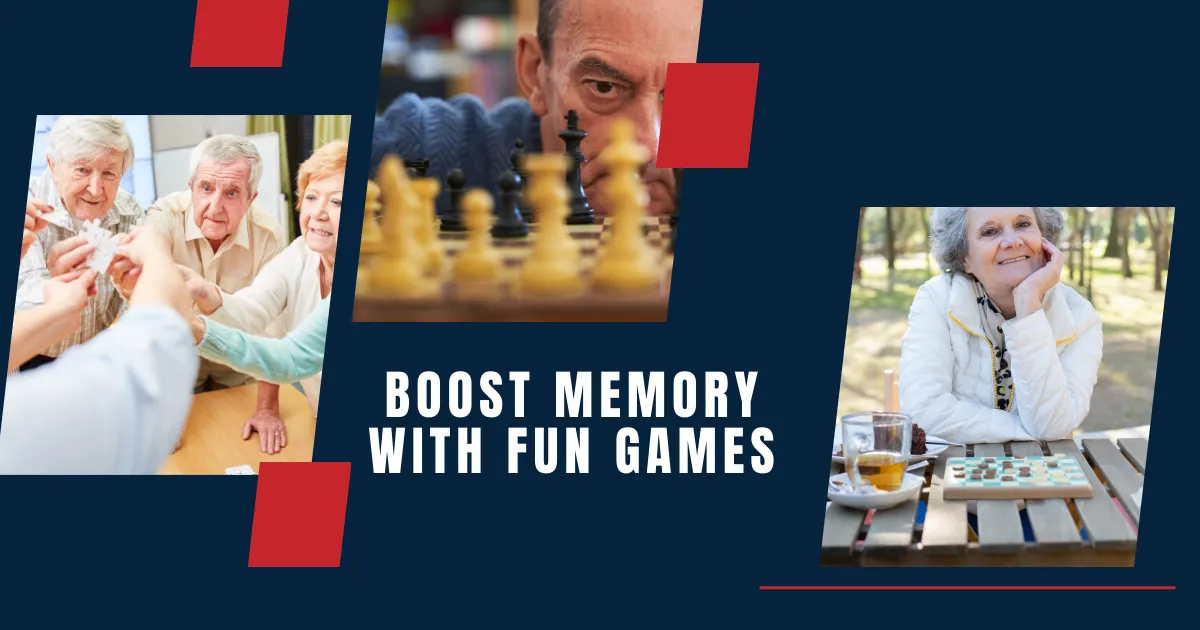
Which game will you try first?
Share this article with a friend – playing together doubles the brain benefits (and the fun).
Click HereJoin the Conversation
Connect with us for daily tips, healthy aging inspiration, and community support across your favorite platforms.


Thank you for sharing these insightful tips on memory games for brain health! It’s wonderful to see how engaging in these games not only provides entertainment but also offers numerous cognitive benefits. Incorporating these activities into our routines can indeed lead to improved memory, enhanced cognitive skills, and overall brain agility. Here’s to challenging our minds while having fun!