
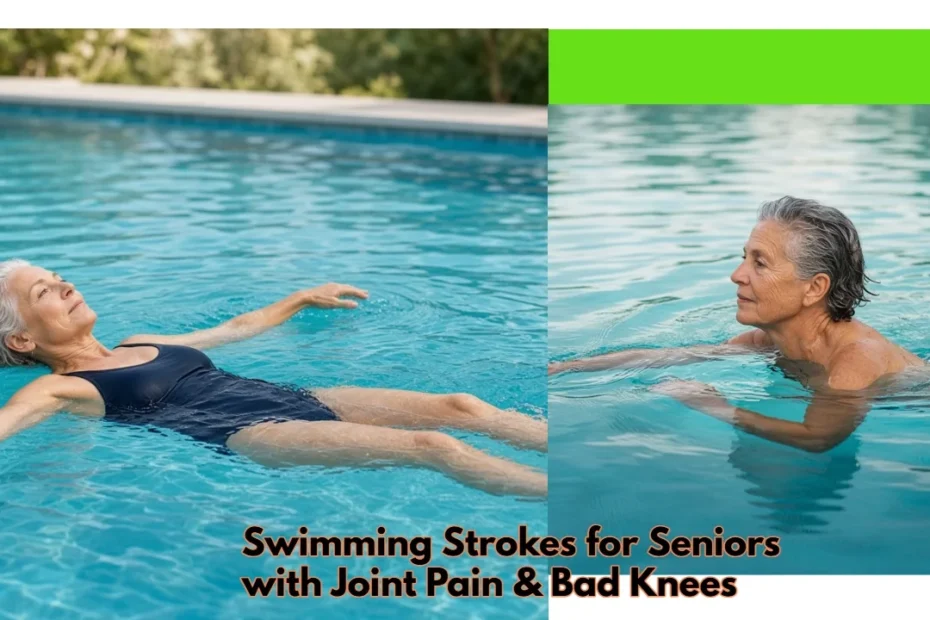
Gentle Aquatic Therapy: Swimming Strokes for Seniors with Joint Pain & Bad Knees
Staying physically active as we age shouldn't mean enduring constant joint discomfort or sharp knee pain. Water naturally supports up to 90% of your body weight, drastically removing the high-impact stress caused by traditional land exercises like running or walking.
Table of Contents
ToggleAquatic Fitness: Low-Impact Joint & Arthritis Relief
Water therapy offers natural buoyancy that reduces weight-bearing stress on worn joints by up to 90%. Incorporating water-based movements into your routine complements active lifestyle strategies like a healthy eating plan by reducing inflammation, enhancing mobility, and rebuilding muscle strength without strain.
Gentle Swimming Strokes for Seniors with Joint Pain & Bad Knees
Not all swimming strokes impact joints equally. Selecting gentle, smooth movements helps protect vulnerable knees, hips, and shoulders:
🏊 Recommended Strokes
- Backstroke: Excellent for shoulder flexibility and spinal alignment. Keeps the face clear of water and reduces neck tension.
- Modified Front Crawl: Use a gentle, continuous flutter kick with minimal knee bend to protect knee cartilage.
- Side Stroke: A low-energy, highly relaxing stroke that allows controlled, painless movements on alternating sides.
⚠️ Strokes to Avoid or Modify
- Avoid Breaststroke Kick (Whip Kick): The outward rotation places severe lateral torque on knees with osteoarthritis.
- Avoid Butterfly Stroke: Places intense hyperextension stress on the lower back and shoulders.
- Use a Kickboard or Noodle: Provides upper-body flotation so you can focus entirely on gentle leg movement.
Pool Exercises & Water Walking for Seniors with Arthritis
Vertical aquatic training builds stabilizing muscles around arthritic joints while improving flexibility and balance. Try these targeted movements in chest-deep water:
🚶 Effective Water Walking Exercises
- Forward & Backward Walking: Walk across the pool pushing through your heels first. Backward walking targets glutes and hamstrings to support knee stability.
- Side-Stepping (Lateral Walks): Step sideways across the lane to strengthen hip abductors and build lateral knee joint support.
- High-Knee Water Marching: Lift your knees toward waist height while pressing down with the opposite arm to build core balance.
💧 Arthritis-Friendly Pool Drills
- Water Leg Lifts: Hold the pool edge and swing one leg gently forward and back to lubricate hip joints.
- Pool Wall Squats: Hold the edge and perform shallow knee bends in chest-deep water to strengthen quadriceps without joint compression.
- Ankle & Wrist Circles: Stand in warm water and rotate your joints to relieve morning stiffness and improve circulation.
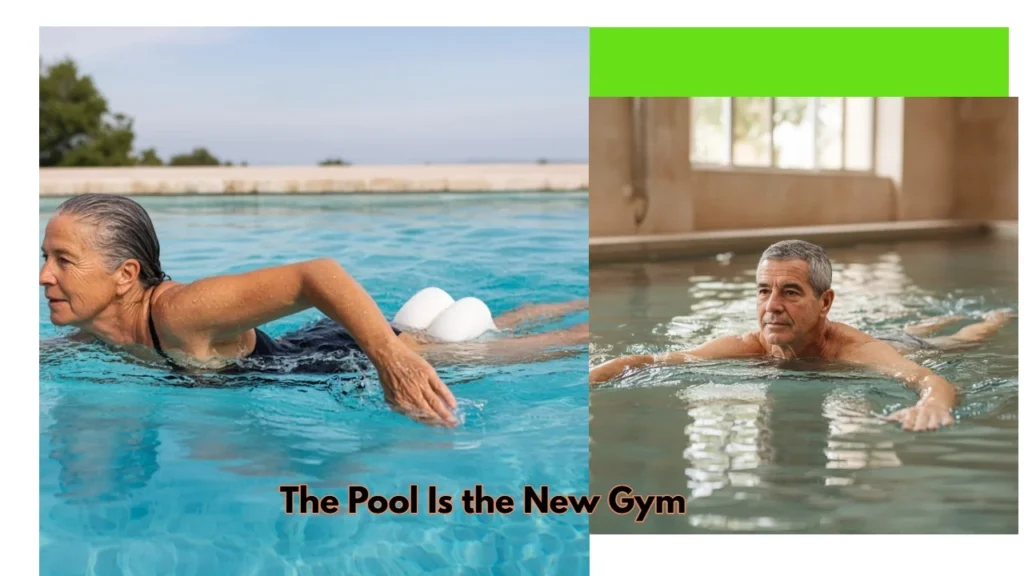
6 Swimming Strokes for Seniors with Joint Pain & Bad Knees
Swimming provides low-impact resistance that relieves stress on aching joints while building strength and cardiovascular health. Here are six gentle, effective swim styles and variations tailored specifically for seniors managing arthritis, joint pain, or bad knees.
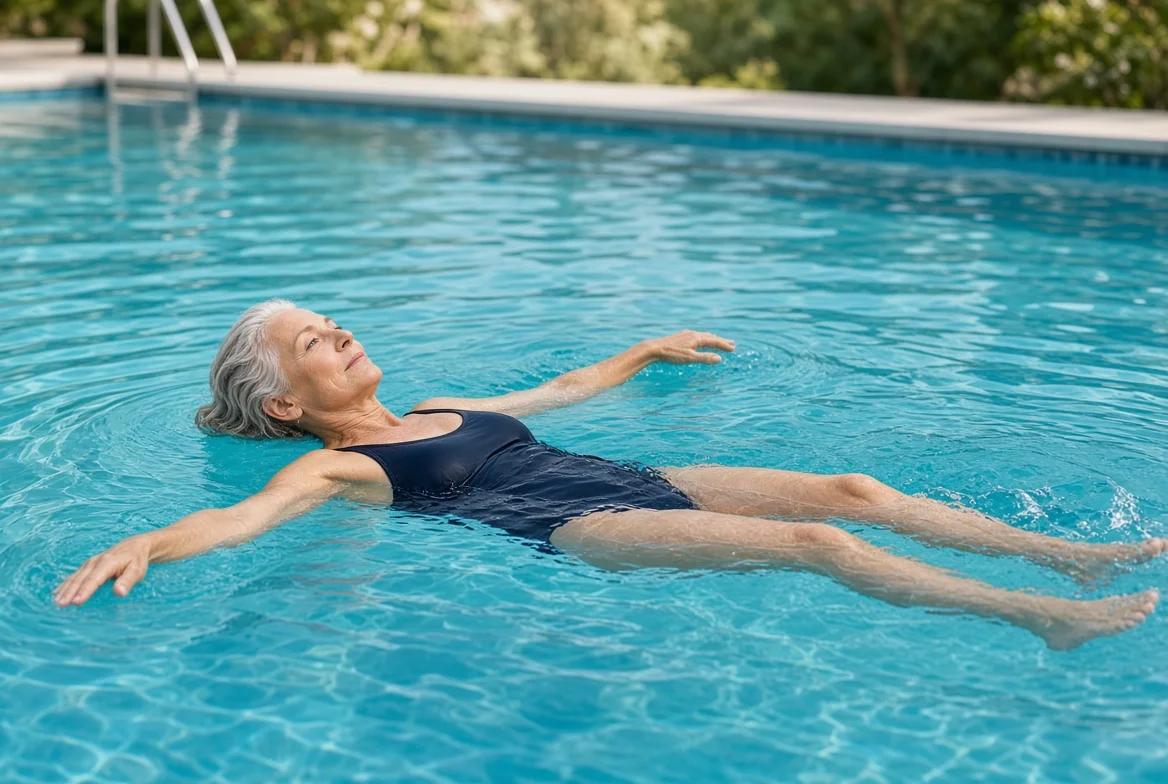
Modified Backstroke (Flutter Kick with Bent Knee Avoidance)
The Backstroke is ideal for seniors dealing with neck, shoulder, or lower back stiffness because your head stays above water in a neutral position, removing breathing stress. Keeping your spine horizontally aligned in the water relieves compression on lumbar vertebrae.
- Joint Benefit: Zero impact on knees and minimal torque on hips.
- Key Technique Adjustment: Focus on kicking strictly from the hips rather than bending from the knees. A small, gentle, whip-free kick protects knee cartilage while keeping your lower body elevated. Keep arm rotations soft and within a comfortable range of motion.
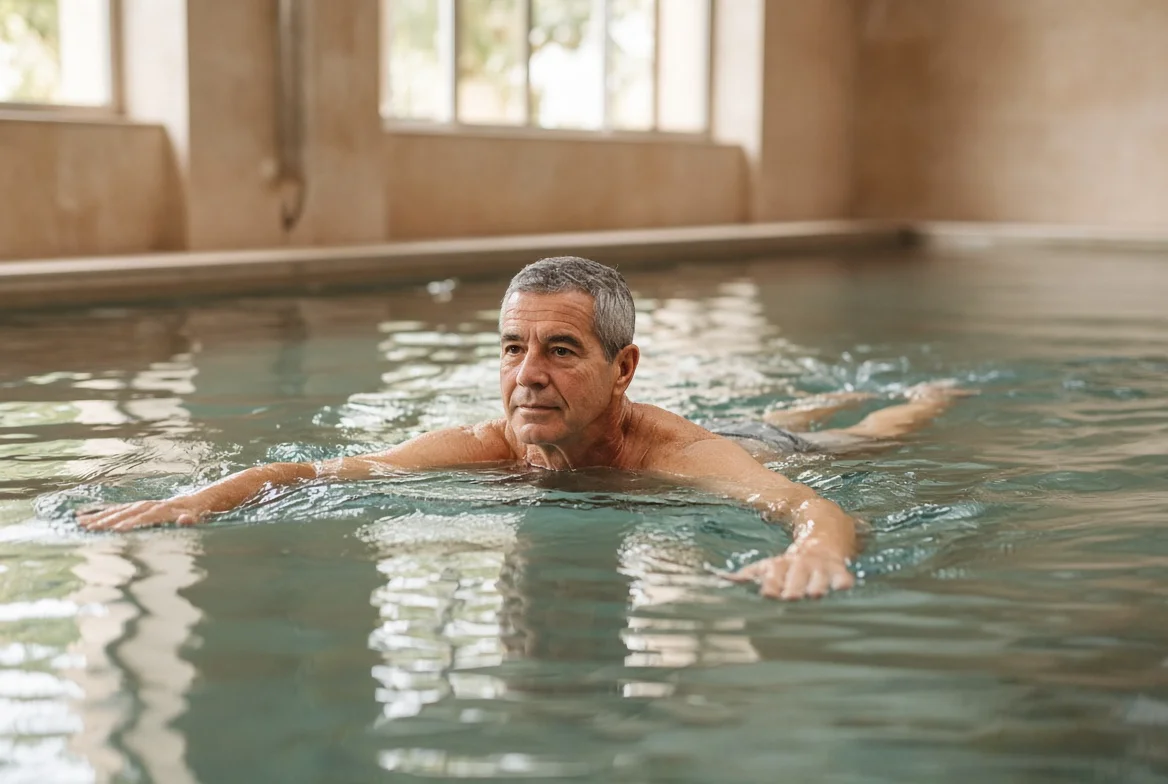
Breaststroke with Straight-Leg / Flutter Kick
Standard Breaststroke features the "whip kick" (frog kick), which involves heavy rotation at the knee and hip joints—making it one of the worst kicks for bad knees or MCL/meniscus sensitivity. However, swapping the whip kick for a soft flutter kick turns this into a high-comfort stroke.
- Joint Benefit: Eliminates lateral strain on knees while maintaining a forward-facing, natural breathing rhythm.
- Key Technique Adjustment: Keep the traditional gliding arm movement and head alignment, but replace the wide outward kick with a relaxed flutter or small dolphin glide underneath you.
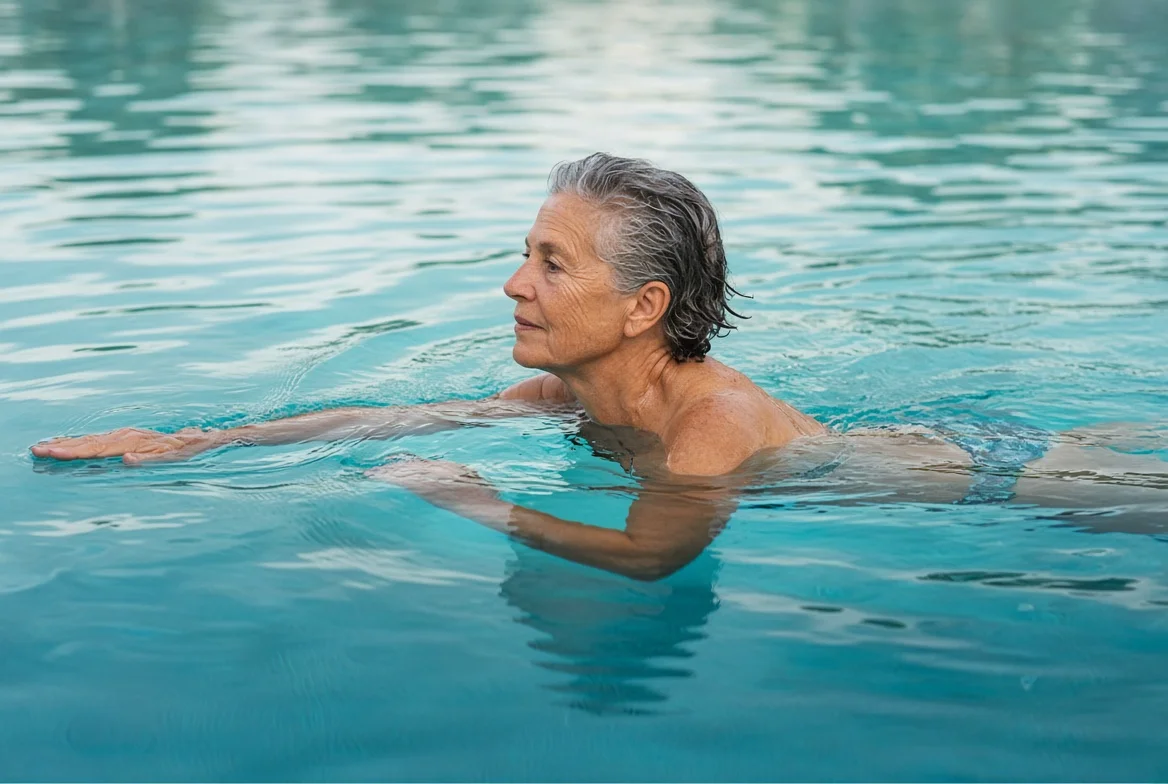
Sidestroke for Joint Comfort
The Sidestroke is an asymmetrical, long-glide stroke traditionally used in lifesaving and long-distance swimming. Because you lie on your preferred side, your neck remains neutral, and you can switch sides whenever one shoulder or hip feels tired.
- Joint Benefit: Exceptional for hip or lower back discomfort, allowing one side of the body to rest completely while the other propels.
- Key Technique Adjustment: Use a slow, controlled scissor kick, keeping the opening small. If a scissor kick creates tension in your knees, transition into a passive flutter kick or place a pull buoy between your thighs to rely entirely on your arms.
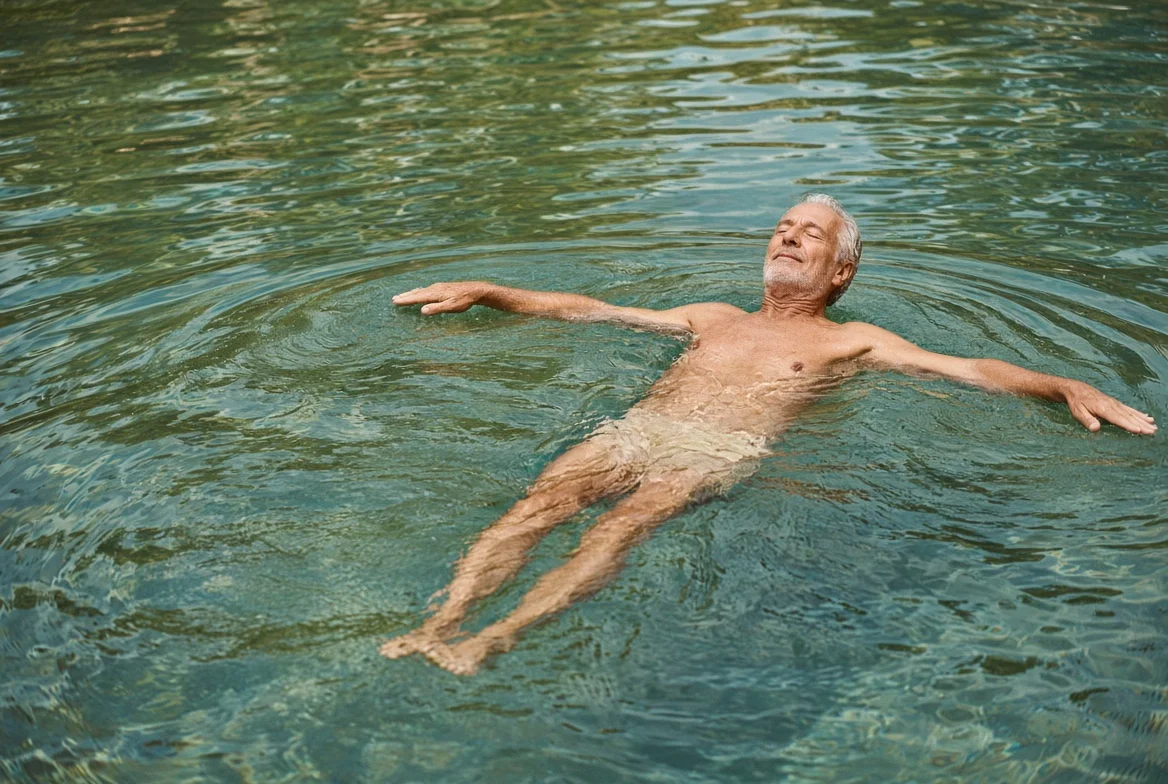
Head-Up Elementary Backstroke
Unlike standard Backstroke, Elementary Backstroke uses symmetrical, whip-free movements that require no over-the-head arm reach, making it ideal for those with rotator cuff sensitivity or shoulder impingement.
- Joint Benefit: Very gentle on shoulders and upper back; eliminates quick, aggressive rotations.
- Key Technique Adjustment: Draw your hands gently up your sides toward your armpits, then extend your arms outwards and sweep downward toward your hips ("Tickle, T, Touch"). Pair this with a gentle, shallow flutter kick instead of a wide kick.
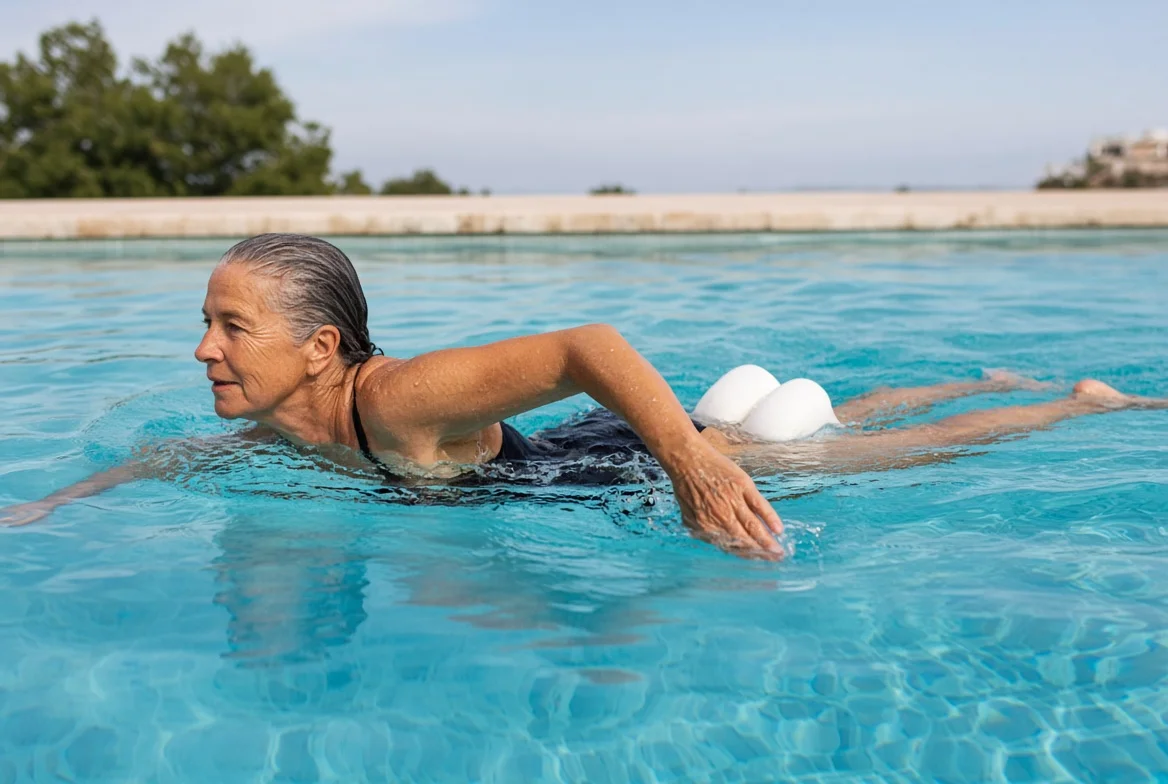
Freestyle with Pull Buoy (Arm-Only Hydro-Glide)
Freestyle (Front Crawl) offers excellent cardiovascular exercise, but rapid kicking or over-kicking can irritate knee joints or hyper-extend the lower back. Utilizing a pull buoy—a soft foam float placed between your thighs—flotation shifts entirely to your lower body without any kicking required.
- Joint Benefit: Completely immobilizes and protects bad knees while reducing hip strain to absolute zero.
- Key Technique Adjustment: Insert a foam pull buoy high between your legs and let them float passively behind you. Focus on a smooth, rhythmic arm entry and engage your core to rotate your torso as one unified block.
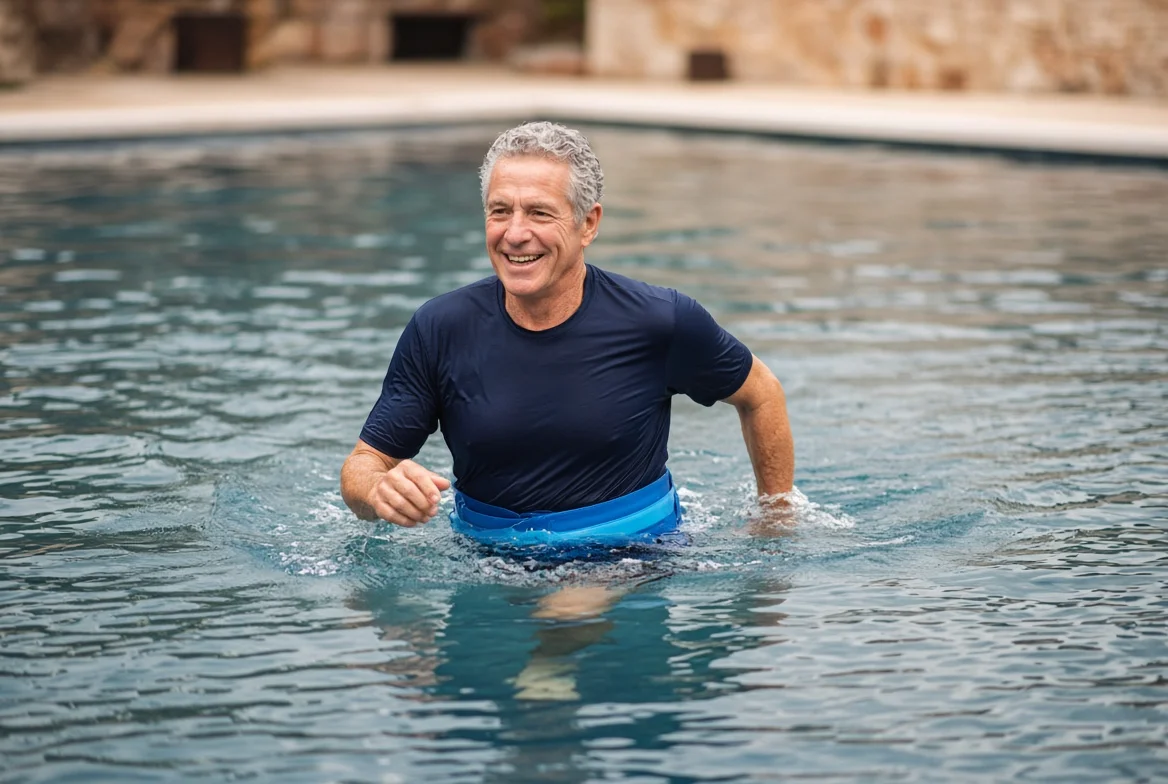
Vertical Water Running & Water Walking
Sculling uses small figure-eight hand movements to propel the body horizontally without needing any leg action. It offers a total upper-body workout while giving inflamed or post-surgery knees complete rest.
- Joint Benefit: Zero ground impact; eliminates bending stress on knees while building hamstring and glute strength.
- Key Technique Adjustment: Strap on an aquatic buoyancy belt in the deep end. Pump your arms and legs in a natural running motion without allowing your feet to touch the bottom. The water provides 360-degree resistance to build supporting leg muscles without joint friction.
Safety Tips: Essential Guidance for Senior Swimmers & Swimming Strokes for Seniors
Simple precautions can make every swim session safer, more comfortable, and more enjoyable.
Stay Where You Feel Comfortable
Start in shallow water and avoid deep areas if you are not fully confident in your balance or swimming ability.
Use Support When Needed
Use pool rails, flotation aids, or other supportive equipment to improve stability and confidence in the water.
Do Not Overexert Yourself
Keep a gentle pace, rest often, and stop right away if you feel dizzy, tired, or short of breath.
Never Swim Alone
Swim with supervision whenever possible, ideally where a lifeguard, instructor, or companion is present.
Choose Warm Water
Warm water pools are often more comfortable for older adults because they can help reduce joint stiffness and muscle tension.
Why Swimming Is Ideal for Seniors Over 60
Quick Summary: Aquatic Fitness for Seniors
Key Takeaways · 2 min-
🌊
Joint-Safe Swimming Modifications: Choosing tailored Swimming Strokes for Seniors—such as modified backstroke or sidestroke—reduces impact on aching cartilage while building muscle strength. Learn how to adapt your routine for optimal wellness and active aging.
-
🦵
Knee Protection Strategies: Practicing swimming for seniors with bad knees involves replacing the harsh whip kick (breaststroke frog kick) with a soft, straight-leg flutter kick or floating with a pull buoy to eliminate joint torque completely.
-
💧
Targeted Arthritis Relief: Integrating vertical pool exercises for seniors with arthritis—such as water walking, high-knee marching, and shallow squats—uses water buoyancy to take up to 90% of body weight off stiff joint sockets.
-
✨
Consistency Over Intensity: Engaging in comfortable Swimming Strokes for Seniors 2–3 times a week improves mobility, balance, and heart health without triggering inflammation or joint flare-ups.
📢 share this article
✨ tap to share — help others crack the comment code


