Skip to content

Hypertension Stages & Common Myths: A Clear, Calming Guide for Your Heart Health After 50

Hypertension Stages & Common Myths

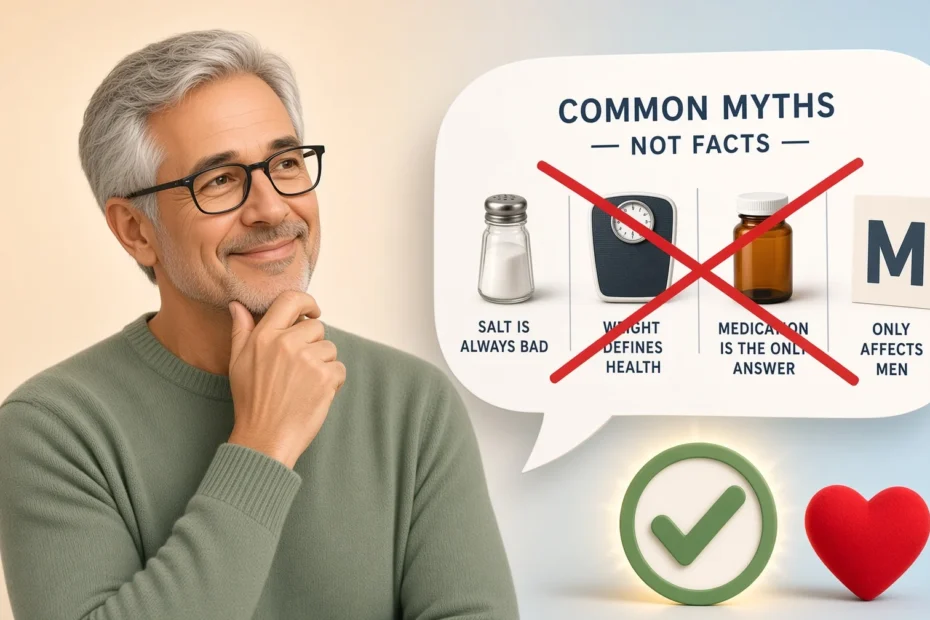
If you’ve recently received a hypertension diagnosis or are worried about your blood pressure, you’re not alone—and you’re not without power. Understanding the numbers and separating fact from fiction is the first step toward taking control. This guide explains the stages in plain language and debunks the most persistent myths, so you can feel confident about your heart health.

In this article, we will debunk 10 hypertension myths and reveal the truth behind them. 
Medical Advice Notice

Important: This information is for educational and lifestyle purposes only. It is not a substitute for professional medical advice. Always consult your doctor about your specific blood pressure readings and treatment plan.

❤️ Hypertension Stages at a Glance

Hypertension is classified into stages based on blood pressure readings. The following are the stages of hypertension based on the American Heart Association guidelines:

🟢
Normal Blood Pressure healthy
Systolic: less than 120 mm Hg  |  Diastolic: less than 80 mm Hg
🟡
Elevated Blood Pressure warning
Systolic: 120–129 mm Hg  |  Diastolic: less than 80 mm Hg
🟠
Stage 1 Hypertension monitor
Systolic: 130–139 mm Hg OR Diastolic: 80–89 mm Hg
🔴
Stage 2 Hypertension take action
Systolic: 140 mm Hg or higher OR Diastolic: 90 mm Hg or higher
⚠️ Important: Hypertension can be asymptomatic – you may not feel any symptoms. That's why regular blood pressure checks are essential for early detection and management.

🌱 Disclaimer: This information is for educational purposes only. Always consult your doctor about your specific blood pressure readings.

🧠 16 Hypertension Myths – Organized & Debunked

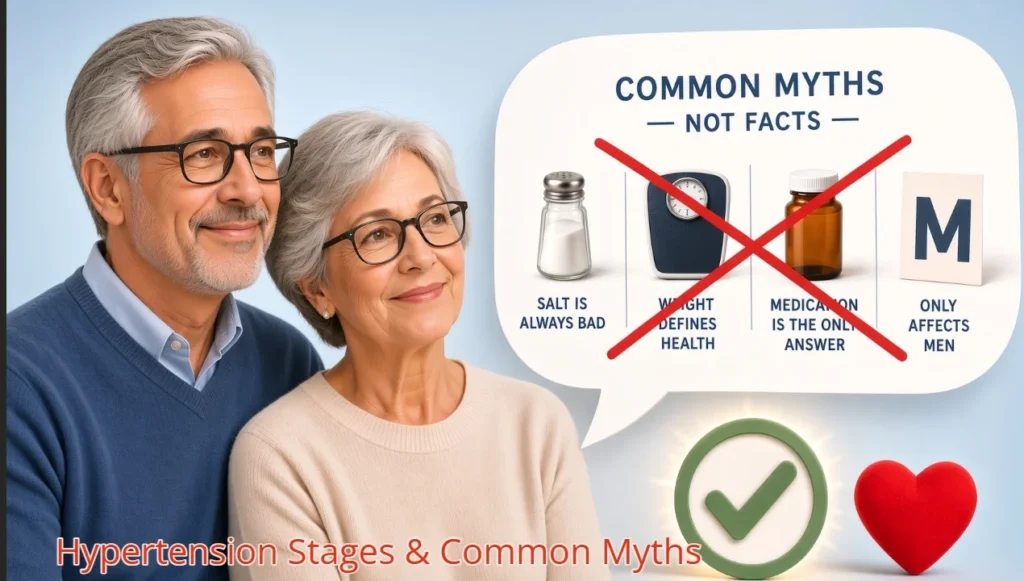
We've grouped these common myths into clear themes so you can quickly find the answers you need. Each myth includes a simple action step – because knowing the truth is only the first step.
👤 Myths About Who Gets Hypertension

#4 Young people and pregnant women can have hypertension, too.
Truth: Nearly 1 in 4 adults aged 20–44 in the US have high blood pressure. It also affects 1 in 12–17 pregnancies. It's not just an "older person's" condition.
Action: If you're under 45 or pregnant, ask your doctor about blood pressure screening at your next visit.
#7 Only overweight or obese people develop hypertension.
Truth: While weight is a risk factor, hypertension can affect anyone – including those at a healthy weight. Genetics, age, diet, stress, and activity level all play significant roles.
Action: Regardless of your weight, have your blood pressure checked at least once a year.
#8 Hypertension is a men's health issue.
Truth: Hypertension affects both men and women. Women face unique risks due to hormonal changes from pregnancy and menopause. Symptoms and treatment responses can also differ.
Action: Women over 50 should monitor blood pressure closely, especially during and after menopause.
#15 Hypertension is inevitable with age.
Truth: While age increases susceptibility, healthy lifestyle choices can delay or prevent hypertension entirely. It's not a guaranteed part of aging.
Action: Focus on what you can control – diet, exercise, and stress management. Learn what to eat to avoid hypertension and start today.

🔍 Myths About Causes & Triggers

#1 The modern blood pressure cuff has been around for more than 100 years.
Truth: Yes – invented in 1881 and popularized in 1901. While the cuff is reliable, technology is evolving. Some newer devices offer more convenience and accuracy.
Action: Consider a validated home blood pressure monitor for regular checks between doctor visits.
#6 Salt is the only thing that affects your blood pressure.
Truth: Salt is a factor, but not the only one. Smoking, alcohol, inactivity, stress, genetics, and conditions like kidney disease also play major roles.
Action: Try replacing salt with herbs and spices this week. Explore heart-healthy foods that naturally support blood pressure.
#11 Exercise makes hypertension worse.
Truth: Regular exercise lowers blood pressure over time by improving heart health and reducing stress. While short-term spikes occur during activity, the long-term benefits are significant.
Action: Start with 10–15 minutes of walking daily. Always check with your doctor before beginning a new exercise routine.

💊 Myths About Treatment & Management

#2 The normal blood pressure range has changed.
Truth: In 2017, guidelines changed Stage 1 from 140/90 to 130/80 mm Hg. This means 30 million more American adults now have high blood pressure – but also more opportunity for early intervention.
Action: If your numbers are between 120–130/80, talk to your doctor about lifestyle changes that can help.
#9 You can't prevent hypertension.
Truth: While genetics play a role, many risk factors are within your control. A healthy diet, regular exercise, stress management, and avoiding tobacco can all prevent or delay hypertension.
Action: Start with one small change – like adding a vegetable to every meal. See what to eat to avoid hypertension for simple, delicious ideas.
#10 Once you have hypertension, you'll need medication for life.
Truth: Medication is often helpful, but lifestyle changes can sometimes reduce or eliminate the need for it. Many people lower their numbers through diet, exercise, and stress reduction alone.
Action: Work with your doctor to create a plan that combines lifestyle changes with any necessary medication.
#12 Hypertension is just a temporary condition.
Truth: Chronic hypertension is a long-term condition that requires ongoing management. While stress or illness can cause spikes, sustained high blood pressure needs consistent attention.
Action: Make blood pressure checks a regular habit – at home and at the doctor's office.
#13 There's only one way to lower your blood pressure.
Truth: A combination approach works best – diet (like the DASH diet), exercise, stress management, weight control, and sometimes medication. There's no single magic bullet.
Action: Explore different strategies and find what works for you. Start with food choices that support healthy blood pressure.
#14 Herbal remedies are a cure.
Truth: Some herbs may help manage blood pressure, but they are not a cure. They should never replace prescribed medications or lifestyle changes without a doctor's guidance.
Action: If you're interested in herbal supplements, discuss them with your doctor to avoid interactions with medications.
#16 Cutting out all fats lowers blood pressure.
Truth: While reducing unhealthy fats (like trans fats) is good, healthy fats – like those from avocados, nuts, and olive oil – actually support heart health and can help lower blood pressure.
Action: Add a handful of nuts or half an avocado to your daily meals. Discover more heart-healthy foods to include in your diet.

📊 Myths About Awareness & Numbers

#3 Most people with high blood pressure do not know they have it.
Truth: Of the 1.13 billion people worldwide with hypertension, only half have it under control. The "silent killer" has no symptoms – making regular checks essential.
Action: Check your blood pressure at least once a month. Use a home monitor or visit a pharmacy.
#5 Hypertension contributes to more than 1000 deaths per day.
Truth: In the US alone, hypertension contributed to over 494,000 deaths in 2018 – more than 1,000 per day. It's a major risk factor for heart disease and stroke.
Action: Don't wait for symptoms. Schedule a blood pressure check today – it could save your life.

🌱 Disclaimer: This information is for educational purposes only. Always consult your doctor about your specific blood pressure readings and treatment plan.

🧰 Your Daily Toolkit for Heart Health

Managing blood pressure isn't about one big change – it's about small, consistent steps you take every day. This toolkit covers the three pillars of holistic health: Mind, Body, and Diet – plus simple ways to weave them into your routine.

🧠

Mind – Calm Your Nervous System

Chronic stress constricts blood vessels. These practices help you relax and lower cortisol:

  • Mindfulness meditation (5–10 min/day)
  • Deep breathing exercises
  • Yoga or tai chi
Explore more healthy habits →
🚶

Body – Move Every Day

Regular physical activity strengthens your heart and improves circulation. Aim for:

  • 150 min/week of moderate exercise (brisk walking, cycling)
  • Or 75 min/week of vigorous activity (jogging, swimming)
  • Strength training 2x/week for muscle and metabolism
Find easy exercise tips →
🍽️

Diet – Eat for Your Heart

Whole foods and the DASH diet are proven to lower blood pressure. Focus on:

  • Reducing sodium (aim for under 1,500 mg/day)
  • Increasing potassium-rich foods (bananas, spinach, sweet potatoes)
  • Limiting processed and high-fat foods
View a heart-healthy eating plan →
Learn about glycemic index for heart health →
🌿

Daily Life – Small Habits, Big Impact

Weave these into your routine for lasting results:

  • Sleep 7–9 hours nightly to regulate stress hormones
  • Stay hydrated – dehydration can spike blood pressure
  • Connect with others – social bonds improve emotional health
More daily wellness tips →

📋 How to Use This Toolkit

You don't need to do everything at once. Start with one card that feels most achievable this week. For example:

  • Week 1: Add a 10-minute walk after dinner.
  • Week 2: Swap one salty snack for a banana or handful of nuts.
  • Week 3: Try 5 minutes of deep breathing before bed.
  • Week 4: Aim for 7 hours of sleep and track your progress.

💪 Remember: You're in Control – Start Small, Stay Consistent

Integrating these holistic practices into your daily life can help you prevent and manage hypertension naturally. Always consult your healthcare provider before making significant changes, and remember that consistency matters more than perfection.

Want to dive deeper into heart-healthy eating? Explore our complete guide on what to eat to avoid hypertension →


📋 Summary: Your Clear Path to Understanding & Managing Hypertension

High blood pressure is often called the “silent killer” for a reason. The reality of hypertension without symptoms means you could be at risk and not know it – which is why understanding the hypertension stages and separating fact from fiction is so important.

In this guide, we’ve clarified the four hypertension stages in plain language, so you know exactly what your readings mean – from normal to stage 2. We’ve also taken the common myths about high blood pressure debunked – from “only overweight people get it” to “you’ll need medication for life” – and replaced them with clear, reassuring truths.

But knowledge alone isn’t enough. That’s why we’ve provided a Daily Toolkit covering mind, body, and diet – simple, actionable steps you can take starting today. Whether it’s a 10-minute walk, swapping salt for herbs, or practicing deep breathing, every small habit adds up to better heart health.

Remember: knowing your hypertension stages is the first step toward control. With regular checks, informed choices, and consistent small changes, you can take charge of your blood pressure and your peace of mind – even when hypertension without symptoms is the reality.

✅ Know your hypertension stages ✅ Debunk the myths ✅ Start your daily toolkit ✅ Check regularly
📱

Join the Conversation

Connect with us for daily tips, healthy aging inspiration, and community support across your favorite platforms.

✨ Respectful discussions and shared experiences are always welcome in our community.
Please follow and like us:

4 thoughts on “Hypertension Stages & Common Myths: A Clear, Calming Guide for Your Heart Health After 50”

  1. Understanding the stages of hypertension is crucial for effective management. From prehypertension to stage 3, each stage requires different treatment approaches. This post provides valuable information on lifestyle changes, medication options, and regular check-ups. Thanks for sharing these essential tips!

  2. Thank you for your sharing. Wow, this post really opened my eyes to the common myths surrounding hypertension! I had no idea that stress alone doesn’t directly cause high blood pressure. It’s great to have this kind of accurate information to share with others. Thanks for debunking these myths!

  3. I’m trying to incorporate more heart-healthy foods into my diet. Any suggestions for quick and easy meal prep ideas?

Leave a Reply

Your email address will not be published. Required fields are marked *